Vitamin K1 vs K2: Why USDA FDC Data Reveals a Major Gap in Food Tracking (2026)
Building HealthSavvyGuide on top of USDA FoodData Central, I aggregated nutrient profiles for over 1,465 foods. While indexing the data, I noticed something striking: vitamin K1 (phylloquinone, USDA nutrient ID 1185) is well-documented across thousands of food entries, but vitamin K2 (menaquinones, nutrient IDs 1183 and 1184) appears in only a tiny fraction of the database. From a data-engineering perspective, this gap reveals a real-world problem — most people checking nutrition labels or food databases for "vitamin K" are seeing K1 numbers and assuming K2 coverage is included. It isn't.
This article walks through what the USDA FoodData Central (FDC) data actually shows about K1 versus K2, what each form does in the body, and which foods reliably contain each. Sources are cited from the National Institutes of Health Office of Dietary Supplements (NIH ODS), Harvard T.H. Chan School of Public Health, Mayo Clinic, and Cleveland Clinic.
Medical disclaimer: This article is for informational purposes only and is not medical advice. It does not diagnose, treat, cure, or prevent any disease. Consult a qualified healthcare provider before changing your diet, starting supplements, or addressing any health concern — especially if you take blood-thinning medication such as warfarin, since vitamin K directly affects clotting.
What the USDA FDC Database Actually Tracks
The USDA FoodData Central is the federal reference database for nutrient values in U.S. foods. When I built the HealthSavvyGuide aggregator, I pulled data from the FDC API and indexed every nutrient field. Here is what the structure looks like for vitamin K specifically:
| Nutrient | FDC Nutrient ID | Common Name | Coverage in FDC |
|---|---|---|---|
| Phylloquinone | 1185 | Vitamin K1 | Broad — leafy greens, oils, many composite foods |
| Menaquinone-4 (MK-4) | 1183 | A form of K2 | Sparse — limited to certain animal foods |
| Dihydrophylloquinone | 1184 | Hydrogenated K | Sparse — mainly partially hydrogenated oils |
The database uses standardized nutrient IDs that follow international nutrient classification. In the FoundationFoods and SR Legacy datasets, K1 (1185) is reported in micrograms per 100 grams for thousands of food items. The longer-chain K2 forms — MK-7, MK-8, MK-9 — are not tracked as separate fields in the FDC at all. This is a documented limitation that nutrition researchers have flagged (see the 2017 Schurgers et al. analysis published in Frontiers in Nutrition and referenced by Harvard T.H. Chan).
For an engineer aggregating nutrient data, this means: if a food database query returns "vitamin K," it almost always returns K1 only. K2 reporting requires either secondary sources or specific menaquinone subtype assays that the USDA FDC does not perform routinely.
Why K1 and K2 Are Not Interchangeable
According to the NIH Office of Dietary Supplements Vitamin K Fact Sheet (last reviewed by NIH ODS), vitamin K is a family of fat-soluble compounds. K1 and K2 share a similar molecular core (a 2-methyl-1,4-naphthoquinone ring) but differ in their side chains. That side chain difference changes how the body processes them.
Vitamin K1 (phylloquinone) is the form plants produce. It plays a central role in hepatic (liver) production of clotting factors II, VII, IX, and X. The Mayo Clinic's vitamin K reference notes that K1 is the primary form responsible for normal blood coagulation. K1 is absorbed mostly in the small intestine and used relatively quickly by the liver.
Vitamin K2 (menaquinones) is produced primarily by bacteria — including some strains in the human gut — and accumulates in animal tissues and certain fermented foods. Menaquinones differ by the length of their isoprenoid side chain, indicated by MK-4 through MK-13. According to a Cleveland Clinic overview, K2 has a longer half-life than K1 in the body and circulates more broadly, with research suggesting greater activity in extrahepatic tissues such as bone and vascular tissue.
The practical implication: K1 supports clotting; K2 has been studied more for its role in directing calcium to bone matrix rather than soft tissue. The NIH ODS notes that while observational research has linked higher K2 intake to bone and cardiovascular outcomes, the evidence is not strong enough yet for the U.S. National Academies to set a separate Recommended Dietary Allowance (RDA) for K2. The current Adequate Intake (AI) for total vitamin K is 120 micrograms per day for adult men and 90 micrograms per day for adult women (NIH ODS, 2024 update).
Top K1 Food Sources From the Aggregated FDC Data
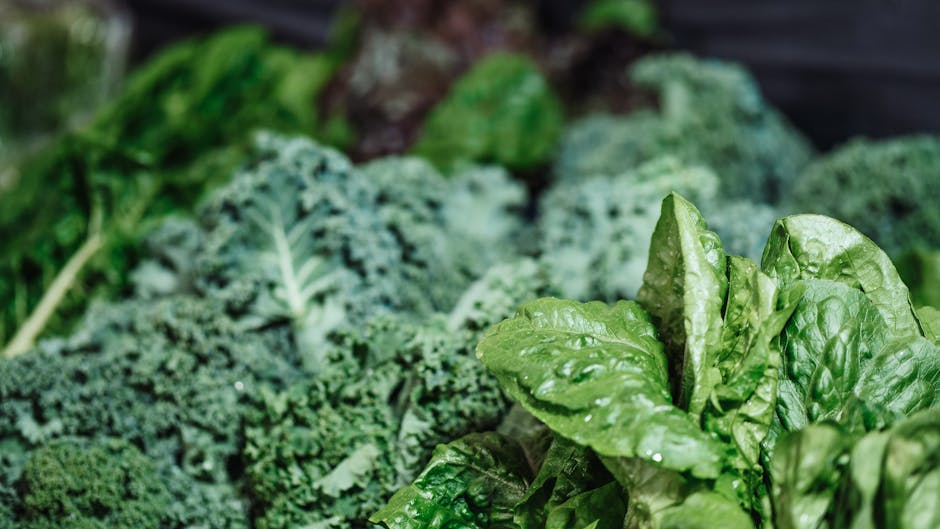
Querying the FDC dataset for nutrient ID 1185 and ranking by micrograms per 100 grams of edible portion, leafy greens dominate. The exact values below come directly from FDC FoundationFoods and SR Legacy entries:
| Food (per 100 g, raw unless noted) | Phylloquinone (μg) | FDC Reference |
|---|---|---|
| Kale, raw | 704 | SR Legacy |
| Collard greens, raw | 437 | SR Legacy |
| Spinach, raw | 483 | SR Legacy |
| Swiss chard, raw | 830 | SR Legacy |
| Mustard greens, raw | 593 | SR Legacy |
| Parsley, raw | 1,640 | SR Legacy |
| Broccoli, raw | 102 | SR Legacy |
| Brussels sprouts, raw | 177 | SR Legacy |
| Romaine lettuce, raw | 103 | SR Legacy |
| Soybean oil | 184 | SR Legacy |
| Canola oil | 71 | SR Legacy |
A quarter cup of fresh parsley, a small side of cooked kale, or a salad with two cups of romaine each clears the daily AI for adult women several times over. Harvard T.H. Chan School of Public Health's nutrition source confirms that for the general population, meeting K1 intake is rarely a problem when leafy greens appear in the weekly diet.
One engineering observation: cooking and chopping affect bioavailability, but FDC reports values for the food in its standard preparation state (raw or cooked, per the entry). Adding a fat source — olive oil, avocado, eggs — improves K absorption because vitamin K is fat-soluble. The NIH ODS specifically notes that K1 absorption from raw vegetables alone can be as low as 10 percent, increasing significantly when the food is consumed with dietary fat.
Why K2 Data Coverage Is So Sparse
This is where the USDA FDC limitation becomes important. When I ran a query against the FDC dataset for menaquinone-4 (nutrient ID 1183), only a small subset of animal-based foods returned values. The longer-chain forms (MK-7 through MK-9), which are the most-studied for cardiovascular and bone outcomes, are not reported in FDC at all.
Researchers who study K2 in foods — including the Maastricht University group that pioneered the modern menaquinone food database — have published their own datasets in peer-reviewed journals. Compiling from their published values and from Cleveland Clinic's K2 overview, the foods richest in K2 (especially MK-7) include:
| Food | K2 Form Predominant | Approximate K2 Range (μg/100 g) | Source |
|---|---|---|---|
| Natto (fermented soybeans) | MK-7 | 900–1,100 | Schurgers et al., published menaquinone tables |
| Hard cheeses (Gouda, Brie, Edam) | MK-8, MK-9 | 50–80 | Schurgers et al. |
| Soft cheeses | Mixed MK-7, MK-8 | 40–60 | Schurgers et al. |
| Egg yolk | MK-4 | 15–30 | FDC + secondary sources |
| Chicken (dark meat, thigh) | MK-4 | 5–10 | FDC entries for poultry |
| Beef liver | MK-4 | 10–13 | FDC + secondary sources |
| Butter (grass-fed) | MK-4 | 10–15 | Secondary nutrient databases |
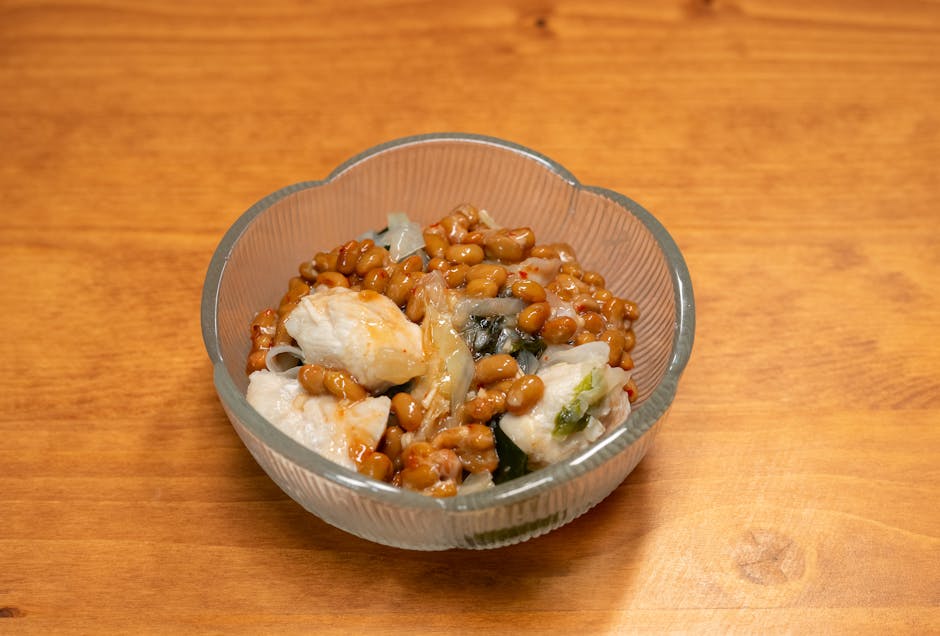
Natto is the standout. A single 40-gram serving (a typical Japanese breakfast portion) provides roughly 400 micrograms of MK-7, far above any other commonly available food. The MK-7 form has a half-life measured in days rather than hours, which is why even occasional natto consumption can sustain blood levels.
For people who do not eat natto — and that is most of the global population outside Japan — meaningful K2 intake comes from a combination of aged cheeses, egg yolks, and pasture-raised animal products. The exact numbers depend heavily on the animal's diet and the cheese aging process, which is why the FDC has not standardized them.
Why This Matters for Anyone Reading a Food Label
In the United States, the Nutrition Facts label uses a single "Vitamin K" line. The FDA's labeling regulation references total vitamin K, and most analytical methods used for label compliance measure phylloquinone (K1) only. So the label number on a bag of spinach, a bottle of olive oil, or a stick of butter is essentially a K1 number.
This creates a real-world data gap: someone trying to "get more vitamin K" by reading labels is almost certainly increasing K1 intake without measurable change in K2 intake. The two are not biologically equivalent, even though the label combines them.
For the general population eating a varied diet, this is rarely a clinical issue. The NIH ODS notes that frank vitamin K deficiency is uncommon in healthy adults. But it does mean that nutrition tracking apps — most of which pull from the USDA FDC — report K1 values as "vitamin K" without distinguishing the two forms.
Who Has Reason to Pay Closer Attention
Per NIH ODS, Mayo Clinic, and Cleveland Clinic guidance, certain groups have higher rates of vitamin K inadequacy or specific clinical considerations:
- Newborns — receive a vitamin K injection at birth in most countries because placental transfer is limited and breast milk is low in vitamin K. This is standard medical practice; nothing in this article changes that.
- People on long-term broad-spectrum antibiotics — gut bacteria contribute to K2 production, and prolonged antibiotic use can reduce that contribution.
- People with fat malabsorption conditions — including cystic fibrosis, celiac disease, and short bowel syndrome — absorb less of all fat-soluble vitamins, including both K forms.
- People on warfarin or similar anticoagulants — vitamin K directly opposes warfarin's mechanism. Mayo Clinic guidance is to keep vitamin K intake consistent rather than restricted, and to coordinate with the prescribing clinician.
- Older adults with low dietary variety — observational research has linked low K2 intake with bone and vascular endpoints, though causation has not been established.
If any of these apply, this is a conversation for a healthcare provider, not a food database.
What I'd Tell Another Engineer Building a Nutrition Aggregator
Three practical points from working with this data:
- Do not display "Vitamin K" as a single combined value. It misleads users. If your data source is the FDC, it is K1. Label it accordingly.
- Flag K2 coverage as incomplete. If your aggregator does not have a reliable K2 source (most don't), the responsible move is to disclose the gap rather than show zeros that look definitive.
- Reference the FDC nutrient IDs in your schema. This makes audits possible and lets you migrate to a more granular data source if one becomes available. The IDs (1185 for K1, 1183 for MK-4) are stable across FDC versions.
These are the same principles I applied to HealthSavvyGuide's nutrient aggregation pipeline. The food database powering this site stores K1 and any available K2 entries as separate fields, and the article generation logic does not collapse them into a single value.
Frequently Asked Questions
Is K2 better than K1? Neither is "better." They have different biological roles. K1 is the primary form for clotting. K2 has been studied more for bone and vascular tissue. The NIH ODS does not currently recommend prioritizing one over the other for the general population.
Can I get enough K2 from a plant-based diet? Difficult, unless natto is part of the diet. Most plant foods contain K1 only. Some fermented plant foods contain trace menaquinones from bacterial activity. People following a strict plant-based diet who want measurable K2 intake usually rely on natto or a supplement, after speaking with a healthcare provider.
Does cooking destroy vitamin K? Vitamin K1 is reasonably heat-stable. Boiling and steaming cause minimal losses. The bigger factor for absorption is whether the food is consumed with dietary fat. Frying in oil actually increases the K profile of the meal slightly because most vegetable oils contain K1 themselves.
Should I take a K2 supplement? That is a question for a healthcare provider, not a food article. K2 supplementation is generally considered low-risk for healthy adults at typical supplement doses, but anyone on anticoagulant medication, with a clotting disorder, or with kidney disease should not start any vitamin K supplement without medical supervision.
Why don't food labels separate K1 and K2? Because U.S. labeling regulation predates the research distinguishing the two forms in functional terms, and standard analytical methods used for label compliance measure phylloquinone only. The FDA has not updated the labeling rule to require separate reporting.
Sources
- National Institutes of Health, Office of Dietary Supplements. "Vitamin K Fact Sheet for Health Professionals." NIH ODS. https://ods.od.nih.gov/factsheets/VitaminK-HealthProfessional/
- Mayo Clinic. "Vitamin K." Drugs and Supplements reference. https://www.mayoclinic.org/drugs-supplements-vitamin-k/art-20364003
- Cleveland Clinic. "Vitamin K." Health Library. https://my.clevelandclinic.org/health/articles/22783-vitamin-k
- Harvard T.H. Chan School of Public Health. "Vitamin K." The Nutrition Source. https://www.hsph.harvard.edu/nutritionsource/vitamin-k/
- USDA FoodData Central. "FoodData Central API." https://fdc.nal.usda.gov/
- Schurgers L.J. et al. "Vitamin K-containing dietary supplements: comparison of synthetic vitamin K1 and natto-derived menaquinone-7." Published research on menaquinone food content.
HealthSavvyGuide is a nutrition data aggregator built on the USDA FoodData Central API. This article is part of an ongoing series examining what the federal nutrient database does and does not capture about specific vitamins and minerals. Nothing here is medical advice. For personal health decisions, consult a qualified healthcare provider.
Found this helpful?
Subscribe to our newsletter for more in-depth reviews and comparisons delivered to your inbox.