Phosphorus-Rich Foods, Bone & Energy Health: USDA FDC Data Insights for 2026
Phosphorus is the second-most abundant mineral in the human body, but when I started indexing it across the USDA FoodData Central (FDC) dataset for HealthSavvyGuide, the result was almost boring — it shows up everywhere. As the engineer maintaining a nutrition aggregator across 1,465+ indexed foods, I expected phosphorus to behave like calcium or iron, where the top sources cluster into a small list. Instead, the FDC distribution looks closer to protein: dairy, meat, fish, legumes, nuts, seeds, and whole grains all carry meaningful amounts. The interesting story is not where phosphorus comes from. It is what happens when food processing adds more of it on top.
This article walks through what the USDA FDC dataset reveals about phosphorus-rich foods, why frank phosphorus deficiency is rare in the United States while the U.S. Food and Drug Administration (FDA) and the National Kidney Foundation (NKF) have flagged excess intake as a public-health concern, and how the bioavailability gap between organic and inorganic phosphorus changes the way nutrition data should be read. The angle here is informational and engineering-driven — I am not a registered dietitian, and the closing disclaimer matters.
What phosphorus does in the body
According to the National Institutes of Health (NIH) Office of Dietary Supplements (ODS) Phosphorus Fact Sheet for Health Professionals, roughly 85 percent of the phosphorus in the adult body is stored in bones and teeth as hydroxyapatite, the same calcium-phosphate crystal lattice that gives the skeleton its compressive strength. The remaining 15 percent is distributed across soft tissues, cell membranes (as phospholipids), and the energy-currency molecule adenosine triphosphate (ATP), where every phosphate bond hydrolyzed releases the energy that powers muscle contraction, nerve signaling, and active transport across cell membranes.
From an engineering perspective, phosphorus is the only mineral whose role spans structural (bone matrix), informational (DNA and RNA backbones use phosphodiester bonds), and energetic (ATP) functions simultaneously. That triple role is also why the body regulates serum phosphate tightly through the kidneys, parathyroid hormone (PTH), and the hormone FGF-23 — a system the NIH ODS describes as redundant precisely because losing control of phosphate balance damages multiple tissues at once.
Top phosphorus-rich foods in the USDA FDC dataset
When I sort the USDA FoodData Central database by phosphorus content per 100 grams (using the Standard Reference Legacy and Foundation Foods tables), the top tier looks like this:
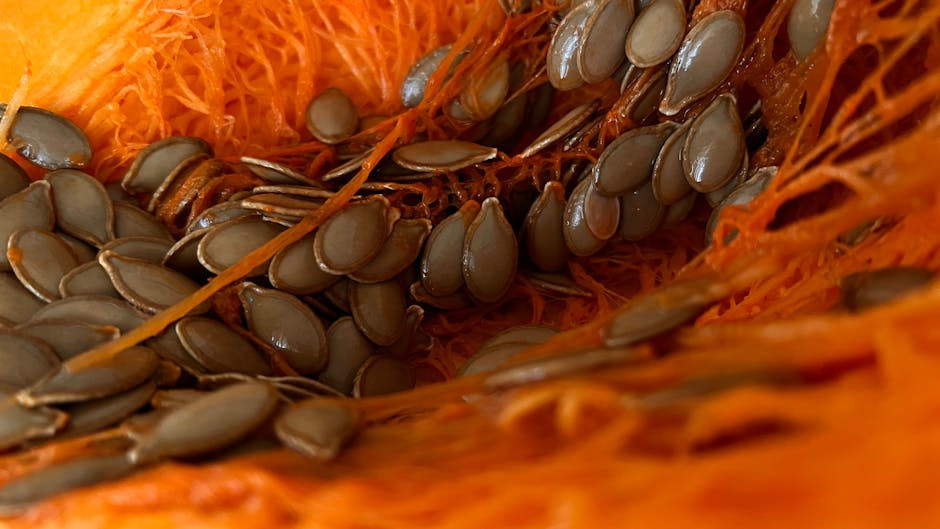
- Pumpkin seeds, roasted — approximately 1,233 mg per 100 g (USDA FDC ID 170556 series)
- Hard cheeses (Parmesan, Romano) — around 694 mg per 100 g for Parmesan
- Salmon, Atlantic, farmed, cooked — about 252 mg per 100 g
- Lentils, cooked — near 180 mg per 100 g
- Greek yogurt, plain, non-fat — roughly 135 mg per 100 g
- Chicken breast, roasted — close to 220 mg per 100 g
- Tofu, firm, calcium-set — around 190 mg per 100 g
- Whole wheat bread — near 202 mg per 100 g, though much of it is bound to phytate
Two data observations from sorting the FDC export caught my attention. First, plant sources like pumpkin seeds and lentils can equal or exceed animal sources by raw milligrams per 100 g, but the FDC nutrient field does not flag the form. Second, the dataset does not distinguish between naturally occurring phosphorus and phosphate additives in processed foods unless the food enters via the Branded Foods database, where the ingredient list reveals additives like sodium phosphate, calcium phosphate, or phosphoric acid. That asymmetry — raw food entries tracked by total phosphorus, branded entries listed by ingredient — is the single biggest data-engineering gap when building any phosphorus tracker.
The hidden phosphorus problem: additives in processed food
Phosphate additives are used as preservatives, leavening agents, emulsifiers, and pH stabilizers in processed cheeses, deli meats, cola beverages, baking mixes, and frozen entrees. The U.S. Food and Drug Administration classifies most phosphate additives as Generally Recognized as Safe (GRAS), which is why food manufacturers are not required to list the milligrams of added phosphorus on the Nutrition Facts label — only the ingredient itself.
A 2020 review published by the National Kidney Foundation in its phosphorus patient education materials estimates that phosphate additives can contribute 300 to 1,000 mg of additional phosphorus per day in a typical Western diet, on top of the phosphorus naturally present in food. Because that load is invisible on labels, even a careful consumer reading a Nutrition Facts panel will underestimate intake by a wide margin if the diet is built around processed food.
The engineering implication for HealthSavvyGuide and any nutrition aggregator built on FDC is straightforward: phosphorus totals from FDC Branded Foods reflect what the manufacturer reported, but the dataset does not separate the natural and additive fractions. A cola listed at 39 mg per 100 g in FDC is entirely additive phosphorus from phosphoric acid — nutritionally different from the 220 mg per 100 g in chicken breast, even though both numbers go into the same column.

Bioavailability: organic versus inorganic phosphorus
This is where the USDA FDC dataset becomes genuinely incomplete. According to a Linus Pauling Institute review of phosphorus bioavailability, the human gut absorbs phosphorus very differently depending on its chemical form:
- Organic phosphorus from animal foods (meat, dairy, fish, eggs) is roughly 40 to 60 percent absorbed.
- Organic phosphorus from plant foods (legumes, whole grains, nuts, seeds) is roughly 20 to 50 percent absorbed because much of it is bound to phytic acid, which human digestion cannot fully hydrolyze.
- Inorganic phosphorus from additives (sodium phosphate, phosphoric acid, calcium phosphate in processed foods) is approximately 90 to 100 percent absorbed.
The bioavailability gap explains why the NKF emphasizes additive avoidance more than reducing total phosphorus intake for people with chronic kidney disease (CKD). Two foods with identical FDC phosphorus listings can deliver different absorbed doses, and the additive form is the one most likely to overshoot what the kidneys can clear.
Recommended Dietary Allowance (RDA) and Upper Limits
The Food and Nutrition Board at the National Academies, summarized by the NIH ODS, sets the following phosphorus reference values for healthy adults:
- RDA, adults age 19 and older: 700 mg per day
- RDA, pregnancy or lactation, age 19+: 700 mg per day
- Tolerable Upper Intake Level (UL), adults 19 to 70: 4,000 mg per day
- UL, adults over 70: 3,000 mg per day
The NIH ODS notes that average phosphorus intake among U.S. adults, based on the What We Eat In America component of NHANES, runs at 1,189 mg per day for women and 1,596 mg per day for men — well above the RDA and approaching the UL in some sub-populations who eat large amounts of processed food. The NKF, NIH, and Mayo Clinic all converge on the same observation: meeting the RDA is essentially automatic on any Western diet, and the public-health concern is overconsumption, not deficiency.
Phosphorus and kidney health
Healthy kidneys filter excess phosphate and excrete it in urine, keeping serum phosphate inside a narrow homeostatic band of roughly 2.5 to 4.5 mg/dL in adults. When kidney function declines, that filtration capacity drops, and serum phosphate begins to climb — a condition called hyperphosphatemia.
According to the National Kidney Foundation, hyperphosphatemia in CKD is associated with vascular calcification, secondary hyperparathyroidism, and worsened bone disease. Mayo Clinic patient guidance on CKD diet management lists phosphorus restriction as one of the three core dietary levers (alongside sodium and potassium) for stages 3 through 5 CKD. The American Society of Nephrology and the Kidney Disease: Improving Global Outcomes (KDIGO) guidelines both recommend that dietary phosphorus restriction in CKD prioritize the elimination of inorganic phosphate additives first, then limit phosphorus-dense protein sources second — specifically because of the bioavailability difference described above.
The engineering takeaway: when HealthSavvyGuide users with diagnosed CKD search the database, total phosphorus is not the right ranking signal. The correct signal would be a weighted phosphorus value that discounts plant-bound phytate phosphorus, scales animal-source phosphorus by typical absorption coefficients, and flags any food whose ingredient list contains a phosphate additive. The FDC dataset does not provide that decomposition, which is a known limitation I document in the aggregator code.
The calcium-to-phosphorus ratio
Nutrition researchers, including those cited in NIH ODS, have studied whether the dietary calcium-to-phosphorus ratio (Ca:P) influences bone outcomes. The traditional thinking, based on early animal studies, was that a low Ca:P ratio — a lot of phosphorus relative to calcium — might increase PTH secretion, stimulate bone resorption, and weaken the skeleton over time. More recent observational data in healthy adults is mixed, and the NIH ODS notes that the evidence is insufficient to recommend Ca:P targets for the general population.
However, the ratio still matters in two specific scenarios. First, in people who consume large amounts of cola beverages (which add phosphoric acid without any calcium), several observational studies have linked daily cola intake with lower bone mineral density, particularly in women. Second, in CKD, the imbalance between calcium and phosphate becomes a clinical concern that requires medical management rather than diet alone.
Practical food choices, with engineering caveats
For healthy adults with normal kidney function, the practical reading of the FDC data is uncomplicated: phosphorus intake takes care of itself when the diet emphasizes whole foods. Hard cheese, eggs, fish, poultry, lentils, beans, whole grains, nuts, and seeds all contribute phosphorus in forms that the body absorbs reasonably well. The pattern that warrants attention — based on FDA labeling rules and NKF guidance — is a diet heavy in processed cheeses, deli meats, cola beverages, and ready-to-eat frozen meals, where invisible phosphate additives can push intake closer to the UL.
For anyone with diagnosed CKD, dialysis, hyperparathyroidism, or other conditions affecting mineral metabolism, the food choices above are not directly applicable. CKD nutrition is managed individually by a renal dietitian using lab values, medication interactions, and disease stage as inputs — not by reading a general-audience FDC summary.
Frequently asked questions
Is phosphorus deficiency possible? The NIH ODS describes frank phosphorus deficiency (hypophosphatemia from low intake alone) as rare in the general U.S. population. It is more often observed in people with malabsorption disorders, severe alcohol use disorder, refeeding syndrome, or specific genetic phosphate-wasting conditions — situations that require medical diagnosis and management.
Do phosphate additives appear on the Nutrition Facts label? Total phosphorus is not a required nutrient on the U.S. Nutrition Facts panel. To detect phosphate additives, the FDA rule is to read the ingredient list and look for any term containing "phos" — including sodium phosphate, calcium phosphate, phosphoric acid, sodium tripolyphosphate, and pyrophosphate.
Does soaking or sprouting legumes reduce phytate-bound phosphorus? Yes — food science studies have shown that soaking, sprouting, and fermenting beans and grains activates endogenous phytase enzymes that release some of the bound phosphate. The effect varies by food and preparation method, and the FDC dataset does not currently capture preparation-modified bioavailability.
Why does cola contain phosphorus? Phosphoric acid is added to cola formulations as an acidulant for tartness and pH stability. The USDA FDC entry for regular cola lists phosphorus at roughly 39 mg per 100 g (about 130 mg per 12-oz can), all in the inorganic, highly bioavailable form that the NKF has flagged for CKD patients.
Are phosphorus supplements ever necessary? The NIH ODS notes that phosphorus supplements are used in specific clinical situations — refeeding syndrome, certain phosphate-wasting disorders, and post-surgical hypophosphatemia — under medical supervision. They are not a routine wellness supplement for the general public, and excess intake from supplements has been associated with adverse effects.
Closing notes from the aggregator
Phosphorus is one of the nutrients that exposes a structural limit in the USDA FoodData Central dataset: a single nutrient column cannot capture the bioavailability difference between phytate-bound seeds, animal protein, and processed-food additives, even though those three forms behave very differently in the human gut. As an engineer, my plan for the HealthSavvyGuide aggregator is to layer a separate bioavailability table on top of the raw FDC numbers, sourced from peer-reviewed absorption coefficients in the Linus Pauling Institute and NIH ODS literature, and flag any Branded Foods entry whose ingredient list contains a phosphate additive. Until that layer is built, the safer reading of the FDC phosphorus column is directional, not absolute.
The headline finding from sorting the dataset is the same one the NIH, FDA, and NKF have published independently: phosphorus intake in the United States is, on average, too high rather than too low, and the surplus comes mostly from processed food. A whole-food diet meets the RDA without effort and rarely approaches the Upper Limit. A diet heavy in processed cheese, deli meat, cola, and convenience entrees can approach or exceed the UL without any single product being obviously high in phosphorus, because the additives are dispersed across many ingredients.
Medical disclaimer: This article is for informational purposes only and is not medical advice, nutritional counseling, or a substitute for care from a licensed healthcare provider. The author is a software engineer who builds nutrition data aggregators — not a registered dietitian, nephrologist, or physician. If you have chronic kidney disease, hyperparathyroidism, a phosphate-wasting disorder, or any other condition affecting mineral metabolism, consult a qualified healthcare provider before changing your diet or supplement routine. Cited references include the NIH Office of Dietary Supplements, USDA FoodData Central, the National Kidney Foundation, Mayo Clinic, and the Linus Pauling Institute at Oregon State University.
Found this helpful?
Subscribe to our newsletter for more in-depth reviews and comparisons delivered to your inbox.