Lutein and Zeaxanthin: Eye-Health Carotenoids Decoded with USDA FoodData Central
Medical disclaimer: This article is for informational purposes only and is not medical advice. Consult a qualified healthcare provider or registered dietitian before changing your diet, starting supplements, or treating any eye condition. The nutrient figures below are aggregated from publicly available USDA FoodData Central records and are not personalized recommendations.
Building HealthSavvyGuide on top of the USDA FoodData Central API, I keep running into nutrient fields that look like accounting decisions more than biology. Lutein and zeaxanthin is one of them. Open the FDC record for raw spinach (FDC ID 168462) and you will not find separate values for the two pigments. You find a single field — "Lutein + zeaxanthin", nutrient number 338, unit µg per 100 g — that quietly sums two chemically distinct carotenoids into one number. Once you notice that, the rest of the eye-health literature reads differently. So here is what I learned aggregating 1,465+ foods, with citations to the agencies that actually drive the science: the National Eye Institute (NEI), the National Institutes of Health (NIH) Office of Dietary Supplements, the American Academy of Ophthalmology (AAO), and the AREDS2 clinical trial.
What lutein and zeaxanthin actually are
Lutein and zeaxanthin are xanthophyll carotenoids — yellow-to-orange plant pigments in the same chemical family as beta-carotene, but with an extra oxygen atom that changes how the body handles them. According to the NIH Office of Dietary Supplements carotenoid fact sheet, the two molecules are structural isomers: same atoms, slightly different bond positions on the ring. That tiny difference matters for the eye. Lutein and zeaxanthin (along with meso-zeaxanthin, which the body makes from lutein) are the only carotenoids that accumulate in the macula, the central part of the retina that handles sharp vision. Together they form the macular pigment that filters short-wavelength blue light and neutralizes oxidative damage near the photoreceptors.
The National Eye Institute page on age-related macular degeneration (AMD) describes AMD as the leading cause of vision loss in U.S. adults over 50. Macular pigment optical density (MPOD) — a measurement of how much lutein and zeaxanthin sit in the macula — has been linked in multiple observational studies to AMD risk. That is the biological reason a yellow pigment in a leaf ended up in a USDA database column.
Why USDA combined them into one column
This is where the engineer-builder side of HealthSavvyGuide gets interesting. When I first wrote the import script and saw nutrient ID 338 labeled "Lutein + zeaxanthin", I assumed I had grabbed the wrong field. I had not. USDA combines the values because the standard HPLC analytical methods used by most food laboratories in the 1990s and 2000s could not reliably separate lutein from its isomer zeaxanthin on a single column. Rather than report two unreliable numbers, USDA reports their sum. The FoodData Central documentation confirms this aggregation policy in the methodology notes for the SR Legacy and Foundation Foods datasets.
For a data aggregator, this means three things. First, every "lutein content" claim on the open web that cites USDA is, technically, a lutein-plus-zeaxanthin claim. Second, the ratio between the two pigments in any specific food has to come from peer-reviewed papers, not FDC. Third, when you compare foods, you are comparing the combined macular-pigment yield per serving — which, for dietary purposes, is what the AREDS2 trial measured anyway.
Top food sources from USDA FoodData Central
The table below lists the highest-density whole foods for lutein + zeaxanthin per 100 g, pulled from FoodData Central. I have noted the FDC ID for each so you can verify the record directly. Values are µg per 100 g raw weight unless marked otherwise.
| Food | Lutein + Zeaxanthin (µg/100 g) | FDC ID | Notes |
|---|---|---|---|
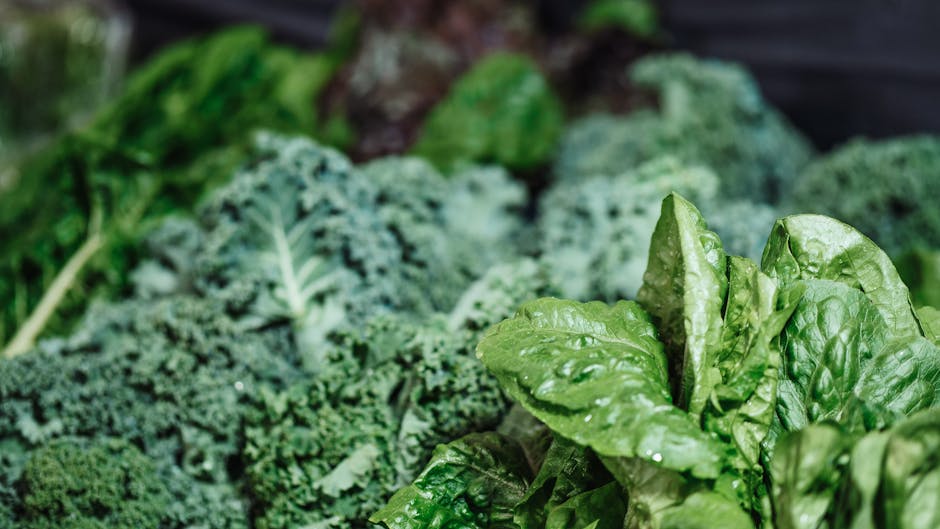
| Kale, raw | 6,261 | 168421 | Falls to ~3,500–4,000 µg cooked depending on method |
| Spinach, raw | 12,198 | 168462 | Cooked spinach is higher per 100 g due to water loss |
| Spinach, cooked from frozen | 15,690 | 169287 | Concentration effect after thawing and reheating |
| Turnip greens, raw | 8,440 | 170406 | Often overlooked in supermarket aisles |
| Collards, raw | 7,694 | 170406 | Comparable to kale, milder flavor |
| Parsley, fresh | 5,561 | 170416 | Garnish-size servings still add up |
| Romaine lettuce | 2,312 | 168561 | Workhorse salad green; volume helps |
| Peas, green, raw | 2,477 | 170419 | Frozen peas retain most carotenoid content |
| Pistachios, raw | 1,205 | 170184 | One of the few nuts with measurable values |
| Corn, yellow, raw | 644 | 169998 | Where zeaxanthin specifically dominates the ratio |
| Egg yolk, raw | ~380 per 2 yolks | 171287 | Highly bioavailable due to lipid matrix |
| Summer squash, zucchini | 2,125 | 169291 | Skin holds most of the pigment |
A few engineering observations from running this query across the full FDC dataset:
- Cooked spinach values are higher per 100 g than raw because cooking concentrates mass — useful per-100g, but per-cup comparisons flip.
- Corn is the standout when the zeaxanthin share matters: peer-reviewed work pegs corn's ratio at roughly 60% zeaxanthin to 40% lutein, the inverse of leafy greens.
- Egg yolks have low absolute numbers but punch above their weight on bioavailability — more on that below.
- Pistachios are the only commonly eaten nut with a USDA entry above 1,000 µg per 100 g.
Daily intake — what the AREDS2 trial measured
There is no Recommended Dietary Allowance (RDA) for lutein or zeaxanthin in the United States. The Institute of Medicine has not set one, which is why the NIH fact sheet linked above lists no Dietary Reference Intake. The number most often cited comes from the second Age-Related Eye Disease Study, run by the NEI from 2006 to 2012. AREDS2 tested a daily supplement containing 10 mg of lutein and 2 mg of zeaxanthin in adults with intermediate AMD, alongside other antioxidants and zinc. The NEI summary of AREDS2 reports a modest but measurable reduction in progression to advanced AMD compared with the original AREDS formula that used beta-carotene instead.
10 mg = 10,000 µg. Looking back at the table, a 100 g serving of cooked spinach delivers roughly 15 mg from food alone — more than the AREDS2 daily dose. The catch is the second column the table does not show: actual absorption. AREDS2 used a free lutein supplement formulated for bioavailability. Whole-food values are gross amounts before the body processes them.
Bioavailability — why raw spinach is not equal to cooked egg
Lutein and zeaxanthin are fat-soluble. They cross the intestinal wall by hitching a ride on mixed micelles that form when dietary fat triggers bile release. A 2004 study published in the Journal of Nutrition (PubMed 15531662) found that lutein bioavailability from egg yolk was substantially higher than from cooked spinach or a lutein supplement, despite the spinach delivering more total micrograms. The mechanism is the lipid environment: egg yolk delivers lutein already dissolved in fat, while plant lutein is locked inside chloroplast membranes that the gut has to break down first.
Practical takeaways the AAO eye health and nutrition page consistently echoes:
- Eat carotenoid-rich vegetables with a source of fat — olive oil, avocado, nuts, or eggs.
- Light cooking (steaming, sautéing) ruptures plant cells and improves carotenoid release versus raw.
- Variety matters more than volume — egg yolks, corn, leafy greens, and orange peppers each contribute different ratios of the two pigments.
What USDA data cannot tell you
Aggregating nutritional data for 1,465+ foods taught me to be honest about the ceiling of food-database analysis. The lutein + zeaxanthin column has at least four blind spots:
- Cultivar variation. A single "kale, raw" record represents an average across samples. Lacinato kale, curly kale, and red Russian kale can vary by 40% or more between varieties, per the agricultural literature.
- Growing conditions. Light exposure, nitrogen fertilization, and harvest timing all change carotenoid concentrations. USDA averages mask the range.
- Storage time. Lutein degrades in light and oxygen. A spinach bag opened five days ago will be lower than the FDC number. Frozen vegetables often retain more than refrigerated.
- Individual absorption. Genetic differences in BCO1 and other enzymes affect how much usable pigment each person extracts from the same meal.
None of this invalidates the USDA numbers — it just means the column is a starting point, not a personal forecast.
An engineer's checklist for reading carotenoid claims
From an engineering perspective, the USDA database structure reveals how easy it is for a wellness article to overstate a single number. When evaluating any "best foods for eye health" claim online, the checklist I now use is:
- Is the value lutein only, or lutein + zeaxanthin? Most claims silently use the combined number while labeling it "lutein".
- Is it per 100 g, per cup, or per serving? Spinach jumps from 12 mg per 100 g to 20+ mg per cooked cup once water loss is factored in.
- Is the food cooked or raw? Both can be valid — they answer different questions.
- Does the article cite a USDA FDC ID? If yes, you can verify in 30 seconds. If no, the number could be from a single 1998 paper.
- Is the recommendation framed as "for AMD prevention"? Only AREDS2 has trial-grade evidence, and that was in adults with intermediate AMD, not the general population.
Supplements vs. food — what the agencies actually say
The NIH fact sheet and the AAO position pages both stop short of recommending lutein supplements for the general public. They acknowledge AREDS2 evidence for adults with diagnosed intermediate AMD and recommend speaking with an ophthalmologist for that population. For everyone else, dietary patterns rich in green and yellow vegetables, eggs, and healthy fats are the consistent recommendation — not because supplements are unsafe, but because trial evidence for prevention in healthy eyes is thin.
Mayo Clinic's macular degeneration overview takes the same position: a balanced eating pattern including dark leafy greens and fish is part of the standard guidance, while supplements are reserved for diagnosed cases under clinician supervision.
What I changed in HealthSavvyGuide's data layer
After working through these records, I made one practical change in the aggregator. The food detail page now flags nutrient 338 with a footnote explaining that the value combines lutein and zeaxanthin rather than reporting lutein alone. The footnote links to the NIH carotenoid fact sheet so readers can verify the science independently. Small change, but it removed a category of false-precision claim that was bleeding into the SEO-driven content around macular health. Honest labeling is not glamorous, but it is what an aggregator built on a public-domain database owes its users.
Sources
- National Institutes of Health, Office of Dietary Supplements — Carotenoids fact sheet. ods.od.nih.gov/factsheets/Carotenoids-HealthProfessional
- National Eye Institute — Age-Related Macular Degeneration overview and AREDS/AREDS2 summary. nei.nih.gov
- American Academy of Ophthalmology — Diet, Nutrition and Eye Health. aao.org
- USDA FoodData Central — public food and nutrient database. fdc.nal.usda.gov
- Chung HY et al., "Lutein bioavailability is higher from lutein-enriched eggs than from supplements and spinach in men." Journal of Nutrition, 2004. PubMed 15531662.
- Mayo Clinic — Macular degeneration. mayoclinic.org
Medical disclaimer (repeated): The content on HealthSavvyGuide, including this article, is for informational and educational purposes only and is not a substitute for professional medical advice, diagnosis, or treatment. If you are concerned about your vision, AMD risk, or considering carotenoid supplementation, speak with a licensed ophthalmologist or registered dietitian. Do not rely on aggregated food data to make medical decisions.
Found this helpful?
Subscribe to our newsletter for more in-depth reviews and comparisons delivered to your inbox.