Potassium and Blood Pressure: What USDA FoodData Central Data Reveals About This Underrated Mineral
Medical Disclaimer: This article is for informational purposes only and is not medical advice. It does not substitute for professional medical consultation, diagnosis, or treatment. Always consult a qualified healthcare provider before making changes to your diet, especially if you have a medical condition such as kidney disease or take medications for blood pressure.
When I started building HealthSavvyGuide on top of the USDA FoodData Central API, I expected to spend most of my time thinking about macronutrients — protein, carbs, fat. Instead, what kept jumping out from the data was potassium. Specifically, how consistently it appeared as an under-reported nutrient in the foods Americans actually eat versus the foods that top the nutrient density rankings in the USDA database.
The USDA FoodData Central database contains nutrient profiles for over 1,400 foods. Potassium is tracked under Nutrient ID 1092 in the newer SR Legacy / Foundation Foods datasets. When you sort foods by potassium density and cross-reference them against typical American dietary patterns pulled from CDC's NHANES surveys, a clear gap appears — and it has real implications for cardiovascular health.
This article walks through what the data actually shows: where potassium is concentrated in whole foods, what current research says about its relationship to blood pressure, and why the gap between recommended intake and average consumption is wider than most people realize.
What Potassium Actually Does in the Body
Potassium is an electrolyte — a mineral that carries an electrical charge — and it plays several roles that are critical to heart and vascular function. The two most relevant to blood pressure:
- Sodium-potassium balance: The kidneys use a sodium-potassium pump to regulate fluid and sodium levels. When potassium intake is adequate, the kidneys excrete more sodium in urine, which reduces fluid volume and lowers pressure on arterial walls. According to the NIH National Heart, Lung, and Blood Institute, this mechanism is one of the primary dietary levers for blood pressure management.
- Vasodilation: Potassium promotes relaxation of blood vessel walls (vasodilation), which reduces vascular resistance. This is separate from the sodium-flushing effect and acts directly on smooth muscle in arterial walls.
The World Health Organization notes that hypertension affects approximately 1.28 billion adults aged 30–79 worldwide and is a leading risk factor for heart attack and stroke. Dietary potassium intake is among the modifiable factors identified in WHO's guidelines on reducing cardiovascular risk.
The Intake Gap: Where Most Adults Fall Short
The National Academies of Sciences, Engineering, and Medicine set the Adequate Intake (AI) for potassium at 2,600 mg/day for adult women and 3,400 mg/day for adult men — updated in the 2019 DRI revision. These targets reflect intakes associated with reduced blood pressure and kidney stone risk in healthy adults.
Data from the CDC's National Health and Nutrition Examination Survey (NHANES) consistently shows that median potassium intake among U.S. adults hovers around 2,300–2,600 mg/day — meaning most women are near the threshold while most men fall meaningfully short. The gap is not enormous in raw numbers, but it is persistent across age groups and demographic categories.
One reason for this gap, visible in the USDA data: the highest-potassium foods (legumes, certain vegetables, some fish) are not the most frequently consumed foods. When building the nutrient aggregation layer for HealthSavvyGuide, I noticed that potassium-dense foods are clustered in food categories with relatively low consumption frequency in the NHANES intake data — particularly cooked legumes and dried fruit.
Top Potassium Food Sources: What the USDA Data Shows
The following data is pulled from USDA FoodData Central (Foundation Foods and SR Legacy datasets), queried via the FoodData Central API using Nutrient ID 1092. Values are per 100 grams of food unless noted.
| Food | FDC ID | Potassium (per 100g) | Typical Serving |
|---|---|---|---|
| Dried apricots | 168874 | 1,162 mg | ~581 mg / 50g (¼ cup) |
| White beans, cooked | 175203 | 561 mg | ~900 mg / 160g (¾ cup) |
| Baked potato, skin on | 170030 | 535 mg | ~962 mg / 180g (1 medium) |
| Sweet potato, baked with skin | 168482 | 475 mg | ~617 mg / 130g (1 medium) |
| Spinach, cooked | 168463 | 466 mg | ~420 mg / 90g (½ cup) |
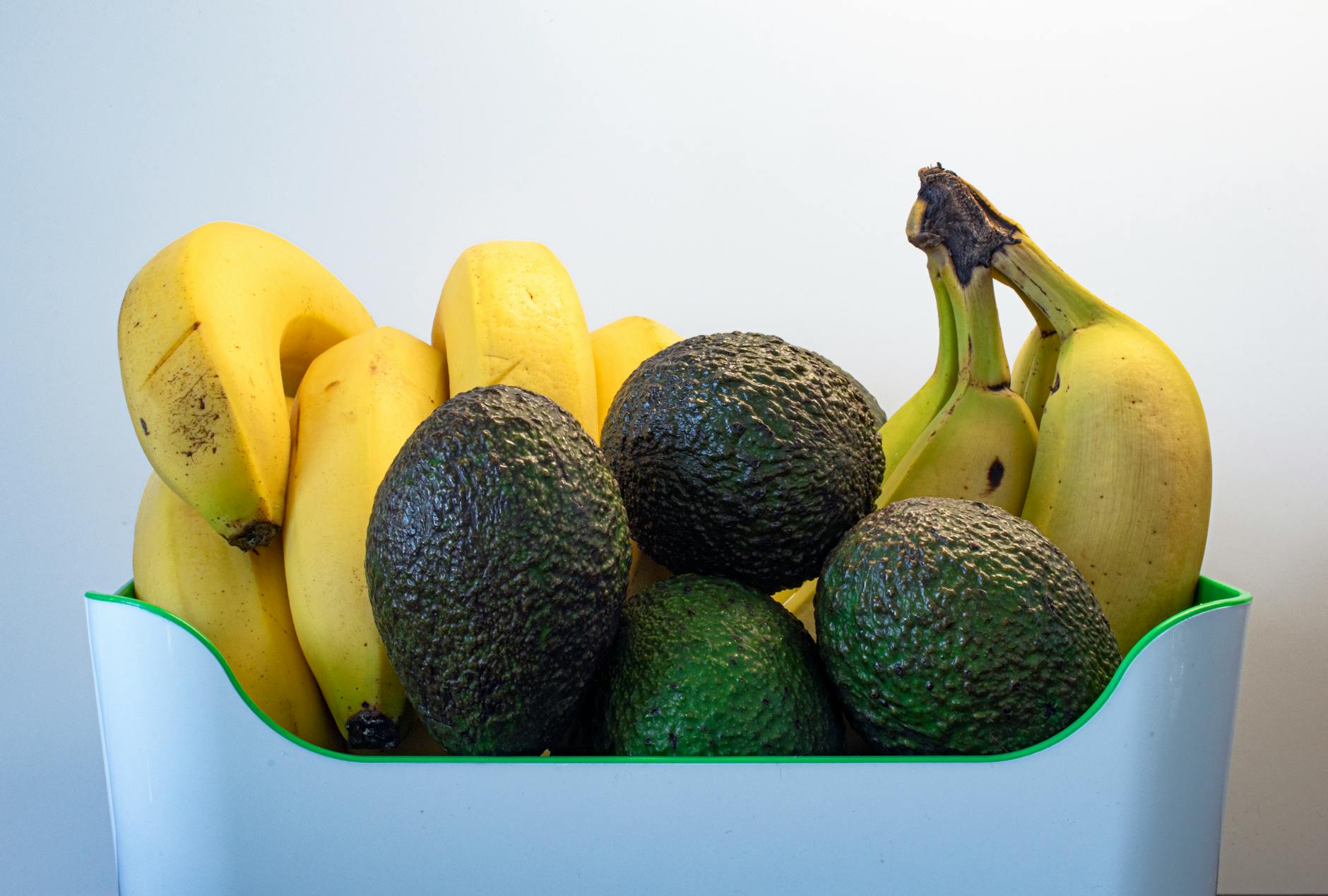
| Avocado, raw | 171705 | 485 mg | ~485 mg / 100g (½ medium) |
| Salmon, Atlantic, farmed, cooked | 175167 | 426 mg | ~362 mg / 85g (3 oz) |
| Banana, raw | 173944 | 358 mg | ~422 mg / 118g (1 medium) |
| Yogurt, plain, whole milk | 171284 | 155 mg | ~370 mg / 245g (1 cup) |
One pattern I noticed when building the nutrient ranking feature for HealthSavvyGuide: the foods at the top of the potassium list are almost uniformly whole, minimally processed foods. Processed and packaged foods — which dominate caloric intake in many NHANES profiles — tend to have high sodium and low potassium, the opposite of what the cardiovascular system benefits from.
Potassium and the DASH Diet Connection
The DASH (Dietary Approaches to Stop Hypertension) eating plan, developed by the NIH, was designed specifically to test dietary modifications against blood pressure outcomes. A central feature of DASH is high potassium from whole food sources — fruits, vegetables, legumes, and low-fat dairy.
Clinical trials on DASH have shown blood pressure reductions of 8–14 mmHg systolic in adults with hypertension, which is within the range of some antihypertensive medications. The American Heart Association recommends a dietary potassium intake of 3,500–5,000 mg/day for adults managing blood pressure, from food sources rather than supplements when possible.
It is worth noting that these are population-level dietary recommendations, not individual prescriptions. Anyone managing a diagnosed cardiovascular condition should work with a healthcare provider on a specific plan.
Why Cooking Method Changes the Numbers
This is a detail I found interesting in the USDA dataset that doesn't get enough attention: cooking method has a significant effect on potassium content in vegetables.
Potassium is water-soluble. Boiling vegetables in large amounts of water and discarding the cooking liquid can reduce potassium content by 30–70%, depending on the food and cooking duration. The USDA's SR Legacy data tracks this: boiled spinach without draining loses significantly more potassium than steamed or sautéed spinach.
Practical implication for the foods in the table above:
- Potatoes: Baking with skin intact preserves most potassium. Boiling peeled potatoes and draining significantly reduces it.
- Legumes: Canned beans retain most potassium (it stays in the bean, not leached into the brine), and rinsing them only reduces sodium, not potassium meaningfully.
- Leafy greens: Steaming or sautéing with minimal water preserves more potassium than boiling.
The Kidney Caution
Any discussion of potassium intake must include this: for people with chronic kidney disease (CKD), high potassium intake can be dangerous rather than beneficial. Healthy kidneys regulate potassium excretion tightly, but impaired kidneys may allow potassium to accumulate in blood (hyperkalemia), which can affect heart rhythm.
The National Institute of Diabetes and Digestive and Kidney Diseases (NIDDK) notes that people with CKD often need to limit potassium-rich foods. This is an important reason why individual dietary guidance from a healthcare provider matters — population-level recommendations do not automatically apply to every individual.
Potassium Supplements vs. Food Sources
The NIH Office of Dietary Supplements notes that potassium supplements are limited to doses of 99 mg per tablet in the U.S. — far below the daily adequate intake. This is partly because high-dose potassium supplementation can cause gastrointestinal distress and, in people with kidney disease or those taking certain medications, dangerous elevations in blood potassium.
The practical takeaway from the USDA data is that food sources are both safer and more effective than supplements for reaching adequate intake. A single baked potato provides nearly 1,000 mg of potassium — more than 10 of the standard 99 mg supplement tablets.
Building Potassium Awareness Into a Normal Eating Pattern
When I built the nutrient gap calculator for HealthSavvyGuide, I ran sample meal plans through the USDA FoodData Central data to see how easily 3,000+ mg of potassium could be reached through whole foods. The results were straightforward:
- 1 medium baked potato with skin: ~962 mg
- 1 cup cooked white beans: ~900 mg
- 1 medium banana: ~422 mg
- ½ cup cooked spinach: ~420 mg
- Total from four items: ~2,704 mg
Adding an avocado, a serving of salmon, or some plain yogurt brings the total to or above the daily adequate intake without any supplementation. The challenge isn't nutritional complexity — it's food pattern habits and the displacement of high-potassium whole foods by processed alternatives.
What the USDA Data Doesn't Tell You
One limitation of any nutrient database approach — and I say this as the engineer who built on top of it — is that bioavailability varies. The USDA data represents total potassium content, not necessarily absorbed potassium. While potassium bioavailability from food is generally high (70–90% for most whole food sources, according to NIH ODS), individual variation exists based on gut health, medication use, and other factors.
The database also doesn't account for the synergistic effects of whole food matrices — the combination of fiber, water content, and other minerals in whole foods may affect how potassium is absorbed and utilized compared to isolated supplements.
Key Takeaways
- USDA FoodData Central data shows the highest potassium concentrations in dried fruit, cooked legumes, potatoes, and certain fish — all whole foods.
- Most U.S. adults fall below the adequate intake for potassium, particularly men (AI: 3,400 mg/day).
- Potassium supports blood pressure through two mechanisms: increasing urinary sodium excretion and promoting vasodilation.
- Cooking method matters — boiling and draining vegetables can cut potassium content significantly.
- People with kidney disease should consult a healthcare provider before increasing potassium intake.
- Whole food sources are more effective and safer than supplements for meeting daily potassium needs.
Sources
- USDA FoodData Central — fdc.nal.usda.gov — Nutrient ID 1092 (Potassium)
- NIH Office of Dietary Supplements — Potassium Fact Sheet for Health Professionals — ods.od.nih.gov
- WHO — Hypertension Fact Sheet — who.int
- NIH NHLBI — DASH Eating Plan — nhlbi.nih.gov
- American Heart Association — Potassium and Blood Pressure — heart.org
- CDC NHANES — National Health and Nutrition Examination Survey — cdc.gov
- NIDDK — Eating and Nutrition for CKD — niddk.nih.gov
Found this helpful?
Subscribe to our newsletter for more in-depth reviews and comparisons delivered to your inbox.