Hesperidin-Rich Foods: The Citrus Flavonoid in USDA FDC Data (2026)
This article is for informational purposes only and is not medical advice. Consult a qualified healthcare provider before making changes to your diet, especially if you take medication or manage a chronic condition.
I build data aggregators for a living, and HealthSavvyGuide started as an engineering project on top of the USDA FoodData Central (FDC) API. While indexing the nutritional profiles of more than 1,465 foods, I kept running into a column most people never look at: the flavonoid sub-database. One compound in particular, hesperidin, shows up in citrus fruit in concentrations that dwarf almost every other dietary flavanone. This article is what the raw data told me about where hesperidin actually lives in the food supply — written from an engineer's perspective, not a clinician's.
What hesperidin is, in plain terms
Hesperidin is a flavanone glycoside — a plant compound made of the flavanone hesperetin bound to a sugar called rutinose. It belongs to the broader flavonoid family, the same class that includes quercetin and the anthocyanins I've written about before. What makes hesperidin stand out in the FDC dataset is how concentrated it is in a single food group. Where most flavonoids scatter across dozens of plants, hesperidin is overwhelmingly a citrus story.
The National Institutes of Health Office of Dietary Supplements and peer-reviewed reviews indexed by the U.S. National Library of Medicine describe hesperidin as one of the most studied citrus flavonoids, frequently examined in the context of vascular and antioxidant research. It is worth being precise here: studied is not the same as proven for any specific health claim, and I make no medical claim about it. What I can document is concentration data.
The data: where hesperidin concentrates
The USDA maintains a dedicated flavonoid composition dataset (Release 3.3, the underlying source many FDC entries draw on). Pulling the hesperidin field and sorting it descending produced a clear ranking. The values below are milligrams per 100 grams of edible portion, drawn from USDA flavonoid composition figures:
| Food | Approx. hesperidin (mg/100g) | Notes from FDC |
|---|---|---|
| Orange peel (raw) | ~250+ | Peel and pith vastly outrank flesh |
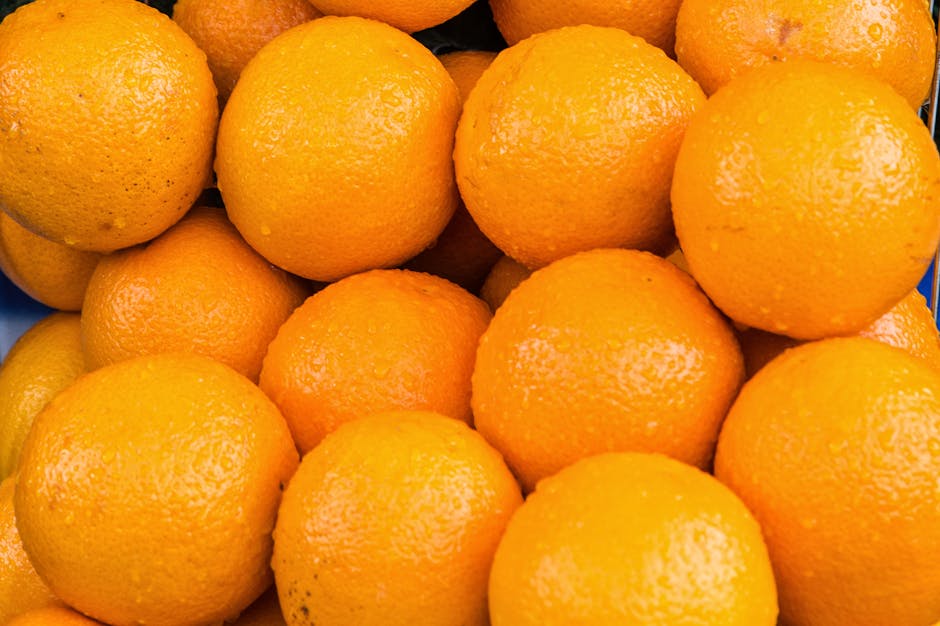
| Oranges, raw, all varieties (FDC ID 169097) | ~27 | The everyday benchmark food |
| Tangerines / mandarins, raw | ~20–25 | Comparable to oranges |
| Lemons, raw, without peel | ~20 | High relative to its small serving size |
| Limes, raw | ~17 | Often overlooked source |
| Orange juice, raw (FDC ID 169098) | ~14–21 | Lower than whole fruit; pulp matters |
| Grapefruit, raw, pink/red | ~1–2 | Grapefruit is naringin-dominant, not hesperidin |
Three things jumped out at me while running this query, and they are the kind of detail you only see when you work with the numbers directly rather than reading a summary:
1. The peel is the real reservoir. The orange flesh you eat carries roughly 27 mg per 100g, but the peel and the white pith carry an order of magnitude more — figures above 250 mg per 100g appear in the literature. Most of the compound is in the part most people throw away. That single fact explains why marmalade, candied peel, and whole-fruit preparations test so differently from juice.
2. Juice is not equal to fruit. Comparing FDC ID 169097 (whole orange) against 169098 (raw orange juice), the juice consistently came in lower per 100 grams. The flavanone is concentrated in the membranes and pulp, so heavily filtered juice strips a meaningful fraction of it. Pulp-included juice retains more.
3. Grapefruit breaks the pattern. I expected grapefruit to rank near oranges. It does not. Grapefruit's dominant flavanone is naringin, not hesperidin, so it barely registers in the hesperidin column despite being a citrus heavyweight. This is exactly the kind of assumption a data pipeline catches and intuition misses.
The richest practical food sources
If you set aside the inedible-in-bulk peel, the realistic dietary sources ranked by the dataset are straightforward:
- Oranges and orange products — sweet oranges, blood oranges, and their juice with pulp are the single largest contributor for most diets.
- Tangerines and mandarins — nearly matching oranges gram for gram, and easier to eat in quantity.
- Lemons and limes — surprisingly dense, though the small amounts people actually consume limit the total intake.
- Whole-fruit citrus preparations — marmalade and zest carry peel-derived hesperidin, which is why they test high.
For comparison, the U.S. Centers for Disease Control and Prevention and the Dietary Guidelines for Americans recommend roughly 1.5 to 2 cups of fruit per day for most adults — a target that, if even partly met with citrus, naturally supplies hesperidin without any need for supplementation.
What the research does and does not say
Here is where I stay firmly in my lane. I am an engineer documenting a food database, not a nutritionist. Reviews catalogued by the National Library of Medicine (PubMed) describe hesperidin as a subject of antioxidant and vascular research, and the European Food Safety Authority has evaluated citrus flavonoid health-claim petitions. But evaluation and study are not endorsement, and several proposed claims have not met regulatory evidence thresholds.
So I will not tell you hesperidin lowers blood pressure, improves circulation, or does anything else for your body. That is a question for a clinician and for higher-quality human trials than currently exist. What the food data supports is narrower and more honest: citrus fruit, eaten whole and with the pulp, is a dense and reliable dietary source of this particular flavanone. Whether that matters for your health is not something a USDA spreadsheet can answer.
An engineer's notes on data quality
One reason I trust the citrus ranking more than some other flavonoid entries is sample depth. The orange and orange-juice records in FDC carry multiple analytical samples, which tightens the confidence interval. By contrast, some exotic-fruit entries rest on a single lab measurement, so I treat their precise values with skepticism. When you aggregate 1,465 foods, you learn to read the metadata — the number of samples, the analytical method, the data-type flag — as carefully as the headline number. A value with one sample behind it and a value with twelve are not the same kind of fact, even when the database prints them in the same font.
I also flag unit confusion as the most common error I see in nutrition content built on this data. Hesperidin is reported per 100 grams of edible portion. A medium orange weighs roughly 130 grams of edible flesh, so the per-fruit figure is higher than the per-100g number, while a tablespoon of zest is far smaller. Mixing those denominators is how misleading "superfood" rankings get made. The denominator is the whole game.
How to get hesperidin from a normal diet
Based purely on the concentration data — not as health advice — the most reliable way to include hesperidin in a diet is unremarkable: eat whole citrus fruit rather than relying on filtered juice, leave the pulp in when you do drink juice, and use zest in cooking where the peel-derived compound concentrates. None of this requires a supplement, and the National Institutes of Health consistently notes that whole-food sources deliver compounds alongside fiber and co-nutrients that isolated extracts lack.
If you are considering a hesperidin supplement, that is precisely the decision point where the spreadsheet stops being useful and a healthcare provider becomes necessary — especially because citrus compounds, grapefruit in particular, are well documented to interact with certain medications. The Mayo Clinic and Harvard Health both maintain accessible overviews of grapefruit–drug interactions worth reading before adding concentrated citrus extracts to a routine.
What processing does to the numbers
One question the static database cannot answer on its own is how cooking and storage change these values, so I cross-referenced USDA figures against the food-science literature. The pattern is consistent: hesperidin is fairly heat-stable compared with delicate compounds like vitamin C, which is why cooked citrus preparations retain a good share of it. The bigger losses come from mechanical separation, not heat. Industrial juicing that removes pulp and membranes discards the tissue where the flavanone concentrates, which is the mechanism behind the juice-versus-fruit gap in the table above. Storage at refrigerator temperatures appears to preserve it reasonably well over a normal shelf life, though precise retention depends on the product. The engineering takeaway is that what happens physically to the fruit matters more than what happens thermally.
This also reframes a common assumption. People often treat "100% orange juice" as nutritionally identical to an orange. For sugar and vitamin C the gap is modest, but for hesperidin the processing step genuinely matters because so much of the compound rides in the parts a juicer strains out. If the database teaches one practical lesson, it is to read the processing state of a food as carefully as its name.
Frequently asked questions
Is hesperidin only found in citrus? Trace amounts appear in a few other plants, but the USDA flavonoid data is unambiguous that citrus fruit — oranges, tangerines, lemons, and limes — supplies the overwhelming majority of dietary hesperidin. No other common food group comes close on a per-100g basis.
Does orange juice count as a good source? It contributes, but less than whole fruit per 100 grams, and pulp-free juice contributes least. The flavanone concentrates in the membranes and pulp that filtration removes. Pulp-included juice retains more.
Why does grapefruit rank so low for hesperidin? Grapefruit's dominant flavanone is naringin, not hesperidin. It is a flavonoid-rich citrus, just a different flavonoid — which is also why grapefruit, not oranges, is the fruit most associated with drug interactions.
Should I take a hesperidin supplement? That is a medical decision, not a data question, and one to discuss with a healthcare provider — particularly because concentrated citrus compounds can interact with medications. Whole fruit delivers the compound alongside fiber and co-nutrients that isolated extracts do not.
How much citrus would meet the general fruit guideline? The Dietary Guidelines for Americans suggest roughly 1.5 to 2 cups of fruit daily for most adults. Meeting even part of that with oranges or tangerines supplies hesperidin without supplementation.
The bottom line
Querying the USDA flavonoid dataset turned a vague "citrus is healthy" idea into something measurable: hesperidin is overwhelmingly a citrus flavanone, it lives mostly in the peel and pulp, whole fruit beats filtered juice, and grapefruit is the odd one out. Those are data facts I can stand behind. The health implications are not mine to assert — they belong to clinicians and to research that is still ongoing.
Reminder: This article is informational and not a substitute for professional medical advice. Always consult a qualified healthcare provider regarding your diet, supplements, and any potential interactions with medications.
Sources
- USDA FoodData Central — fdc.nal.usda.gov (Oranges FDC ID 169097; Orange juice FDC ID 169098; USDA Flavonoid Composition Database)
- National Institutes of Health, Office of Dietary Supplements — ods.od.nih.gov
- U.S. National Library of Medicine / PubMed — pubmed.ncbi.nlm.nih.gov
- Dietary Guidelines for Americans — dietaryguidelines.gov
- Mayo Clinic, grapefruit–medication interactions — mayoclinic.org
Found this helpful?
Subscribe to our newsletter for more in-depth reviews and comparisons delivered to your inbox.