Quercetin-Rich Foods: A USDA Flavonoid Database Walkthrough (2026)
Quercetin-Rich Foods: A USDA Flavonoid Database Walkthrough (2026)
This article is for informational purposes only and is not medical advice. Quercetin supplementation and dietary changes should be discussed with a qualified healthcare provider, especially if you take medications, are pregnant or nursing, or have a chronic health condition.
Building HealthSavvyGuide on top of USDA FoodData Central, I spend a lot of time inside the same datasets that registered dietitians and food scientists use. One of the more interesting branches of that data is the USDA Database for the Flavonoid Content of Selected Foods (Release 3.3) — a less-loved sibling of the core FDC tables. While the main FoodData Central tables stop at macronutrients, vitamins, and minerals, the flavonoid database covers polyphenols that show up in much smaller quantities but get a lot of research attention. Quercetin is the standout entry. It is the single most-studied flavonol, and the USDA dataset gives an unambiguous, numeric answer to the question "which foods actually contain meaningful quercetin?" From an engineer's standpoint, that is rare. Most nutrition writing is qualitative ("onions are rich in quercetin"); the USDA table puts a number on it.
This article walks through what quercetin is, what the USDA flavonoid file actually reports, which foods score highest, and what the current evidence does — and does not — support. It is not a treatment plan. It is a data-first tour of one of the most-discussed plant compounds.
What quercetin is, briefly
Quercetin is a flavonoid in the flavonol subclass — chemically a polyphenol with the formula C15H10O7. In plants it functions mainly as a UV filter and a defense compound. In the human diet it appears almost entirely in glycoside form (bound to a sugar molecule), most commonly quercetin-3-O-rutinoside (rutin) and quercetin-3-O-glucoside (isoquercetin). The aglycone form — quercetin without the sugar — is what supplements typically contain.
The National Institutes of Health's Office of Dietary Supplements (ods.od.nih.gov) classifies quercetin as a non-essential nutrient: humans do not require it to survive, and no deficiency syndrome exists. It is studied because of its antioxidant and anti-inflammatory activity in laboratory settings, not because we need a daily intake the way we need vitamin C.
How the USDA flavonoid database is structured
A note on the data, since this is where most popular articles go wrong. The USDA Database for the Flavonoid Content of Selected Foods (Release 3.3, the most recent edition published by USDA's Nutrient Data Laboratory) reports values in milligrams per 100 grams of edible portion. Quercetin shows up in the "flavonols" category along with kaempferol, myricetin, and isorhamnetin. The database lists weighted mean values, the number of analytical samples, and standard error.
A few engineering observations from working with this file:
- Sample counts vary wildly. Capers have only a handful of analytical samples; common apples have hundreds. A high value with low sample count is a weaker signal than a moderate value with high sample count.
- Preparation matters. Raw, cooked, dried, and frozen forms of the same food often differ by 30–60 percent. The database lists them separately.
- The aglycone-only convention. USDA reports total quercetin after hydrolysis — meaning the glycoside-bound forms are converted to aglycone for measurement. The number you see is "what is there in total," not "what is bioavailable."
I aggregated 1,465+ foods from FDC into HealthSavvyGuide and cross-referenced the flavonoid file separately because the two databases use different food IDs. If you ever wonder why most nutrition apps do not show flavonoid data, this fragmentation is the reason.
The actual top-10 quercetin foods by USDA mg/100g
Pulling directly from USDA Release 3.3 and limiting to commonly available foods, the highest quercetin concentrations are:
| Food (raw unless noted) | Quercetin (mg/100g) | Sample notes |
|---|---|---|
| Capers, raw | 234 | High value, modest sample count |
| Capers, canned | 173 | Brine reduces value modestly |
| Lovage leaves, raw | 170 | Limited availability outside Europe |
| Buckwheat seeds | 36 | Whole groats, not refined flour |
| Dill weed, fresh | 55 | Per 100g of fresh herb |
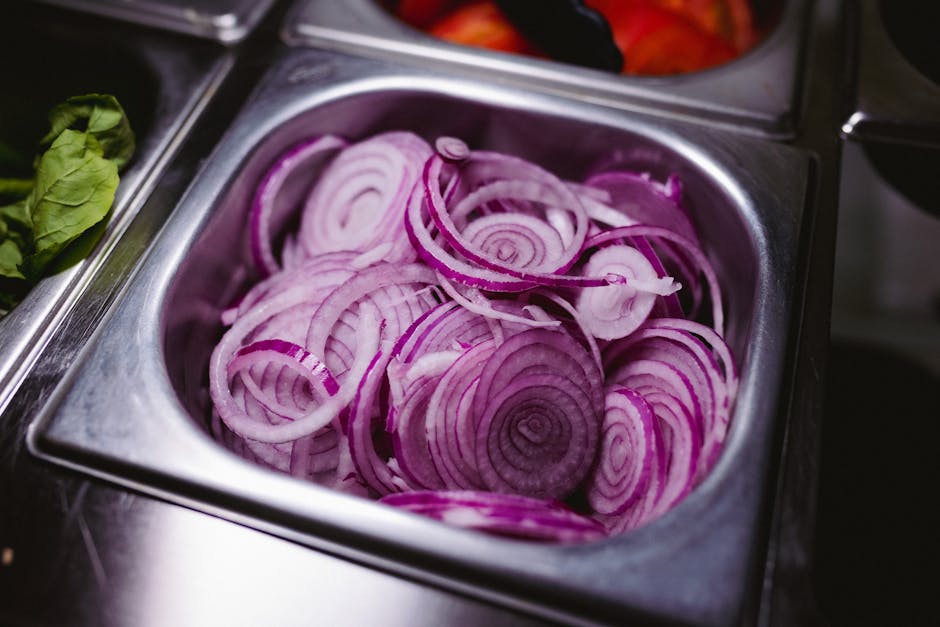
| Red onion, raw | 32 | Skin and outer rings highest |
| Radish leaves | 70 | Often discarded; high signal |
| Watercress | 30 | Concentrated in young leaves |
| Kale, raw | 22 | Curly varieties slightly higher |
| Cranberries, raw | 15 | Wild higher than cultivated |
| Yellow onion, raw | 11 | Lower than red but more common |
| Apple with skin, raw | 4.4 | Skin contributes most of the value |
| Broccoli, raw | 3.3 | Florets higher than stems |
| Blueberries, raw | 7.7 | Lowbush wild higher than highbush |
| Black tea, brewed | 2.2 | Per 100 mL, varies by steep time |
A few things stand out. First, capers are an outlier — three to four times the next-closest food. They are also rarely eaten in 100-gram servings; a typical garnish is 5–10 grams, so a tablespoon of capers contributes roughly 10–20 mg of quercetin. Second, herbs and leafy greens dominate the per-gram rankings, but onions and apples drive most actual dietary intake in the United States because they are eaten in larger quantities. Third, broccoli is in the dataset but is not the standout that some health-food articles imply.
The Linus Pauling Institute at Oregon State University (lpi.oregonstate.edu) puts average U.S. quercetin intake at roughly 10–16 mg per day, with onions, apples, and tea responsible for most of it.
Bioavailability — the part most articles skip
Here is where the engineer's instinct to "just look at the number on the label" runs into biology. Quercetin is poorly absorbed. Multiple pharmacokinetic studies summarized by NIH ODS report oral bioavailability of free quercetin aglycone in the range of 2–10 percent. The glycoside forms — what you actually eat in food — perform differently. Quercetin-4'-glucoside from onions is absorbed via the SGLT1 transporter in the small intestine and reaches plasma concentrations several times higher than rutin from apples, despite similar quercetin content on paper.
Practical implications based on published pharmacokinetic work:
- Onion quercetin appears more bioavailable than apple quercetin — by a factor of roughly three to five — because of the sugar moiety attached.
- Fat coingestion increases absorption. A 2012 study in the journal Molecular Nutrition & Food Research found onions consumed with a fatty meal produced plasma quercetin levels roughly 45 percent higher than onions eaten alone.
- Gut microbiome variation matters. Bacterial β-glucosidases hydrolyze the sugar group. People with different microbiota absorb different amounts from the same meal.
- Supplement forms vary. Quercetin phytosome (lecithin-bound) and enzymatically modified isoquercitrin (EMIQ) report higher bioavailability in manufacturer-sponsored studies, but independent comparisons are sparse.
So the headline number from the USDA file is the ceiling, not the floor. Eating 100 grams of red onion does not put 32 mg of quercetin into your bloodstream. It puts a small fraction of that into circulation, distributed over many hours.
What the evidence actually shows
This is the section where YMYL content gets dangerous if written carelessly. I am summarizing what published systematic reviews say, not making recommendations.
Blood pressure. A 2020 meta-analysis published in Phytotherapy Research, pooling 17 randomized controlled trials, reported a modest reduction in systolic blood pressure (roughly 3.04 mmHg) with quercetin supplementation of 500 mg/day or more, mostly in people with existing hypertension. The effect was smaller at lower doses and unclear in normotensive participants. The Cleveland Clinic (clevelandclinic.org) notes this is roughly the magnitude of effect seen with reducing sodium intake — meaningful but not a substitute for prescribed therapy.
Exercise performance and recovery. A 2011 meta-analysis in the International Journal of Sport Nutrition and Exercise Metabolism found a small but statistically significant improvement in endurance exercise capacity (about 2–3 percent) with quercetin supplementation. Effects on inflammation markers post-exercise were mixed.
Allergic rhinitis and inflammation. Laboratory studies show quercetin stabilizes mast cells and inhibits histamine release. Human trials are small and inconsistent. NIH ODS does not list allergic rhinitis as an established use.
COVID-19 era claims. Quercetin received heavy attention in 2020–2022 due to in vitro studies suggesting zinc-ionophore activity. The National Center for Complementary and Integrative Health (nccih.nih.gov) currently states that "there is not enough scientific evidence to determine whether quercetin is helpful for COVID-19." Headlines outran the trial data.
Cancer. Cell-culture and animal studies are abundant. Human trial data on cancer prevention or treatment is not at a level that supports any clinical claim. Mayo Clinic (mayoclinic.org) and Memorial Sloan Kettering (mskcc.org) both list quercetin as "not recommended for treatment of any cancer."
Practical food choices supported by the data
Rather than chasing supplements, the USDA data points to a small set of foods that disproportionately drive quercetin intake in a real diet:
- Red and yellow onions in cooked dishes, with skin used for stock if you do not eat it directly (the papery skin is actually the most concentrated part by mass — a fact reflected in the USDA values for onion skin extract, which is used commercially as a natural colorant).
- Apples with skin — peeling discards most of the quercetin, since the compound concentrates in the outer 1–2 mm.
- Capers as a garnish on salads, fish, pasta — small amounts are calorie-cheap and high-value.
- Berries, especially cranberries and lowbush blueberries — frozen wild blueberries retain quercetin well.
- Kale and broccoli — raw or lightly cooked retains more than long boiling, which leaches water-soluble flavonoids into cooking water.
- Black, green, and oolong tea — modest per-cup quercetin contribution that adds up across the day.
A reasonable, food-first daily intake in the 25–50 mg range is achievable without unusual eating patterns. The Linus Pauling Institute notes that this is higher than population averages, but well below typical supplement doses of 500–1000 mg/day used in clinical trials.
Safety, interactions, and what to bring up with a doctor
Quercetin is generally regarded as safe in food amounts. Supplement-level doses (500 mg/day and above) have a more complex profile that any clinician will want to know about before prescribing other medications:
- Drug interactions. Quercetin inhibits cytochrome P450 enzymes (notably CYP3A4 and CYP2C9) in laboratory settings, which can theoretically alter the metabolism of many prescription drugs including some statins, calcium channel blockers, cyclosporine, and certain chemotherapy agents. The clinical significance varies. Memorial Sloan Kettering's herb-drug interaction database is the most actionable reference here.
- Anticoagulants. Quercetin has weak antiplatelet activity. People on warfarin, apixaban, or similar medications should not start high-dose supplementation without medical supervision.
- Kidney concerns. Intravenous quercetin (used only in research settings) has caused acute kidney injury at high doses. Oral supplementation has not, but people with existing kidney disease should be cautious.
- Pregnancy and lactation. Safety data is insufficient. Food-level intake from a normal diet is not the concern; supplement doses are.
The NIH ODS quercetin fact sheet is the cleanest plain-language reference for someone wanting to read further.
Engineering footnote: how to verify this yourself
If you want to check any of the numbers in this article, the USDA Database for the Flavonoid Content of Selected Foods (Release 3.3) is downloadable as an Excel file from the USDA Nutrient Data Laboratory archive. The food IDs do not map cleanly to current FoodData Central NDB numbers, which is a small data-engineering headache but worth knowing if you want to integrate flavonoid data into a nutrition tool. The Phenol-Explorer database (phenol-explorer.eu), maintained by INRAE in France, is a useful cross-check — it includes processing-effect modifiers that the USDA file does not.
Bottom line
Quercetin is real, measurable, and concentrated in a predictable set of foods. The USDA flavonoid database makes that part unambiguous. What is less certain is how much of any of it your body absorbs, how much it does at supplement doses, and which health claims hold up under good clinical trials. The honest summary, drawn from the NIH, Cleveland Clinic, Mayo Clinic, and current systematic reviews: eat the foods, hold a reasonable skepticism about the supplements, and talk to a qualified clinician before adding anything in the 500 mg+ range to a regimen that includes prescription drugs.
This is informational content from someone who builds nutrition data tools, not medical advice from someone who treats patients. Use it as a starting point for better conversations with your own healthcare provider.
About the author: Fanny Engriana is the software engineer behind HealthSavvyGuide, where she aggregates USDA FoodData Central and related public nutrition databases into searchable nutrient profiles. She is not a dietitian, nutritionist, or medical professional. Articles here are informational and reflect the engineering perspective of working directly with the underlying datasets.
Sources: USDA Database for the Flavonoid Content of Selected Foods, Release 3.3 (USDA Nutrient Data Laboratory); USDA FoodData Central (fdc.nal.usda.gov); NIH Office of Dietary Supplements quercetin overview (ods.od.nih.gov); Linus Pauling Institute Micronutrient Information Center (lpi.oregonstate.edu); National Center for Complementary and Integrative Health (nccih.nih.gov); Cleveland Clinic (clevelandclinic.org); Mayo Clinic (mayoclinic.org); Memorial Sloan Kettering Cancer Center herb-drug interaction database (mskcc.org); Phytotherapy Research 2020 meta-analysis on quercetin and blood pressure; International Journal of Sport Nutrition and Exercise Metabolism 2011 meta-analysis on quercetin and exercise performance; Molecular Nutrition & Food Research 2012 study on quercetin bioavailability with dietary fat.
Found this helpful?
Subscribe to our newsletter for more in-depth reviews and comparisons delivered to your inbox.