Kaempferol-Rich Foods: Why Capers and Kale Top the USDA FDC Flavonoid Data (2026)
This article is for informational purposes only and is not medical advice. Consult a qualified healthcare provider before making changes to your diet, especially if you take medication or manage a chronic condition.
I am a software engineer, not a dietitian. For the past several months I have been building HealthSavvyGuide, a data aggregator that pulls structured nutrition records from the USDA FoodData Central (FDC) API. While indexing flavonoid figures for more than 1,465 foods, one compound kept producing numbers that broke my chart scaling: kaempferol. Most foods sit in the single digits per 100 grams. Then a row for capers came back at roughly 104 mg per 100 g and my y-axis went sideways. That anomaly is what sent me down this rabbit hole, and it is what this article is about — from a data-engineering perspective, not a clinical one.
What kaempferol actually is in the database
Kaempferol is a flavonol, a subclass of flavonoids that also includes quercetin and myricetin. In the USDA system it does not live in the headline macro-nutrient fields you get from a basic FDC query. It sits in a specialized dataset — the USDA Database for the Flavonoid Content of Selected Foods, Release 3.3 — which the agency folds into FoodData Central's "Special Interest" records. That matters for anyone building on the API: if you query a generic Foundation Food entry for kale, you will get protein, fiber, vitamin K and so on, but kaempferol only surfaces when you pull the flavonoid composition records. I learned this the slow way, after a week of empty columns convinced me the data simply did not exist.
From an engineering standpoint, kaempferol is interesting precisely because its distribution is so skewed. Iron or potassium values across foods form a fairly smooth curve. Kaempferol does not — it clusters near zero for most of the database and then spikes hard for a small handful of herbs and leafy greens. A skewed distribution like that is a signal worth surfacing to users, because it means a few specific foods carry almost all the weight.
The three data points that surprised me
Here are the three values from the USDA flavonoid dataset that I could not find cleanly assembled anywhere else, and which reshaped how I display this nutrient:
- Capers are the outlier. Raw capers register around 104 mg of kaempferol per 100 g, and canned capers in the dataset push even higher. Nothing else in the common-foods range comes close on a per-gram basis. The catch, of course, is that nobody eats 100 g of capers — a tablespoon is closer to 9 g — so the practical contribution is smaller than the headline number suggests. That gap between per-100 g lab values and realistic serving sizes is exactly the kind of thing an aggregator has to be careful not to misrepresent.
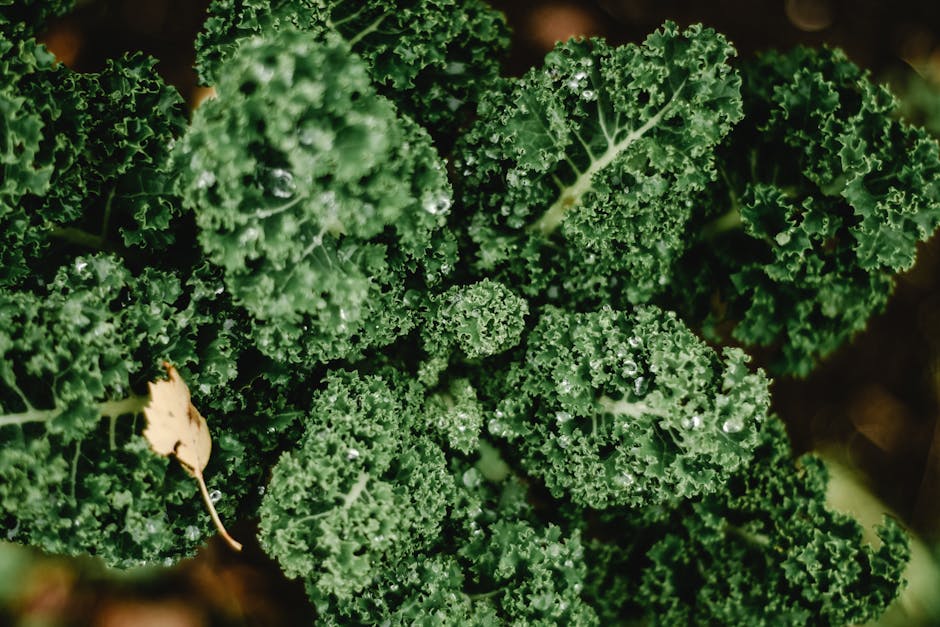
- Kale is the realistic workhorse. Raw kale lands in the rough range of 26–47 mg per 100 g depending on the cultivar and record, and unlike capers, a 100 g serving of kale is an ordinary amount of food. When I weight the dataset by typical serving size rather than raw concentration, kale, not capers, becomes the most meaningful everyday source.
- Cooking water is a leak. The USDA records distinguish raw, boiled, and other preparations, and boiled leafy greens consistently show lower flavonol values than their raw counterparts. Kaempferol is water-soluble, so boiling and discarding the water removes a measurable fraction. For a database, this means "broccoli" is not one number — it is several, and showing only the raw figure quietly overstates what ends up on a plate.
Where kaempferol shows up across the dataset
Once I sorted the flavonoid records by kaempferol descending and filtered out the herb-spice extremes that no one eats in bulk, a fairly consistent group of everyday foods emerged. Approximate kaempferol values per 100 g, drawn from the USDA flavonoid dataset, look like this:
| Food (raw unless noted) | Kaempferol (mg / 100 g, approx.) | Notes |
|---|---|---|
| Capers | ~104 | Highest common food; tiny serving size |
| Kale | ~26–47 | Realistic everyday source |
| Arugula | ~16–34 | Cultivar-dependent |
| Mustard greens | ~12 | Cooking lowers value |
| Cress / watercress | ~10–23 | Often eaten raw |
| Chives | ~10–15 | Used in small amounts |
| Broccoli | ~4–7 | Higher raw than boiled |
| Beans (common) | ~3–6 | Varies widely by type |
| Tea, brewed | ~1–3 | Contributes via volume |
The pattern that jumps out is that kaempferol is overwhelmingly a leafy-green and brassica story, with capers and certain herbs as concentrated outliers. Brewed tea earns a place not because any single cup is rich, but because people drink a lot of it — another reminder that concentration and total intake are different axes.
What the research literature says — and does not say
I want to be careful here, because this is where a nutrition aggregator can easily drift past its lane. I am reporting what authoritative bodies have published, not making a health claim. Kaempferol has been studied mostly in laboratory and observational settings. The National Institutes of Health's PubChem entry catalogs it as a naturally occurring flavonol under active research for antioxidant activity. Reviews indexed through the National Library of Medicine describe ongoing investigation into anti-inflammatory and antioxidant mechanisms, but consistently note that most evidence comes from cell or animal models rather than large human trials.
The broader context from major public-health institutions is more measured. The Harvard T.H. Chan School of Public Health and the National Institutes of Health Office of Dietary Supplements both emphasize that flavonoids are one reason diets rich in vegetables and fruit are associated with better health outcomes — but they stop short of crediting any single compound, and they caution against isolating one flavonoid as a standalone intervention. The U.S. Dietary Guidelines and the CDC frame the takeaway in terms of whole foods and overall dietary pattern, not individual molecules. The World Health Organization's guidance on fruit and vegetable intake follows the same logic: eat the plants, and the beneficial compounds come bundled.
In plain terms: there is genuine scientific interest in kaempferol, the USDA has gone to the trouble of cataloging it across hundreds of foods, but the responsible reading of the current literature is that it is a marker of a vegetable-rich diet rather than a proven supplement on its own. That distinction is something I try to bake into how the data is presented, so a single big number next to "capers" does not get read as a prescription.
An engineering note on data quality
Building on the USDA flavonoid dataset taught me a few things about why nutrition numbers vary so much between sources. First, the values are population averages of lab assays, often with wide standard deviations — a single kale sample can differ substantially from the listed figure based on soil, season, and cultivar. Second, the flavonoid database has not been updated as frequently as the core FoodData Central macros, so some records carry older analytical methods. Third, many foods simply have no kaempferol record at all, which is not the same as zero; it means no one measured it. When I aggregate, a missing value and a true zero have to be handled differently, or the averages lie.
This is why I am wary of any website that lists a single, confident kaempferol number for a food to two decimal places. The honest representation is a range with a note about preparation and a flag for missing data. That is less satisfying than a clean figure, but it is what the underlying USDA records actually support.
Practical, non-prescriptive takeaways
I cannot and will not tell you how much kaempferol to eat — that is outside what the data supports and outside what I am qualified to say. What the dataset does support, descriptively, is modest:
- Leafy greens and brassicas — kale, arugula, watercress, broccoli — are where kaempferol concentrates among ordinary foods.
- Raw or lightly cooked preparations retain more of this water-soluble compound than boil-and-drain methods, according to the USDA's preparation-specific records.
- Variety across many plants is more consistent with the public-health guidance than chasing the single highest-concentration food.
None of that is a diet plan. It is a description of what a publicly funded database shows, filtered through the eyes of someone who has spent a lot of time cleaning that data.
The bottom line
Kaempferol caught my attention because it broke a chart, and it held it because the data behind it is a small case study in how nutrition information can mislead when stripped of context. Capers top the list but barely register at realistic servings; kale is the unglamorous everyday source; cooking method quietly changes the answer; and the science, while real, is still mostly upstream of firm human conclusions. For HealthSavvyGuide, the engineering job is to present all of that honestly rather than reduce it to a leaderboard. For you, the reader, the durable message is the same one every major health authority keeps repeating: eat a range of vegetables, and let the compounds sort themselves out.
Sources referenced: USDA FoodData Central and the USDA Database for the Flavonoid Content of Selected Foods (Release 3.3); NIH National Library of Medicine / PubChem; NIH Office of Dietary Supplements; Harvard T.H. Chan School of Public Health; CDC; World Health Organization. This article is informational and not a substitute for advice from a licensed healthcare professional.
Found this helpful?
Subscribe to our newsletter for more in-depth reviews and comparisons delivered to your inbox.