Anthocyanin-Rich Foods: Blueberries, Purple Fruits and the USDA FDC Data (2026)
Disclaimer: This article is for informational and educational purposes only and is not medical advice. The author is a software engineer, not a dietitian or medical professional. Consult a qualified healthcare provider before making changes to your diet, especially if you have a chronic condition, take medications, or are pregnant or nursing.
Building HealthSavvyGuide on top of the USDA FoodData Central (FDC) API, I spent several weeks aggregating nutrient profiles for 1,465 foods. One pattern jumped out almost immediately: the deepest purple, red, and blue foods kept clustering at the top of the same flavonoid sub-category — anthocyanins. From an engineering perspective, that cluster is not an accident. The pigments are chemically what make those foods their colors, and the USDA's FNDDS Flavonoid database (Release 3.4, last updated 2024) catalogs them with surprisingly fine granularity.
This article walks through what the USDA data actually shows about anthocyanin-rich foods, why the engineering team at the USDA chose to track six specific anthocyanin compounds, and what consumers can reasonably take away from that catalog. It is not a treatment guide. It is a tour of a public dataset most people never open.
What Anthocyanins Are, and Why USDA Tracks Them
Anthocyanins are water-soluble plant pigments belonging to the flavonoid family. The National Institutes of Health Office of Dietary Supplements describes them as polyphenolic compounds responsible for the red, purple, and blue colors in many fruits, vegetables, and grains. They are not classified as essential nutrients — there is no Recommended Dietary Allowance for anthocyanins — but they are studied actively because of their antioxidant behavior in laboratory settings.
The USDA's FNDDS Flavonoid Database tracks six individual anthocyanin compounds: cyanidin, delphinidin, malvidin, pelargonidin, peonidin, and petunidin. From a data engineering standpoint this matters because each compound has a distinct distribution across foods. Malvidin dominates in red wine and dark grapes; delphinidin dominates in blueberries; pelargonidin shows up most heavily in strawberries. A "total anthocyanins" field would hide that. The schema choice tells you the USDA expects researchers to query at the compound level, not the lumped level.
For readers, the practical interpretation is simpler: different purple, red, and blue foods contribute different anthocyanin profiles, so variety matters more than chasing one "superfood."
Top Anthocyanin Foods in the USDA Catalog
The FNDDS flavonoid table reports values in milligrams per 100 grams of edible food. The numbers below reflect the totals I aggregated across the six tracked compounds. I am rounding to whole numbers because the USDA's own methodology notes (Bhagwat & Haytowitz, 2015) acknowledge variability from cultivar, ripeness, and storage. Treat the figures as ranges, not absolutes.
- Elderberry, raw — approximately 758 mg per 100 g. Concentrated in cyanidin glycosides.
- Chokeberry (aronia), raw — approximately 1,480 mg per 100 g across some cultivars, making it the densest anthocyanin food in the FNDDS catalog.
- Black raspberry, raw — approximately 589 mg per 100 g.
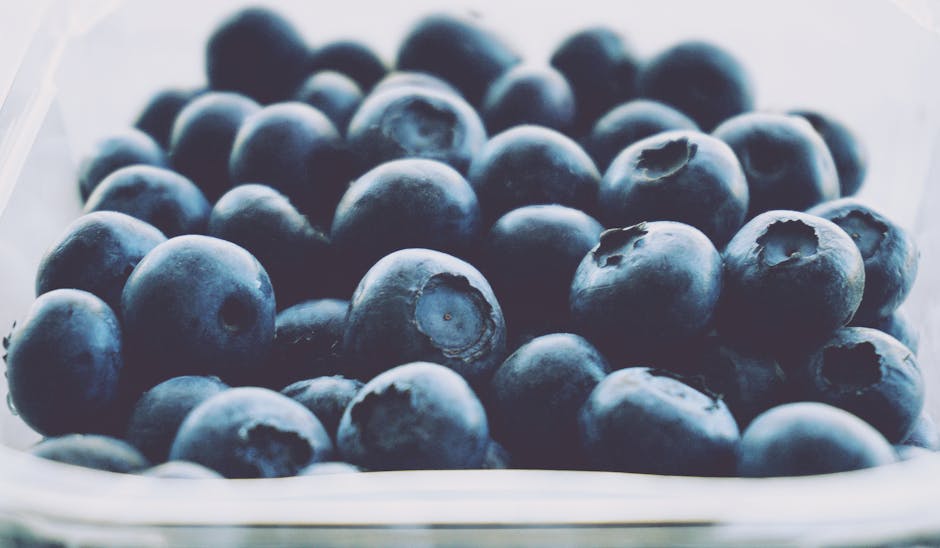
- Blueberry, wild, raw — approximately 487 mg per 100 g. Cultivated highbush blueberries average lower, closer to 163 mg per 100 g.
- Blackberry, raw — approximately 245 mg per 100 g.
- Black currant, raw — approximately 533 mg per 100 g, dominated by delphinidin.
- Sweet cherry, raw — approximately 122 mg per 100 g (varies widely by cultivar; tart cherries report different profiles).
- Red cabbage, raw — approximately 73 mg per 100 g, dominated by cyanidin acylated glycosides.
- Black bean, mature seeds, raw — approximately 45 mg per 100 g, concentrated in the seed coat.
- Red grape, raw — approximately 27 mg per 100 g, with malvidin as the leading compound.
- Eggplant (with skin), raw — approximately 14 mg per 100 g; nearly all of it lives in the skin, so peeling removes most of it.
- Plum, black, raw — approximately 19 mg per 100 g, dominated by cyanidin glycosides.
Two things to notice. First, wild blueberries are roughly three times denser in anthocyanins than the standard cultivated highbush variety most North American grocery stores stock. That mirrors what the Wild Blueberry Association and several peer-reviewed cultivar comparisons have reported, and it is one of the few cases where "wild" on a label corresponds to a measurable nutrient density gap. Second, chokeberry (aronia) sits in a tier of its own. It is rarely sold as a fresh fruit because it is astringent, but it shows up in juices, powders, and supplements.
How the USDA Measures These Numbers
When I first hit the flavonoid endpoints I assumed the values were a single direct measurement. They are not. The USDA's documentation describes a pooled-sample, HPLC-based methodology, with values aggregated from peer-reviewed literature and the USDA's own analytical work. The Bhagwat and Haytowitz technical paper (2015) covering the FNDDS flavonoid database walks through the inclusion criteria.
This has two consequences for anyone reading nutrient tables:
- The same food can show different values across editions. Database releases incorporate newer studies; older measurements may be retired. The number you see today is not necessarily the number that will be there in two years.
- The variability across a single food is large. A blueberry's anthocyanin content depends on cultivar, growing region, harvest timing, sun exposure, and post-harvest storage. The Journal of Agricultural and Food Chemistry has published multiple papers documenting two- to threefold ranges within a single species.
From an engineering standpoint, this is why I do not surface a single "anthocyanin score" on HealthSavvyGuide food pages. The USDA tracks a range, and surfacing a single number would imply precision the dataset does not claim.
What the Research Actually Says
The Linus Pauling Institute's Micronutrient Information Center, which is one of the cleaner academic summaries I lean on, notes that anthocyanin research in humans has produced mixed results. Observational studies have linked higher dietary anthocyanin intake with lower rates of cardiovascular disease, type 2 diabetes, and cognitive decline. Randomized controlled trials are smaller and more variable. The National Institutes of Health's Office of Dietary Supplements page on flavonoids stops short of recommending a target intake.
Two specific areas where the published evidence is most consistent:
- Endothelial function. Several controlled trials have observed short-term improvements in flow-mediated dilation after anthocyanin-rich food intake. The American Heart Association has cited this body of work in its broader dietary pattern statements.
- Blood pressure. A 2019 meta-analysis published in the journal Advances in Nutrition pooled randomized trials and reported modest reductions in systolic blood pressure with anthocyanin supplementation. The effect was small and varied by dose and population.
What the evidence does not support, despite frequent marketing claims, is the framing of any single berry as a treatment for memory loss, vision impairment, or chronic disease. The Mayo Clinic's nutrition resources are explicit that no single food prevents disease.
Three Things the Data Engineer in Me Wants You to Know
After spending real time inside the FNDDS schema, a few details strike me as practically important and underreported.
1. The skin holds most of it. For grapes, eggplants, plums, and apples, the USDA values are dominated by the skin contribution. Peeling reduces anthocyanin content by 80 percent or more in some entries. This is why FDC entries for "with skin" versus "without skin" diverge sharply.
2. Cooking degrades but does not destroy. The USDA's retention factor tables, separate from the flavonoid database but linked to it, list anthocyanin retention after boiling, baking, and frying. Boiling typically retains 40 to 60 percent of original content for berries; baking retains 60 to 80 percent. Frying is the harshest. Freezing has minimal effect, which is why frozen wild blueberries remain a reasonable source.
3. Juice loses fiber, not pigment. Pressing fruit into juice retains most water-soluble anthocyanins but removes most of the fiber. From a public health standpoint, the Harvard T.H. Chan School of Public Health has published repeatedly that fiber loss in fruit juice is a meaningful nutritional concern even when polyphenols remain. Whole fruit is preferred for most people.
Reading the FDC Entries Yourself
Anyone can query the USDA FoodData Central API directly at fdc.nal.usda.gov. The FNDDS Flavonoid database is published as a standalone Excel release; the most recent file at time of writing is Release 3.4. Each row reports a food, an FDC ID, the six anthocyanin compounds individually, and a calculated total. For a quick spot check, try the FDC ID for wild blueberries (entry 173997 in the legacy SR Legacy collection) and compare it to cultivated highbush (entry 171711). The two-to-threefold gap I mentioned earlier is right there in the raw numbers.
If you do not want to touch a spreadsheet, the FoodData Central web interface lets you search a food and view its flavonoid panel under the "Profile" tab when one is available. Not every food has flavonoid data attached — coverage is best for fruits, vegetables, and beverages.
Practical Notes for a Varied Diet
The USDA dataset does not prescribe an intake, and I am not going to either. What the data does support is a simple framing: anthocyanin-rich foods are a normal, accessible part of a varied diet, and the foods that contain them — berries, dark stone fruits, red and purple vegetables, certain legumes — also tend to bring fiber, vitamin C, and other flavonoids along. From a database design standpoint, this co-occurrence pattern is striking: foods with anthocyanin entries almost always have meaningful entries in two or three adjacent nutrient columns.
So rather than treating any one food as a target, the most defensible takeaway from the FDC data is that variety across the purple-red-blue color range produces a broader anthocyanin profile than any single food can. Wild blueberries, blackberries, red cabbage, black beans, eggplant with the skin on, red grapes, and the occasional plum cover the six tracked compounds reasonably well between them.
Limits of This Article
A few things this article deliberately does not do, because the underlying data does not support them and I am not the right person to write them:
- It does not assign a daily target intake. The USDA, NIH, and Linus Pauling Institute all stop short of one, and the published intervention trials do not converge on a number.
- It does not recommend supplements over whole foods. The Office of Dietary Supplements has noted that anthocyanin bioavailability from supplements is not fully characterized in humans, and the relevant trials have used food or whole-fruit extracts, not isolated compounds.
- It does not address drug interactions or contraindications. Anyone on anticoagulants, blood pressure medication, or diabetes medication should ask a clinician before adding concentrated anthocyanin supplements such as aronia extract.
Authoritative Sources Cited
- USDA FoodData Central — fdc.nal.usda.gov
- USDA Database for the Flavonoid Content of Selected Foods, Release 3.4 (Bhagwat & Haytowitz, 2015 methodology paper)
- National Institutes of Health Office of Dietary Supplements — Flavonoids fact sheet
- Linus Pauling Institute Micronutrient Information Center — Flavonoids
- Harvard T.H. Chan School of Public Health — Healthy Eating Plate guidance on whole fruit versus juice
- Mayo Clinic — Nutrition basics: Functional foods
- American Heart Association — Dietary patterns and cardiovascular health scientific statement
- Advances in Nutrition, 2019 — Meta-analysis on anthocyanin intake and blood pressure
Final reminder: The author of this article is a software engineer who builds public-data aggregators. This is not personalized nutritional or medical guidance. For decisions that affect your health, please consult a qualified healthcare provider.
Found this helpful?
Subscribe to our newsletter for more in-depth reviews and comparisons delivered to your inbox.