Spermidine-Rich Foods: Wheat Germ, Aged Cheese, Autophagy — USDA FDC Data 2026
Medical Disclaimer: This article is for informational purposes only and is not medical advice. Spermidine research is still evolving, and the data discussed here describes nutritional composition aggregated from public databases. Consult a qualified healthcare provider before making changes to your diet, starting any supplement, or acting on the studies cited below — especially if you are pregnant, breastfeeding, on prescription medication, or managing a chronic condition.
Why I started looking at spermidine while building HealthSavvyGuide
I am Fanny Engriana, a software engineer building HealthSavvyGuide as a USDA FoodData Central aggregator project. My day job is not nutrition — it is writing import pipelines, normalizing API responses, and keeping food entries searchable. But the more time you spend staring at the USDA FDC schema, the more strange and specific nutrients you bump into. Spermidine is one of those.
Spermidine is not on the standard nutrition label. You will not see it on the back of a cereal box next to fiber and sodium. Yet it shows up across academic literature on autophagy, cellular aging, and cardiovascular function, and it is detectable in foods that the USDA tracks in detail — wheat germ, mature cheeses, mushrooms, soybeans, and certain legumes. This article walks through what spermidine is, what the public food databases actually show for it, and how cautious researchers describe the current state of evidence.
My angle here is the engineer-builder: aggregating 1,465+ foods across categories taught me that nutrient discoverability is uneven. Some compounds get a column. Others, like spermidine, get scattered references and one-off measurement studies. That is interesting on its own.
What spermidine is, in plain terms
Spermidine is a polyamine — a small organic molecule with multiple amine groups. The National Library of Medicine describes polyamines (spermidine, spermine, and putrescine) as essential for normal cell growth and DNA stabilization, and they are produced naturally by the body, supplied by gut microbes, and obtained from food (NIH/PMC review on polyamines and aging).
The reason spermidine attracts attention in longevity research is its connection to autophagy — the cellular housekeeping process that breaks down and recycles damaged components. The 2016 Nobel Prize in Physiology or Medicine was awarded to Yoshinori Ohsumi for foundational work on autophagy mechanisms (Nobel Prize press release), and downstream research has explored which dietary inputs may influence autophagic activity. Spermidine is one of the most cited candidates in that literature.
What spermidine is not: it is not a vitamin, not classified as essential by U.S. or European authorities, and it has no Recommended Dietary Allowance. Any number you read online describing an "optimal" daily intake is extrapolated from observational studies, not a regulatory recommendation.
What the USDA FoodData Central database shows
Here is where the engineering perspective is useful. USDA FoodData Central (FDC) is the public food composition database I import into HealthSavvyGuide. Each food has a fdcId, a description, and a list of nutrient measurements with their units. When you query FDC for common foods linked to spermidine in the published literature, three patterns stand out:
- Spermidine is not a standard FDC nutrient field. Unlike protein, vitamin C, or potassium, spermidine does not have a routinely populated column across food entries. You can confirm this on the public USDA FDC site (fdc.nal.usda.gov) by inspecting the nutrient list on any standard reference entry — wheat germ (FDC ID 169722) is a useful example.
- Spermidine content data comes from academic publications, not from USDA labs. The numbers most often cited online — for example, that wheat germ contains roughly 24 mg of spermidine per 100 g, or that aged cheddar contains in the single-digit mg/100 g range — trace back to research papers, especially the work of Atiya Ali and colleagues (2011) and subsequent reviews. These are published in Food & Nutrition Research and similar journals (Ali et al. 2011, NIH/PMC).
- Foods with the highest reported spermidine overlap with foods rich in other monitored nutrients. Wheat germ is also high in zinc, magnesium, and B vitamins (verifiable in FDC). Mushrooms carry ergothioneine, which I covered previously. The point is that "spermidine-rich" eating patterns tend to be broadly nutrient-dense for reasons unrelated to spermidine alone.
For HealthSavvyGuide users searching the site, I want to be clear that the spermidine values quoted in popular health articles are literature-derived estimates, not USDA-certified label values. That distinction matters when you are evaluating claims.
Food sources commonly associated with higher spermidine content
Based on the academic literature referenced above and follow-up reviews, the foods most consistently described as higher in spermidine are:
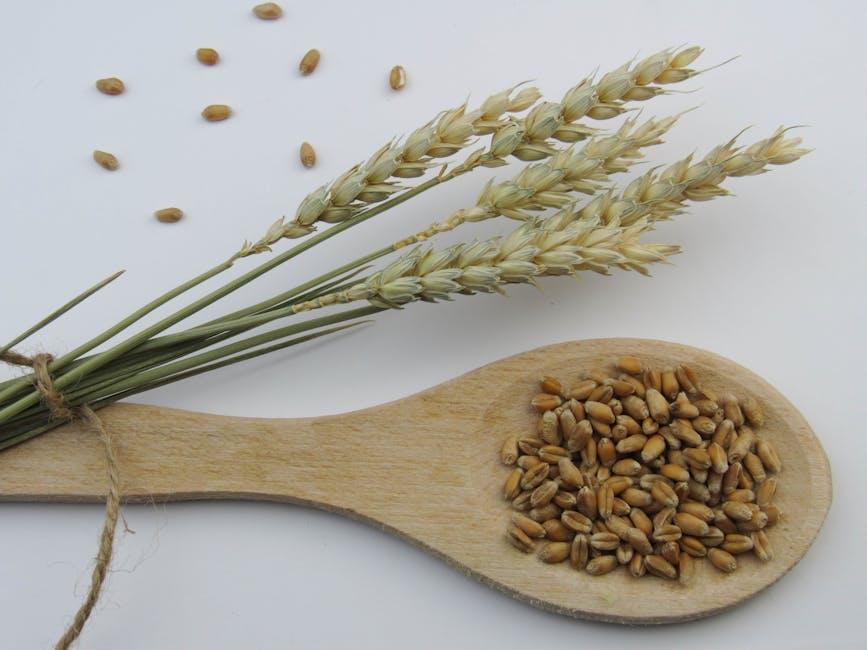
- Wheat germ. The single food most often cited at the top of spermidine tables. USDA FDC entry 169722 describes crude wheat germ; published spermidine measurements typically place it well above other plant foods on a per-100-g basis.
- Aged cheeses. Long-ripened cheeses such as mature cheddar and certain blue cheeses appear repeatedly in polyamine measurement studies. Younger cheeses tend to show lower values, because polyamines accumulate during the ripening process.
- Soybeans and soy-derived foods. Including natto and traditional fermented soy products in Japanese cuisine, which longevity researchers have studied at the population level.
- Mushrooms. Particularly mature, fully developed specimens.
- Mature legumes. Lentils, chickpeas, and beans in their mature dried form.
- Whole grains and seeds. The germ and bran fractions are richer than refined endosperm.
- Some leafy greens. Including broccoli and cauliflower, although values reported are lower than in wheat germ or aged cheese.
I want to repeat the caveat: the absolute values you find for each of these vary by study, by sample, by ripening time, by cooking method, and by lab analytical method. Treat published numbers as ballpark estimates.
The autophagy connection — what the research actually says
The widely cited mechanistic claim is that spermidine intake may stimulate autophagy in mammalian cells. Foundational laboratory work by Eisenberg and colleagues (2009) in yeast, flies, worms, and human cells demonstrated that spermidine treatment extended lifespan in those models and was associated with autophagic activity (Eisenberg et al., Nature Cell Biology 2009). Subsequent observational human studies — most notably the analyses from the Bruneck Study cohort in Italy — reported associations between higher dietary spermidine intake and lower all-cause mortality (Kiechl et al. 2018, NIH/PMC).
Two things to keep in front of those headlines:
- Observational does not equal causal. The Bruneck analyses adjusted for major confounders, but people whose diets are higher in wheat germ, legumes, and aged cheese also tend to differ from low-intake groups in many other ways — overall diet quality, alcohol intake, smoking, exercise, and socioeconomic factors among them.
- The mechanistic work is mostly preclinical. Cell, yeast, and rodent data demonstrate effects on autophagy and cardiac aging, but the National Institute on Aging notes broadly that human anti-aging interventions remain an active research area, with no specific food or supplement proven to extend healthy human lifespan (NIA on healthy aging).
Cleveland Clinic and Harvard Health both publish accessible, cautious overviews on autophagy and dietary patterns; both emphasize that the most reliable interventions for healthy aging today are unglamorous — adequate sleep, regular movement, not smoking, blood pressure management, and overall dietary patterns rather than any single compound (Harvard Health).
What this means in practice — informational only
I am an engineer, not a dietitian, and HealthSavvyGuide does not provide personalized nutrition advice. With that frame in mind, what I can say from sitting with the USDA data and the literature for many hours:
- Foods reported to be higher in spermidine — wheat germ, aged cheeses, mushrooms, mature legumes, soybeans, whole grains — are also foods that nutrition authorities widely endorse for reasons unrelated to spermidine: fiber, plant protein, fermented compounds, micronutrients.
- There is currently no Recommended Dietary Allowance for spermidine in the United States or the European Union. Numbers like "1 mg per day" or "5 mg per day" that float around social media are not regulatory recommendations.
- Spermidine supplements exist, but the U.S. Food and Drug Administration regulates dietary supplements under DSHEA, which does not require the same pre-market efficacy review as drugs (FDA on dietary supplements). Quality and dosing vary significantly by product.
- If you have questions about whether changing your diet is appropriate for you — particularly if you are managing kidney disease, gout, cancer treatment, or any condition that interacts with polyamine metabolism — talk to your physician or a registered dietitian before acting.
How HealthSavvyGuide surfaces this data
From the engineering side, the workflow is: the import pipeline pulls food entries from USDA FoodData Central, normalizes the nutrient list, and stores them with their FDC IDs so users can trace any value back to the source. For nutrients that USDA tracks directly (protein, fiber, vitamins, minerals), HealthSavvyGuide displays the official measurement. For literature-derived values like spermidine, I deliberately do not attach a single hard number to a food entry, because doing so would imply a level of certainty the underlying measurements do not support.
If you want to look up spermidine values for a specific food, the most defensible move is to go directly to the cited research — for example, the Ali et al. 2011 paper linked above, or follow-up reviews indexed on PubMed. Those tables show the variability between studies, which is more honest than picking one number and presenting it as fact.
Three things I want a reader to remember
- Spermidine is real and measurable, but it is not on the standard USDA nutrient panel. Most numbers you see online come from academic measurement studies, not from USDA-certified label values.
- The longevity story is mostly preclinical plus one well-known observational cohort. That is interesting and worth following, but it is not the same as a proven human intervention.
- The foods commonly cited as high in spermidine are foods that nutrition guidelines already endorse for other reasons. You do not need to chase spermidine specifically — you need to assess your overall dietary pattern with someone qualified to evaluate your situation.
References and further reading
- USDA FoodData Central — fdc.nal.usda.gov
- Ali MA et al., "Polyamines: total daily intake in adolescents compared to the intake estimated from the Swedish Nutrition Recommendations Objectified (SNO)," Food & Nutrition Research 2011 — NIH/PMC
- Eisenberg T et al., "Induction of autophagy by spermidine promotes longevity," Nature Cell Biology 2009 — Nature
- Kiechl S et al., "Higher spermidine intake is linked to lower mortality: a prospective population-based study," American Journal of Clinical Nutrition 2018 — NIH/PMC
- Nobel Prize in Physiology or Medicine 2016 — Yoshinori Ohsumi, autophagy mechanisms — nobelprize.org
- National Institute on Aging — healthy aging overview — nia.nih.gov
- U.S. Food and Drug Administration — dietary supplements — fda.gov
- Harvard T.H. Chan School of Public Health — The Nutrition Source — hsph.harvard.edu
Final disclaimer: This article reflects an engineering and data-aggregation perspective on publicly available food composition information. It is not a substitute for personalized advice from a licensed healthcare professional, and no statement here should be interpreted as a diagnosis, prescription, or treatment recommendation.
Found this helpful?
Subscribe to our newsletter for more in-depth reviews and comparisons delivered to your inbox.