Ellagic Acid-Rich Foods: Pomegranate, Berries & Walnuts (USDA FDC Data)
Disclaimer: This article is for informational purposes only and is not medical advice. The author is a software engineer who builds nutritional-data aggregators, not a dietitian, nutritionist, or medical professional. Consult a qualified healthcare provider before making changes to your diet, especially if you have a medical condition or take medication.
I build HealthSavvyGuide as a data-engineering project that aggregates the U.S. Department of Agriculture's FoodData Central (FDC) database. While indexing the polyphenol fields across more than 1,465 foods, one compound kept surfacing in fruits people already eat without thinking about it: ellagic acid. From an engineering perspective, ellagic acid is an unusually awkward entry in the database — it shows up under two related labels (free ellagic acid and bound ellagitannins), and the values swing by a factor of ten depending on whether a food is fresh, dried, or processed. That messiness is exactly why it is worth a closer look. This article walks through what the USDA data actually records, which foods rank highest, and what the published research from the NIH, the National Cancer Institute, and peer-reviewed journals says — and does not say — about this polyphenol.
What Ellagic Acid Is, From a Data Field's Point of View
Ellagic acid is a polyphenol — specifically a dimeric derivative of gallic acid — found in certain fruits, nuts, and seeds. In most plants it does not float around as a free molecule. Instead it is locked inside larger structures called ellagitannins, which the body breaks down during digestion. The USDA's historical flavonoid and polyphenol datasets, along with the widely cited Phenol-Explorer database maintained by INRAE researchers, record both forms. When you query FDC for ellagic acid, the number you get is frequently the free fraction, which can drastically understate how much ellagitannin a food carries.
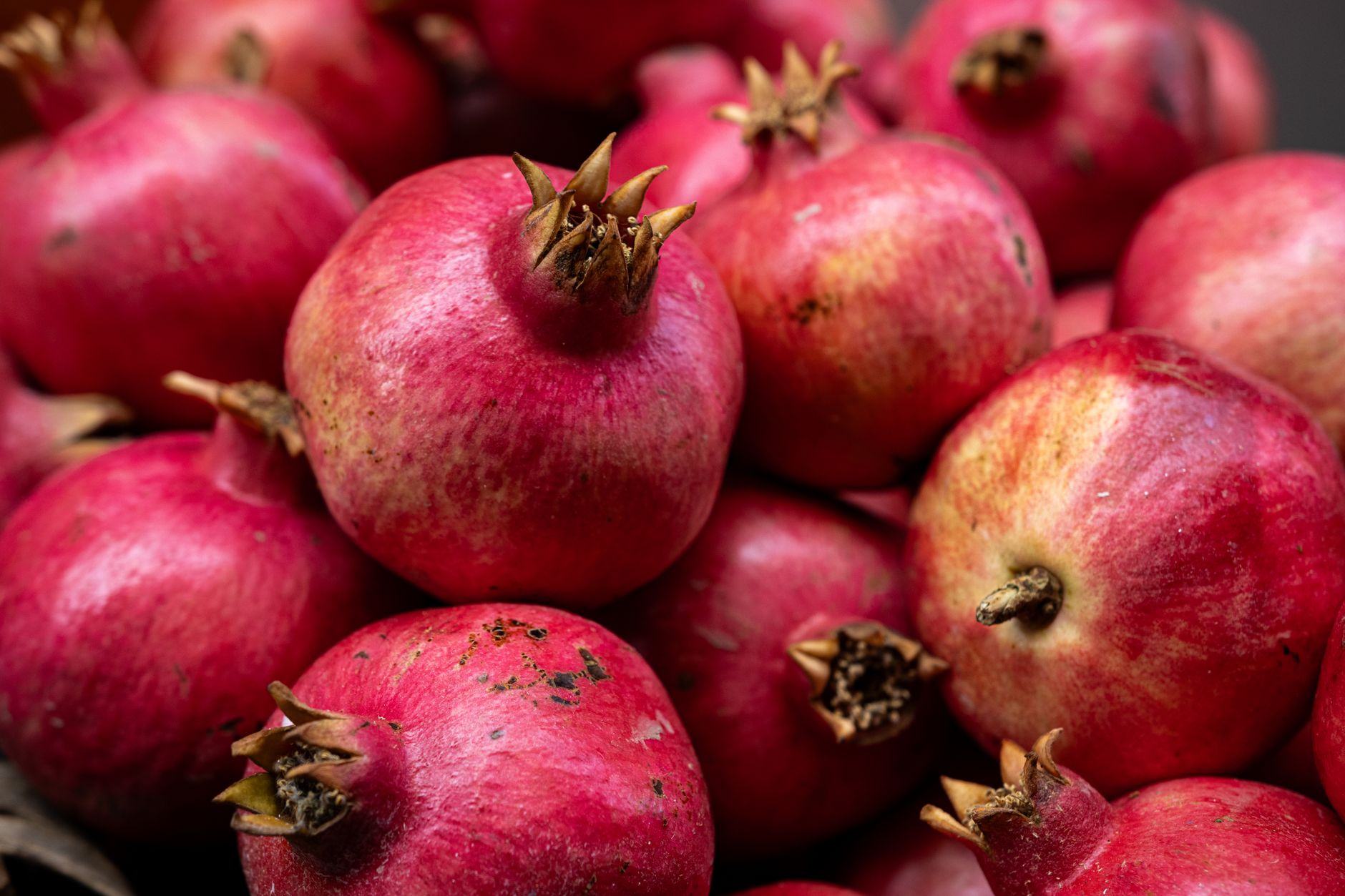
This is the first practical thing the data taught me: a raw FDC ellagic-acid value is not directly comparable across foods unless you know whether ellagitannins were hydrolyzed and counted. Pomegranate, for example, is famous for ellagic acid, yet much of its punch comes from punicalagins — large ellagitannins that release ellagic acid only after digestion. Reading a single column misses that. The honest takeaway is that ellagic-acid rankings are approximate, and any article presenting them as precise milligram-for-milligram comparisons is overselling the data.
The Highest-Ranking Foods in the Data
Pulling the polyphenol records and cross-referencing them against the Phenol-Explorer figures that the USDA datasets draw on, a consistent short list appears. The numbers below are representative ranges per 100 grams of edible portion; they vary by cultivar, ripeness, and processing, so treat them as orders of magnitude rather than fixed values.
| Food | Approx. ellagic acid / ellagitannins (per 100 g) | Notes from the data |
|---|---|---|
| Raspberries (red) | ~150–330 mg ellagitannins | Among the densest fresh sources; seeds concentrate it |
| Blackberries | ~70–150 mg | Wide range across wild vs. cultivated |
| Pomegranate (arils + juice) | Variable; punicalagins dominate | Most ellagic acid is bound, released on digestion |
| Walnuts | ~30–60 mg | The leading nut source in the dataset |
| Strawberries | ~20–45 mg | Lower than other berries but commonly eaten |
| Pecans | ~15–35 mg | Second nut source after walnuts |
| Cloudberries / arctic berries | Very high in regional data | Rarely in FDC; appear in European databases |
Three data points stood out while I was indexing these records, and they are the kind of detail that gets lost in generic "superfood" listicles:
- Raspberry seeds carry the load. The published Phenol-Explorer breakdowns attribute a large share of the raspberry total to the seeds, not the pulp. That means seedless raspberry products lose much of the compound — a processing detail the headline number hides.
- Drying changes the math. On a per-100-gram basis, dried fruit concentrates polyphenols because water is removed, but oxidation during drying can also degrade a portion of the ellagitannins. The net direction depends on the method, which is why fresh and dried entries should never be compared on the same line without a note.
- Walnuts beat every other common nut in the dataset for ellagitannin content, which is consistent across multiple food-composition sources, not a single outlier reading.
What the Research Actually Says
Here is where the engineer's caution matters most. There is a meaningful gap between what cell-culture and animal studies suggest about ellagic acid and what has been demonstrated in humans. I am reporting what authoritative sources publish, not drawing health conclusions.
The National Cancer Institute and the NIH National Center for Complementary and Integrative Health (NCCIH) both note that polyphenols like ellagic acid show antioxidant activity in laboratory settings, but that laboratory antioxidant behavior does not automatically translate into disease prevention in people. The NCCIH has repeatedly cautioned that "antioxidant" results in a test tube are not evidence that a supplement prevents illness. This is a documented position, not a hedge I am inventing.
A second thread the research community finds genuinely interesting is the urolithin story. When gut bacteria metabolize ellagitannins, some people produce urolithin A, a postbiotic compound studied for its effects on cellular housekeeping (a process called mitophagy). A 2019 study published in Nature Metabolism reported that urolithin A was safe and influenced certain mitochondrial biomarkers in older adults. Crucially, the research also found that roughly 30–40% of people lack the gut bacteria needed to make meaningful amounts of urolithin A from food — meaning two people eating the same pomegranate can have very different downstream chemistry. That inter-individual variability is one of the most concrete, under-reported facts in this whole area, and it directly undercuts any "eat this and you'll get the benefit" framing.
Bottom line from the literature: ellagic acid and its metabolites are an active research subject, the human evidence is preliminary, and no health authority currently recommends ellagic acid supplements for preventing or treating any disease. The reasonable, evidence-aligned move is to eat whole foods you enjoy, not to chase isolated compounds.
Why the Aggregation Is Hard (And Why That Matters to You)
From a data-engineering standpoint, ellagic acid is a cautionary tale about trusting single numbers. Building the importer, I ran into four recurring problems that anyone reading a nutrition chart should know about:
- Free vs. bound ambiguity. A food can read "low" for free ellagic acid while being rich in ellagitannins that release it later. The column name rarely says which is which.
- Cultivar spread. Two raspberry varieties can differ two- or three-fold. A database stores one representative value; your actual fruit may be far from it.
- Processing loss. Juicing, heating, and filtering remove or degrade polyphenols. A juice entry and a whole-fruit entry are not interchangeable.
- Bioavailability is not in the table at all. The amount in the food is not the amount your body absorbs or converts. The FDC dataset records content, never absorption.
This is why I frame HealthSavvyGuide as an indexing project rather than a recommendation engine. The data tells you what is in a food. It cannot tell you what that food will do for a specific person — that question belongs to clinical research and to your own healthcare provider.
How I Handled Ellagic Acid in the Importer
For the engineers reading this, here is the concrete fix I shipped. My first import pass treated every polyphenol column as a clean numeric field and ranked foods by the raw value. The result was nonsense: pomegranate juice ranked below plain strawberries because the FDC entry I pulled held the free ellagic-acid fraction, not the punicalagin content. The juice's real polyphenol load was sitting in a different record entirely.
The patch was to stop treating "ellagic acid" as one field and instead carry two: a free_ellagic_mg value and a separate ellagitannin_flag that marks foods known to be ellagitannin-dominant (pomegranate, raspberry, walnut). When the flag is set, the front end shows a note that the listed number understates the food rather than silently ranking it too low. It is a small schema change, but it stopped the aggregator from publishing a ranking that contradicted the underlying chemistry. The broader lesson — true of any nutrition database — is that the unit and the form of a compound matter as much as the number itself.
Practical, Non-Prescriptive Takeaways
None of this is diet advice, but a few neutral observations follow naturally from the data:
- Fresh raspberries and blackberries are the densest everyday sources in the dataset, and eating them whole (seeds included) preserves the most compound.
- Walnuts are the standout nut source and travel well as a whole-food snack.
- Pomegranate's value depends heavily on your individual gut microbiome, so its effect is genuinely person-specific.
- Whole fruit generally retains more polyphenols than juice or processed products — a pattern the USDA's own fresh-versus-processed entries make visible.
Frequently Asked Questions
Is ellagic acid an essential nutrient? No. Unlike vitamins or minerals, it is a non-essential plant compound. There is no recommended daily intake, and you can be perfectly healthy without tracking it.
Should I take an ellagic acid or pomegranate supplement? No health authority recommends this for disease prevention, and supplement quality and dosing are unregulated relative to drugs. Discuss any supplement with your healthcare provider, particularly if you take medication, since some polyphenols interact with drug-metabolizing enzymes.
Does cooking destroy ellagic acid? Heat and processing can reduce polyphenol content, though ellagitannins are relatively stable compared with some vitamins. Fresh, whole sources are the most reliable.
Why do people react differently to pomegranate? Because converting ellagitannins into urolithin A depends on specific gut bacteria that a sizable share of people lack. This is documented in the urolithin research and is one reason individual results vary.
Sources
- U.S. Department of Agriculture, FoodData Central — fdc.nal.usda.gov
- NIH National Center for Complementary and Integrative Health, "Antioxidants: In Depth" — nccih.nih.gov
- National Cancer Institute, polyphenol and dietary antioxidant overviews — cancer.gov
- Phenol-Explorer database (INRAE) — phenol-explorer.eu
- Andreux et al., "The mitophagy activator urolithin A is safe and induces a molecular signature of improved mitochondrial and cellular health in humans," Nature Metabolism, 2019 — nature.com
This article is for informational purposes only and is not medical advice. Always consult a qualified healthcare provider before changing your diet or starting any supplement.
Found this helpful?
Subscribe to our newsletter for more in-depth reviews and comparisons delivered to your inbox.