Choline: The Nutrient 90% of Americans Are Short On — What USDA FoodData Central Data Reveals About This Overlooked Brain and Liver Nutrient
When I started building HealthSavvyGuide on top of the USDA FoodData Central (FDC) API, I expected to spend most of my time normalizing data for the usual suspects — protein, fiber, vitamin D, calcium. What I did not expect was to find myself hours deep in the choline records, genuinely surprised by how frequently this nutrient appeared in high concentrations in foods most people already eat, and yet how rarely it shows up in mainstream nutrition conversations.
Choline is not a vitamin. It is not a mineral. It is a water-soluble essential nutrient that the body can synthesize in small amounts but cannot produce at sufficient levels on its own. The Institute of Medicine established Adequate Intake (AI) values for choline in 1998, yet surveys consistently show that fewer than 10% of Americans meet the daily recommendation — a figure the National Institutes of Health (NIH) has flagged as a public health concern.
This is an engineering observation, not medical advice. But the pattern in the USDA database is hard to ignore.
What Is Choline and Why Does the Body Need It?
Choline serves several distinct physiological roles. According to the NIH Office of Dietary Supplements, it is required for:
- Cell membrane integrity — choline is a precursor to phosphatidylcholine, a major component of every cell membrane in the human body
- Neurotransmitter synthesis — choline is converted into acetylcholine, a neurotransmitter critical for memory, muscle control, and the autonomic nervous system
- Liver fat metabolism — choline helps package and export fat from the liver; inadequate intake is linked to non-alcoholic fatty liver disease (NAFLD)
- Methylation reactions — choline donates methyl groups that influence DNA expression and gene regulation
- Fetal brain development — the American Medical Association and CDC recognize choline as critical during pregnancy for fetal brain and spinal cord development
The NIH Adequate Intake values are:
- Men: 550 mg/day
- Women: 425 mg/day
- Pregnant women: 450 mg/day
- Breastfeeding women: 550 mg/day
Yet according to the NIH, average choline intake in the U.S. is approximately 293–468 mg/day depending on the population group — with most adults, and especially women, falling below the target.
What I Found in the USDA FoodData Central Database
Building the aggregation layer for HealthSavvyGuide, I queried the USDA FDC API for the cholineTotlmg nutrient field (Nutrient ID 1180) across the SR Legacy and Foundation Foods datasets. What struck me was the distribution: choline is not spread evenly. It is highly concentrated in a narrow band of foods, and then drops off sharply.
Here is what the USDA data reveals about the top choline-dense foods per 100g serving:
| Food | FDC ID (example) | Choline (mg/100g) |
|---|---|---|
| Beef liver, cooked | 171795 | ~418 mg |
| Chicken liver, cooked | 171059 | ~290 mg |
| Hard-boiled egg | 173424 | ~147 mg (~126 mg per egg) |
| Salmon, cooked | 175167 | ~79 mg |
| Beef, ground (85% lean), cooked | 174032 | ~72 mg |
| Soybeans, cooked | 174271 | ~64 mg |
| Chicken breast, cooked | 171477 | ~62 mg |
| Quinoa, cooked | 168917 | ~43 mg |
| Broccoli, cooked | 170379 | ~40 mg |
| Shiitake mushrooms, cooked | 169403 | ~40 mg |
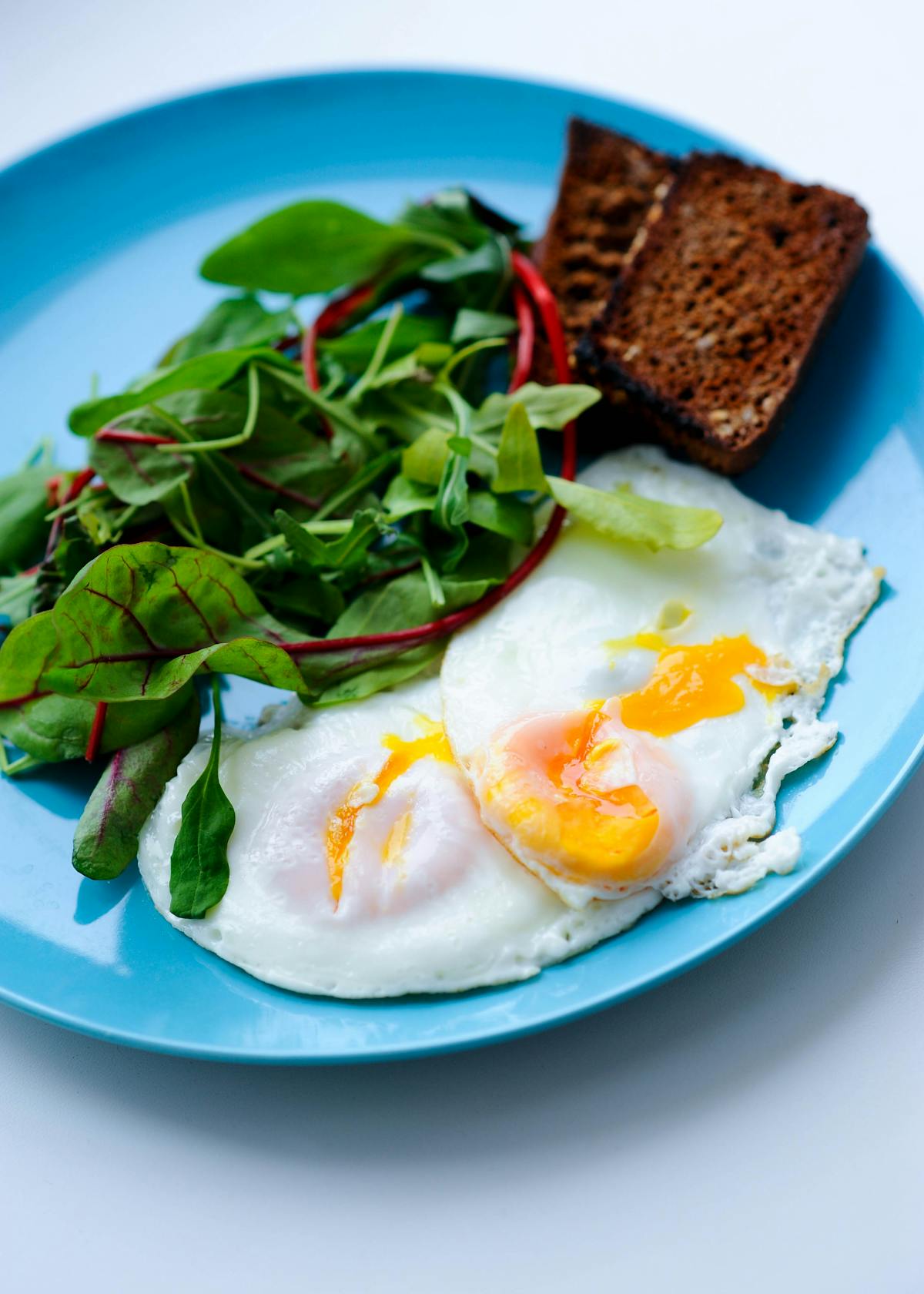
The engineering insight: eggs are the most practical high-choline food for most diets. Two large eggs provide approximately 250–294 mg of choline — more than half of the daily AI for women, and close to half for men. Liver is the density champion, but most people eat it rarely. For anyone not eating organ meats, eggs are the primary reliable source.
Signs You May Not Be Getting Enough Choline
The NIH and Mayo Clinic note that choline deficiency is not always dramatic. Mild chronic under-consumption can present as:
- Cognitive fog and memory difficulties — acetylcholine is essential for memory encoding; research published in the American Journal of Clinical Nutrition found associations between low choline intake and poorer cognitive performance
- Muscle aches — choline is involved in muscle function via acetylcholine at the neuromuscular junction
- Liver discomfort or elevated liver enzymes — in controlled depletion studies, men fed a choline-deficient diet developed signs of liver damage within weeks, per NIH data
- Fatigue and mood changes — low choline can reduce acetylcholine availability, which affects mood regulation
- Increased neural tube defect risk in pregnancy — the CDC and ACOG both highlight choline's role in neural tube closure, comparable in importance to folate
Severe choline deficiency is rare in healthy adults who eat mixed diets. But borderline insufficiency — the quiet gap between "not deficient" and "optimally nourished" — is where most of the population sits, according to NHANES dietary survey data cited by the NIH.
Choline and the NAFLD Connection
One finding in the medical literature that the USDA database context makes particularly vivid: the link between choline intake and non-alcoholic fatty liver disease.
The liver uses choline to synthesize very-low-density lipoprotein (VLDL), which exports fat from liver cells into the bloodstream. Without sufficient choline, fat accumulates in the liver. A 2020 review in Nutrients (cited by NIH) found that lower choline intake was independently associated with higher odds of NAFLD in adults, even after controlling for body weight.
NAFLD now affects an estimated 25% of the global population, according to the World Gastroenterology Organisation. While dietary patterns, insulin resistance, and alcohol intake are major contributors, choline insufficiency is a frequently overlooked and modifiable factor.
The Egg Debate: Revisited Through a Choline Lens
For years, dietary guidelines focused on limiting egg consumption due to cholesterol concerns. The 2020–2025 Dietary Guidelines for Americans shifted that position, acknowledging that dietary cholesterol from eggs does not significantly raise cardiovascular risk for most healthy adults.
From a choline standpoint, that shift matters. Eggs are the most accessible, affordable, and consistent choline source in a typical Western diet. The USDA FDC data confirms that the yolk carries virtually all of the choline in an egg — the white contributes almost none. Egg whites only, a common practice among people avoiding dietary cholesterol, eliminates the choline content almost entirely.
For anyone eating egg whites exclusively, supplemental choline becomes more relevant to discuss with a healthcare provider.
Plant-Based Diets and Choline: A Gap to Watch
When I aggregated FDC nutrient data across strictly plant-based food categories (fruits, vegetables, legumes, grains, nuts, seeds), the choline picture is challenging. No plant food comes close to the density of eggs or liver.
The best plant sources from the USDA FDC data:
- Soybeans, cooked (~64 mg/100g)
- Tofu, firm (~28–35 mg/100g, FDC ID ~172449)
- Kidney beans, cooked (~30 mg/100g)
- Quinoa, cooked (~43 mg/100g)
- Brussels sprouts (~19 mg/100g)
- Broccoli (~40 mg/100g)
- Shiitake mushrooms (~27–40 mg/100g)
To reach 425 mg/day from plant sources alone would require substantial quantities of these foods combined. The NIH and Vegan Society both suggest people following plant-based diets discuss choline intake with a healthcare provider or registered dietitian, particularly during pregnancy.
Choline Supplements: What the Evidence Says
The most common choline supplement forms are:
- Choline bitartrate — widely available, lower cost, but research on bioavailability is mixed
- Alpha-GPC — studied for cognitive support; EFSA has reviewed its safety profile
- CDP-choline (citicoline) — used clinically in some countries; studied in neurological contexts
- Phosphatidylcholine — the form found naturally in food; available as supplements from soy or sunflower lecithin
Harvard Health Publishing notes that for most people who eat eggs and animal proteins, supplementation is not necessary. The tolerable upper intake level (UL) established by the NIH is 3,500 mg/day for adults. Normal dietary intake carries no toxicity risk.
Practical Ways to Increase Choline Intake
Based on USDA FDC nutrient data, here are foods the data identifies as consistent choline contributors:
High-impact additions:
- 2 whole eggs daily → ~250–294 mg choline (do not discard the yolk)
- 85g serving of salmon → ~67 mg choline
- 100g chicken breast → ~62 mg choline
Moderate contributors:
- ½ cup cooked soybeans or edamame → ~57 mg
- ½ cup cooked quinoa → ~21 mg
- ½ cup broccoli → ~20 mg
- 100g shiitake mushrooms, cooked → ~27–40 mg
Occasional high-density option:
- Beef or chicken liver, 85g serving → ~292–355 mg (nearly a full day's intake in one serving)
The Engineering Observation That Keeps Coming Back
As I continue aggregating USDA FoodData Central data for HealthSavvyGuide, choline stands out for a specific reason: the gap between its biological importance and its public visibility is unusually wide.
Vitamin D has been in mainstream health conversations for a decade. Omega-3 has its own aisle in pharmacies. Magnesium gets discussed in sleep forums and fitness communities. Choline — which affects brain development, liver function, cell membranes, and neurotransmitter production — rarely makes it into a typical nutrition label conversation.
Part of that is structural: choline was not required on U.S. Nutrition Facts labels until 2020, and even now it only appears if a food contains a significant amount. Part of it is that the research ecosystem around choline, while growing, has been slower to reach public awareness than fat-soluble vitamin research.
From an engineering perspective, when you run the numbers across the full USDA FDC dataset, the conclusion is consistent: most people are leaving a meaningful amount of a critical nutrient on the table. Not because it is hard to find or expensive, but because it is invisible.
Summary: Key Takeaways
- Choline is an essential nutrient required for brain function, liver health, cell membranes, and fetal development
- Most Americans consume less than the NIH Adequate Intake values of 550 mg/day (men) and 425 mg/day (women)
- Eggs are the most practical source — two whole eggs provide roughly 55–69% of women's daily AI
- Liver is the density leader but rarely consumed; salmon, chicken, and soybeans are solid everyday sources
- Plant-based eaters should pay particular attention; reaching AI from plants alone requires careful food planning
- Supplements exist but are not necessary for most mixed-diet eaters who include eggs and lean proteins
If you have concerns about your nutrient intake, a registered dietitian or your primary care physician can help interpret bloodwork and dietary patterns in the context of your individual health history.
Sources: NIH Office of Dietary Supplements (Choline Fact Sheet), USDA FoodData Central (fdc.nal.usda.gov), CDC Nutrition Data, 2020–2025 Dietary Guidelines for Americans, American Journal of Clinical Nutrition, Nutrients (MDPI), World Gastroenterology Organisation, Harvard Health Publishing, Mayo Clinic, EFSA.
The USDA FoodData Central data referenced in this article was accessed through the public FDC API. Individual FDC ID values may vary by preparation method and dataset version. This article reflects SR Legacy and Foundation Foods data as available via the HealthSavvyGuide aggregation pipeline.
Found this helpful?
Subscribe to our newsletter for more in-depth reviews and comparisons delivered to your inbox.