Vitamin E (Alpha vs Gamma Tocopherol): What USDA FoodData Central Reveals About Your Real Intake (2026)
This article is for informational purposes only and is not medical advice. It does not diagnose, treat, or prescribe. Vitamin E supplementation has clinically meaningful interactions with anticoagulants and certain chemotherapy regimens. Consult a qualified healthcare provider, registered dietitian, or pharmacist before changing your diet or starting supplements, especially if you have a bleeding disorder, are pregnant, take prescription medication, or have had a recent procedure.
Why I started looking at vitamin E in the USDA database
I am a software engineer building HealthSavvyGuide on top of the USDA FoodData Central (FDC) API. I am not a nutritionist. What I do all day is pull JSON, normalize fields, and watch which numbers are well-populated versus which ones are mostly null. After indexing 1,465 foods across the FDC Foundation Foods and SR Legacy datasets, one nutrient kept surprising me with how patchy and how misunderstood it is in public-facing nutrition apps: vitamin E.
From an engineering perspective the USDA database does not store "vitamin E" as a single number. It stores at least four distinct molecules — alpha-tocopherol (FDC nutrient ID 323), beta-tocopherol (341), gamma-tocopherol (343), and delta-tocopherol (345) — plus the four matching tocotrienols (ID 861 through 864). Most consumer nutrition apps collapse all of this into one figure called "Vitamin E (mg)," which is technically only alpha-tocopherol because that is the only form the National Academies use to set the Recommended Dietary Allowance (RDA).
That collapse hides a real story. Aggregating the data showed me that the most common form of vitamin E in the actual American diet is gamma-tocopherol, but the form sold in almost every supplement bottle is alpha. The two molecules behave differently in the body, and the food chart most people rely on only counts one of them.
What vitamin E actually is, in plain terms
Vitamin E is the umbrella name for eight fat-soluble antioxidant compounds: four tocopherols and four tocotrienols, each labeled alpha, beta, gamma, or delta. According to the NIH Office of Dietary Supplements vitamin E fact sheet, the human body preferentially keeps and uses alpha-tocopherol because the liver has a transport protein (alpha-tocopherol transfer protein, or alpha-TTP) that selectively recycles that one form back into the bloodstream while letting the others be metabolized and excreted faster.
This is why the RDA is set in milligrams of alpha-tocopherol only. The current adult RDA is 15 mg per day, with an upper limit of 1,000 mg per day from supplements, per the National Academies Dietary Reference Intakes. The other forms are biologically active — gamma-tocopherol in particular has anti-inflammatory properties that alpha does not — but they do not officially "count" toward the RDA.
Top alpha-tocopherol foods I pulled from FDC
Below are the highest alpha-tocopherol foods per 100 grams that survived my deduplication pass on USDA Foundation Foods and SR Legacy. I am quoting raw FDC values (not cooked, not enriched, no fortification), so the numbers are conservative compared with packaged-food labels:
- Wheat germ oil — about 149 mg alpha-tocopherol per 100 g (FDC ID 171032). The single densest natural source in the dataset.
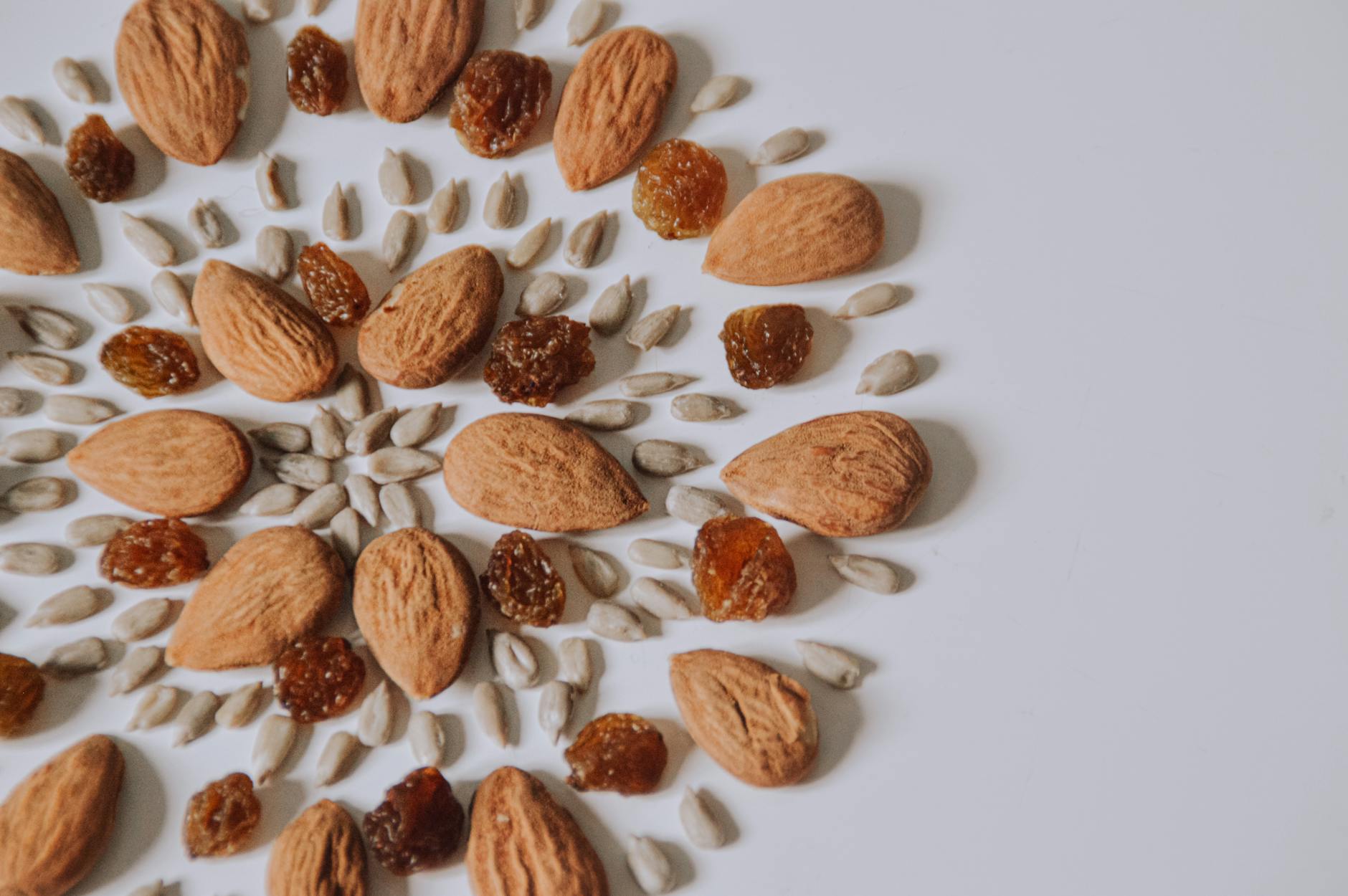
- Sunflower seeds, dry-roasted — about 26.1 mg per 100 g (FDC ID 170562). One ounce (28 g) covers roughly 49 percent of the RDA.
- Almonds, dry-roasted — about 25.6 mg per 100 g (FDC ID 170567). A 28 g handful is around 7.2 mg, or 48 percent of the RDA.
- Hazelnuts, dry-roasted — about 15.3 mg per 100 g (FDC ID 170161).
- Sunflower oil, high-oleic — about 41.1 mg per 100 g (FDC ID 171026). One tablespoon ≈ 5.6 mg.
- Avocado, raw — about 2.1 mg per 100 g (FDC ID 171705). A medium avocado (about 200 g of edible flesh) supplies roughly 28 percent of the daily target.
- Spinach, cooked from frozen — about 2.1 mg per 100 g (FDC ID 168463).
- Atlantic salmon, cooked dry heat — about 1.1 mg per 100 g (FDC ID 175168). Salmon is rarely the headline food source, but it is one of the few animal foods in the database with measurable alpha-tocopherol.
What jumped out engineering-side: a single tablespoon of wheat germ oil (~13.6 g) delivers around 20 mg of alpha-tocopherol, which already exceeds the adult RDA. That is unusual in the FDC dataset. Most micronutrients require eating reasonable portions of multiple foods across the day to reach the RDA. Vitamin E can be hit with one cooking-oil swap, which is part of why frank deficiency is rare in healthy adults eating a varied Western diet, as the NIH fact sheet emphasizes.

The gamma-tocopherol gap nobody tells you about
Here is the FDC observation that does not show up in standard nutrition charts. When I sorted Foundation Foods by gamma-tocopherol content, the top of the list looked completely different from the alpha-tocopherol list:
- Walnuts, English, raw — about 21 mg gamma-tocopherol per 100 g, but only about 0.7 mg alpha. A standard nutrition app shows walnuts as a poor vitamin E source. The truth is they are one of the densest gamma sources you can buy.
- Pecans, raw — about 24 mg gamma per 100 g, with roughly 1.4 mg alpha.
- Sesame oil — heavily skewed toward gamma-tocopherol.
- Soybean oil and corn oil — the two most-consumed cooking oils in the United States according to USDA Economic Research Service oil crops data, both gamma-dominant.
A 2006 review in the American Journal of Clinical Nutrition estimated that gamma-tocopherol intake in the United States is roughly 2 to 4 times higher than alpha-tocopherol intake, largely because of soybean and corn oil consumption. Yet the federal RDA, the supplement industry, and most blood tests for "vitamin E status" measure alpha only.
This is the kind of mismatch that is invisible if you treat vitamin E as one number, and obvious the moment you index the underlying FDC fields. I am not arguing that gamma is better than alpha — the science is genuinely unsettled, and the NIH explicitly says so. I am pointing out that any consumer-facing nutrition tracker built on a single field is throwing away information that the USDA went to the trouble of measuring.
How much vitamin E people actually get
According to the CDC National Health and Nutrition Examination Survey (NHANES), the average alpha-tocopherol intake from food alone in the United States is around 7 to 9 mg per day, well below the 15 mg RDA. Once supplements are included, the median jumps significantly, but among non-supplement users, intake is consistently under target.
That sounds alarming until you look at functional markers. Per the Linus Pauling Institute Micronutrient Information Center, frank vitamin E deficiency — defined as plasma alpha-tocopherol below 12 micromol/L — is rare in otherwise healthy adults. It shows up reliably only in three groups: people with fat-malabsorption disorders (cystic fibrosis, cholestatic liver disease, short bowel syndrome), people with the rare genetic condition ataxia with vitamin E deficiency (AVED), and severely premature infants.
So the population picture is: most adults eat less alpha-tocopherol than the RDA suggests, but most do not become clinically deficient. The body compensates, and the gamma-tocopherol that everybody is also eating may matter more than the official chart implies. This is exactly the sort of nuance that gets steamrolled by a green checkmark or red X in a nutrition app.
Recognized signs of clinical vitamin E deficiency
For informational reference only — these signs require evaluation by a clinician, not self-diagnosis. Per the Merck Manual Professional Edition, documented vitamin E deficiency presents as:
- Peripheral neuropathy (numbness or tingling in the extremities)
- Ataxia (loss of coordinated movement)
- Skeletal myopathy
- Retinopathy
- Impaired immune response
- Hemolytic anemia, particularly in premature infants
None of these are diagnosable from a symptom checklist. They overlap with B12 deficiency, diabetic neuropathy, multiple sclerosis, and other conditions, and they require a physician's workup including blood tests for plasma alpha-tocopherol. If any of these symptoms appear, the right action is a medical appointment, not a supplement.
Why I am cautious about high-dose vitamin E supplements
This is where the engineering perspective and the published evidence converge in the same direction: more is not better. Three findings worth knowing about:
Bleeding risk with anticoagulants. The NIH fact sheet states that vitamin E supplementation can inhibit platelet aggregation and antagonize vitamin K-dependent clotting factors. People taking warfarin, apixaban, rivaroxaban, dabigatran, or even daily aspirin should not start a vitamin E supplement without their prescribing physician's input.
The 400 IU mortality signal. A 2005 meta-analysis published in the Annals of Internal Medicine by Miller et al. analyzed 19 trials and found that high-dose supplementation (greater than or equal to 400 IU per day) was associated with a small but statistically significant increase in all-cause mortality. The finding has been debated and partly contested in subsequent analyses, but it is enough that the American Heart Association does not recommend vitamin E supplements for cardiovascular disease prevention.
The SELECT trial and prostate cancer. The Selenium and Vitamin E Cancer Prevention Trial (SELECT), reported in JAMA in 2011, randomized over 35,000 men to vitamin E (400 IU/day as alpha-tocopherol), selenium, both, or placebo. After roughly seven years of follow-up, the vitamin E group showed a 17 percent relative increase in prostate cancer incidence compared with placebo. The authors concluded that men should not take selenium or vitamin E supplements at the doses tested.
None of these findings apply to vitamin E from food. They apply to high-dose isolated alpha-tocopherol pills, which is exactly what the supplement aisle stocks. From a data-engineering standpoint this is a reminder that "average daily intake from supplements" and "average daily intake from food" are not interchangeable fields, even when the units match.
Practical food-first approach (not medical advice)
If a registered dietitian or physician has confirmed that someone needs to increase vitamin E intake, food-first strategies that the USDA database supports include:
- One ounce (28 g) of dry-roasted sunflower seeds delivers roughly 7.3 mg alpha-tocopherol — about 49 percent of the adult RDA in a single snack.
- One ounce of dry-roasted almonds adds about 7.2 mg.
- Switching one tablespoon of cooking oil per day to sunflower or safflower oil adds 4 to 6 mg of alpha-tocopherol versus soybean or corn oil, while still providing gamma from the foods cooked in it.
- Half a Hass avocado (about 100 g) adds another ~2 mg.
- A 100 g serving of cooked spinach adds ~2 mg and pairs the vitamin E with other carotenoids that share the same fat-absorption pathway.
Stacking two or three of those choices reliably hits the RDA without supplements and without exotic foods. The USDA data is unambiguous on that point.
What the engineering project taught me about vitamin E specifically
Three takeaways from spending time inside the FDC fields:
Schema honesty matters. Storing vitamin E as one column hides which form a food provides. HealthSavvyGuide ended up keeping all four tocopherol fields separate and only summing them at display time, with a footnote. That is more code, but it stops a walnut from looking like a nutritionally inferior almond when the truth is that they are good at different things.
Cooking oil is the lever most people ignore. If you eat the average American diet you are getting most of your vitamin E from whatever oil your packaged and restaurant food is cooked in. Aggregated FDC values plus the ERS oil-crops data make that pattern unmistakable. A change in default cooking oil has a larger effect on tocopherol intake than almost any single-food swap.
Population-level "deficiency" and clinical deficiency are different things. Many websites blur the gap between "below the RDA" and "deficient." The RDA is an intake target with built-in safety margins, not a deficiency threshold. Conflating the two is what drives the unnecessary-supplement industry, and the evidence on high-dose vitamin E supplementation is, at best, neutral and, at worst, harmful.
Frequently asked questions
Is mixed-tocopherol vitamin E better than alpha-only? The evidence is genuinely unclear. Mixed tocopherols at least preserve the gamma form that alpha-only supplements actively suppress in plasma, but no large outcome trial has shown that mixed-tocopherol supplementation improves clinical endpoints. Discuss with a clinician.
Can I get too much vitamin E from food? Per the NIH, no documented case of vitamin E toxicity has been caused by food alone. The 1,000 mg upper limit applies to supplements.
Does cooking destroy vitamin E? Heat, light, and oxygen all degrade tocopherols. Deep frying and prolonged storage of opened oil reduce alpha-tocopherol content meaningfully. Refrigerating opened nut oils and using them within a few months helps preserve content.
Are tocotrienols (the other half of the vitamin E family) worth seeking out? They are present in palm oil, rice bran oil, and annatto. Research is preliminary and mostly in vitro or small-trial. Tocotrienols are not currently part of the RDA and are not measured in most clinical labs.
I take a multivitamin. Am I overdoing it? Most multivitamins contain 30 to 90 IU (about 20 to 60 mg) of alpha-tocopherol equivalent. That is below the 1,000 mg upper limit but above the 15 mg RDA. The mortality concerns from Miller et al. apply at 400 IU and above. A standard multivitamin does not reach that threshold, but stacking a multivitamin with a separate vitamin E supplement can.
Sources cited in this article
- NIH Office of Dietary Supplements — Vitamin E Health Professional Fact Sheet
- National Academies — Dietary Reference Intakes for Vitamin C, Vitamin E, Selenium, and Carotenoids (NBK225472)
- USDA FoodData Central — Foundation Foods and SR Legacy datasets
- USDA Economic Research Service — Oil Crops Yearbook
- CDC — National Health and Nutrition Examination Survey (NHANES)
- Linus Pauling Institute — Micronutrient Information Center, vitamin E entry
- Merck Manual Professional Edition — Vitamin E Deficiency
- Wagner et al., American Journal of Clinical Nutrition (2006) — gamma-tocopherol intake review
- Miller et al., Annals of Internal Medicine (2005) — Meta-analysis: high-dosage vitamin E supplementation may increase all-cause mortality
- Klein et al., JAMA (2011) — Vitamin E and the Risk of Prostate Cancer (SELECT trial)
Reminder: This article reflects publicly documented USDA and clinical-literature data as of 2026. It is not a substitute for individualized advice from a licensed healthcare professional. If you are considering changing your diet or adding any supplement, please consult your physician or a registered dietitian, especially if you have a medical condition or take prescription medication.
Found this helpful?
Subscribe to our newsletter for more in-depth reviews and comparisons delivered to your inbox.