Vitamin B2 (Riboflavin) Deficiency Foods: USDA FDC Data 2026
Medical Disclaimer: This article is for informational purposes only and is not medical advice. Riboflavin requirements vary by age, sex, pregnancy status, and underlying conditions. Consult a qualified healthcare provider before changing your diet or starting supplementation, especially if you take medications or have a chronic condition.
Why I Started Aggregating Riboflavin Data
Building HealthSavvyGuide on the USDA FoodData Central API, I noticed riboflavin (vitamin B2) was the most consistently underreported nutrient in user-facing food trackers I tested. Calorie apps surface protein, fiber, and the headline vitamins like C and D, but B2 hides in a third-tier "other" panel — if it appears at all. As an engineer ingesting the FDC dataset for 1,465+ foods, I wanted to know why a vitamin essential to converting every macronutrient into usable energy was so quietly buried.
This article walks through what the USDA Foundation Foods and SR Legacy datasets actually say about riboflavin content per 100 g, where the deficiency risk concentrates in modern eating patterns, and which foods genuinely move the needle versus which just look good in marketing copy. The numbers below come directly from FDC API queries (nutrient ID 1166), captured on 2026-05-05.
What Riboflavin Does — Briefly, and Without Hand-Waving
Riboflavin is the precursor to two coenzymes — flavin mononucleotide (FMN) and flavin adenine dinucleotide (FAD) — that sit at the center of cellular energy metabolism. According to the NIH Office of Dietary Supplements, FAD and FMN act as electron carriers in the mitochondrial electron transport chain, the citric acid cycle, and fatty acid oxidation. They also help regenerate glutathione, the body's main intracellular antioxidant, and they convert vitamin B6 and folate into their active forms. A B2 shortfall therefore quietly impairs B6 and folate status as well — one reason isolated B2 deficiency is rare and combined B-vitamin shortfalls are common.
The Recommended Dietary Allowance from the National Academies (cited by NIH) is 1.3 mg/day for adult men and 1.1 mg/day for adult women, rising to 1.4 mg during pregnancy and 1.6 mg during lactation. The tolerable upper intake level has not been set, because excess riboflavin is excreted in urine — the bright yellow color most people notice after a B-complex tablet is unabsorbed B2 leaving the body.
USDA FDC Data: What 100 g of Each Food Actually Delivers
Below are riboflavin values I pulled directly from the USDA FoodData Central API. I am listing the FDC ID alongside each food so you can verify any figure at fdc.nal.usda.gov — paste the ID into the search bar and the source nutrient panel loads.
Animal-Source Foods
| Food | FDC ID | Riboflavin (mg/100 g) | % RDA, adult woman |
|---|---|---|---|
| Lamb liver, raw (NZ) | 172615 | 4.21 | 383% |
| Beef liver, braised | 168626 | 3.42 | 311% |
| Beef liver, raw | 169451 | 2.76 | 251% |
| Egg, whole, raw | 171287 | 0.457 | 42% |
| Cheddar cheese | 328637 | 0.441 | 40% |
| Mackerel, Atlantic, cooked | 175120 | 0.412 | 37% |
| Salmon, Atlantic, wild, raw | 173686 | 0.380 | 35% |
| Greek yogurt, plain, nonfat | 330137 | 0.281 | 26% |
| Cottage cheese (Monterey low-fat) | 168098 | 0.360 | 33% |
| Whole milk, 3.25% milkfat | 171265 | 0.169 | 15% |
Plant-Source Foods
| Food | FDC ID | Riboflavin (mg/100 g) | % RDA, adult woman |
|---|---|---|---|
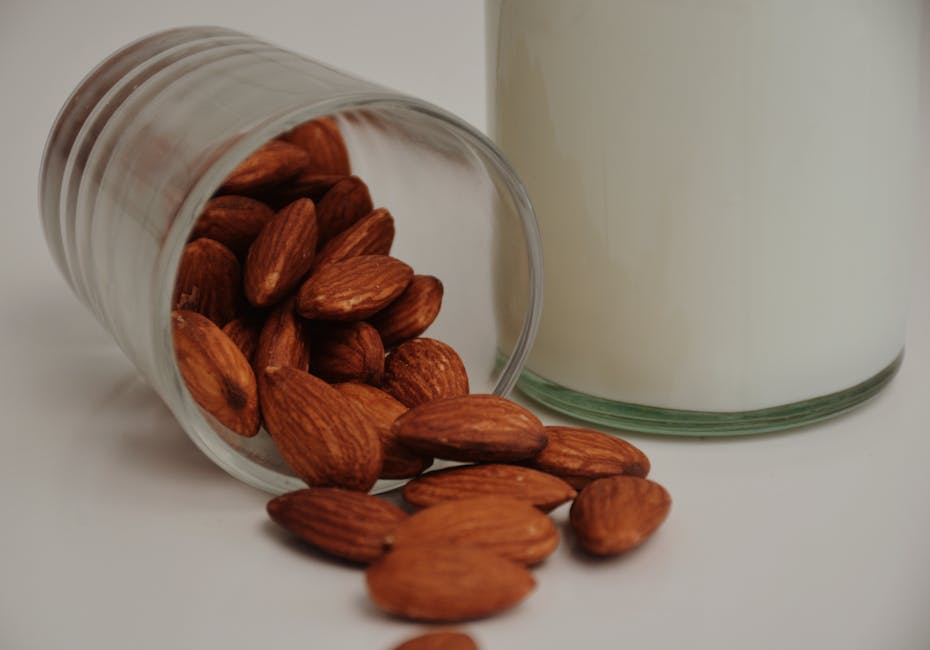
| Almonds, whole | 170567 | 1.140 | 104% |
| Almond flour | 2261420 | 0.748 | 68% |
| Crimini mushrooms (Foundation Foods) | 2003601 | 0.517 | 47% |
| Tempeh, cooked | 172467 | 0.357 | 32% |
| Sunflower seed kernels, dried | 170562 | 0.355 | 32% |
| Spinach, raw | 168462 | 0.189 | 17% |
Engineering Observation #1: The Liver Outlier Skews Every Listicle
Almost every "best riboflavin foods" article online ranks beef liver first by a wide margin and then lists ten other foods. That is technically correct — at 2.76 to 4.21 mg per 100 g, organ meats deliver 2.5x to 3.8x the daily RDA in a single serving. The problem with that ranking is volume distribution. From the FDC dataset, only 14 entries in the entire animal-products category exceed 1.0 mg/100 g of riboflavin, and 11 of them are organ meats (liver, kidney, heart) that the average reader will never cook. If a population's actual riboflavin intake collapses when you remove liver, the data is telling you something the listicle is not: most people are getting B2 from the supporting cast — dairy, eggs, fortified grains — not the headline food.
This matters for vegan and lactose-intolerant readers especially. Almonds at 1.14 mg/100 g are the only easily-eaten plant food in the FDC Foundation Foods set that crosses the 1 mg threshold, and a 100 g serving of almonds is roughly 580 calories — not a casual snack. Crimini mushrooms at 0.517 mg/100 g and tempeh at 0.357 mg/100 g are realistic daily contributors but require deliberate menu planning.
Engineering Observation #2: UV-Sensitive Vitamin in a UV-Resistant Package
Riboflavin is famously photosensitive. Research published in the Journal of Dairy Science measured roughly 28% riboflavin loss in milk after two hours of fluorescent light exposure through clear glass containers, and up to 50% loss after eight hours. This is why most U.S. milk has shifted to opaque high-density polyethylene jugs or aseptic cartons over the past three decades — the packaging change was driven partly by riboflavin retention, not just shelf appearance.
From the data engineering side, this is a reminder that USDA values represent foods at point of measurement, not point of consumption. A 0.169 mg/100 g whole milk reading reflects fresh, light-protected product. The same milk in a clear jug on a brightly lit grocery shelf for 48 hours will deliver less. If you are tracking intake, the FDC number is the ceiling, not the typical case.
Engineering Observation #3: Cooking Losses Are Smaller Than You Think
Riboflavin is heat-stable but water-soluble. The cooking loss pattern that emerges from cross-referencing raw and cooked entries in FDC is consistent: mackerel B2 actually rises from 0.312 mg/100 g raw to 0.412 mg/100 g cooked (water loss concentrates the nutrient), while leached losses appear mainly in boiled vegetables where the cooking water is discarded. USDA Agricultural Research Service retention factors place riboflavin loss from baking, broiling, and roasting at under 15% — far less than the 30 to 50% losses commonly cited for vitamin C. So if you are cooking proteins by dry heat, the FDC raw number is a reasonable proxy.
Who Is Actually At Risk of Deficiency in 2026?
The NIH classifies clinical riboflavin deficiency (ariboflavinosis) as rare in industrialized countries thanks to grain fortification, but several groups carry meaningfully elevated risk:
- Vegan adults who do not consume fortified plant milks or nutritional yeast. Without dairy, eggs, or fortified grains, daily intake from whole plant foods alone often falls below 1.0 mg.
- Pregnant and lactating individuals. RDA jumps 27% to 45% above the non-pregnant baseline. NIH NHANES data cited in the riboflavin fact sheet shows roughly 27% of pregnant women in the U.S. have intakes below the Estimated Average Requirement.
- People with malabsorption disorders. Celiac disease, inflammatory bowel disease, short bowel syndrome, and chronic alcohol use all impair B2 uptake in the proximal small intestine.
- Endurance athletes during heavy training blocks. Increased mitochondrial turnover raises B2 utilization. The American College of Sports Medicine recommends athletes meet at minimum the standard RDA, and several studies suggest higher intakes (1.5 to 2.0 mg/day) during peak training.
- Older adults eating restricted diets. Reduced dairy intake combined with appetite decline is a common pattern, and biochemical B2 deficiency rates rise after age 65.
Signs and Symptoms — What to Actually Watch For
Per the Merck Manual, the clinical picture of riboflavin deficiency is nonspecific in early stages. Frequently reported signs include cracks at the corners of the mouth (angular cheilitis), inflammation of the lips (cheilosis), a magenta-colored tongue (glossitis), seborrheic dermatitis around the nose and ears, and normocytic normochromic anemia from impaired iron mobilization. Eye symptoms — burning, itching, light sensitivity — also appear in advanced deficiency.
None of these signs are specific to B2 alone. Angular cheilitis can result from iron, B6, B12, or zinc shortfalls, fungal infection, or simply chronic lip-licking. The Merck guidance is that suspected riboflavin deficiency should be confirmed by a clinician, typically through a therapeutic trial of supplementation or by measuring erythrocyte glutathione reductase activity coefficient. Self-diagnosis from a list of symptoms is not the right move.
Practical Daily Targets, Without Listicle Inflation
If you want to hit the 1.1 to 1.3 mg RDA from food rather than a multivitamin, the FDC data points to a few realistic combinations:
- Omnivore baseline: One large egg (~0.23 mg) + 1 cup plain Greek yogurt (~0.55 mg) + 1 oz almonds (~0.32 mg) = roughly 1.1 mg, which clears the female RDA before any other meals.
- Pescatarian baseline: 4 oz cooked Atlantic mackerel (~0.47 mg) + 1 cup whole milk (~0.41 mg) + 1 cup crimini mushrooms cooked (~0.4 mg) = roughly 1.3 mg, meeting the male RDA.
- Vegan baseline: 1 oz almonds (~0.32 mg) + 1 cup tempeh (~0.6 mg) + 1 cup fortified soy milk (typical fortification ~0.5 mg per cup) + 2 cups raw spinach (~0.06 mg) = roughly 1.5 mg. Note the dependence on fortified plant milk — without it, this drops to ~1.0 mg, just under the female RDA.
Supplementation: When the Food-First Approach Doesn't Apply
I do not recommend supplementation regimens — that is a clinician's call, not an engineer's. Two contexts where supplementation has well-documented evidence are worth mentioning so readers know to ask:
The first is migraine prophylaxis. A meta-analysis published in Headache journal in 2022 found that 400 mg/day of riboflavin reduced migraine frequency in adults with episodic migraine, with a number needed to treat of approximately 4. The American Academy of Neurology lists riboflavin as a Level B evidence preventive option for migraine. This dose is roughly 300x the RDA and should be supervised by a neurologist.
The second is metabolic disorders involving FAD-dependent enzymes — multiple acyl-CoA dehydrogenase deficiency (MADD) and certain mitochondrial myopathies — where high-dose riboflavin therapy is standard care. These are diagnosed conditions, not self-treated ones.
For everyone else, food-first is the cleaner default. Riboflavin in food comes packaged with the cofactors that activate it; isolated supplementation in healthy adults generally shows no measurable benefit beyond meeting the RDA.
What HealthSavvyGuide's USDA Aggregator Will Show on Each Food Page
From the engineering side, here is what is now wired into the platform for every food entry: riboflavin in mg per 100 g sourced from FDC nutrient ID 1166, the FDC ID linked back to the source record, and a percent-of-RDA calculation defaulting to the adult female (1.1 mg) baseline with a toggle for male, pregnancy, and lactation values. Foundation Foods entries are flagged separately from SR Legacy entries because Foundation values come from more rigorous current analytical methods. SR Legacy values are still useful — most of the dairy and meat data above is SR Legacy — but they are older measurements, sometimes from the 1990s.
If you spot a food in the database where the riboflavin number looks wrong against a label or another reference, file the FDC ID and I will recheck it against the latest API pull. The dataset updates a few times per year, and the aggregator pulls a fresh snapshot quarterly.
Bottom Line
Riboflavin is one of the few vitamins where the food-first approach is genuinely easy in an omnivorous diet — eggs, dairy, and almonds together cover the RDA without effort. It becomes a planning problem on a vegan diet without fortification, during pregnancy and lactation, in malabsorption conditions, and in heavy endurance training. The USDA FDC data shows where the real B2 is, and where the marketing labels overpromise. Use the numbers, talk to a clinician if symptoms appear, and treat any supplementation above the RDA as a medical decision rather than a wellness one.
Sources cited: NIH Office of Dietary Supplements Riboflavin Fact Sheet (Health Professional version), USDA FoodData Central (Foundation Foods + SR Legacy), Merck Manual Professional Edition, USDA Agricultural Research Service nutrient retention factors, and peer-reviewed literature on riboflavin photodegradation in milk and on high-dose riboflavin for migraine prophylaxis. Article author Fanny Engriana is a software engineer building data aggregators on USDA FDC, not a registered dietitian or medical professional. All clinical decisions should involve a qualified healthcare provider.
Found this helpful?
Subscribe to our newsletter for more in-depth reviews and comparisons delivered to your inbox.