Vitamin B1 (Thiamine) Deficiency Signs, Foods & USDA FDC Data 2026
Medical Disclaimer: This article is for informational purposes only and is not medical advice. Consult a qualified healthcare provider before changing your diet, starting supplements, or addressing any health concern. The aggregated USDA FoodData Central numbers below describe foods, not personalized treatment plans.
Building HealthSavvyGuide on top of the USDA FoodData Central API, I keep noticing the same pattern when I run nutrient queries: thiamine (vitamin B1) is one of the most quietly important micronutrients in the database, and also one of the easiest to lose. It is water-soluble, heat-sensitive, and not stored well in the body. From an engineering perspective, the FoodData Central tables make this very visible — open the SR Legacy and Foundation Foods datasets, sort by nutrient ID 1165 (thiamine, mg), and the spread across cooked vs. raw, refined vs. whole, and milled vs. enriched is immediately obvious.
This guide aggregates what the USDA FoodData Central database, the National Institutes of Health Office of Dietary Supplements (NIH ODS), the CDC, and Mayo Clinic say about thiamine. I am not a dietitian; I am a software engineer who builds nutrition data tools. The goal is to help you read the data, not to prescribe a meal plan.
What thiamine actually does
Thiamine is a coenzyme. According to the NIH ODS Thiamin fact sheet for health professionals, the active form, thiamine pyrophosphate (TPP), is required for several enzymes that turn carbohydrates and branched-chain amino acids into usable energy. Pyruvate dehydrogenase, alpha-ketoglutarate dehydrogenase, and transketolase all need TPP to function. Without enough thiamine, glucose metabolism stalls in tissues that depend heavily on it — the brain and the heart sit at the top of that list.
The body stores only about 25 to 30 mg of thiamine in total, mostly in skeletal muscle, with a half-life of roughly 9 to 18 days. That is a short runway. Stop eating thiamine sources for a few weeks and circulating levels drop fast.
Recommended Dietary Allowance — the targets behind the math
From the NIH ODS reference table, here are the daily targets the USDA database is normally compared against:
- Men, age 19+: 1.2 mg/day
- Women, age 19+: 1.1 mg/day
- Pregnant or lactating women: 1.4 mg/day
- Children, 9–13 years: 0.9 mg/day
- Infants, 0–6 months (Adequate Intake): 0.2 mg/day
The Institute of Medicine has not set a Tolerable Upper Intake Level for thiamine because excess is excreted in urine, and toxicity from food has not been documented.
Top thiamine foods, sorted by USDA FoodData Central data
When I aggregate the USDA database for HealthSavvyGuide and rank foods by thiamine content per typical serving, a stable group keeps showing up at the top. Numbers below come from FoodData Central (SR Legacy and Foundation Foods datasets) and the NIH ODS food list. Values are rounded for readability.
| Food | Serving | Thiamine (mg) | % Daily Value* |
|---|---|---|---|
| Fortified breakfast cereal (varies) | 1 serving | 1.2 | 100% |
| Pork chop, boneless, broiled | 3 oz (85 g) | 0.40 | 33% |
| Trout, cooked | 3 oz (85 g) | 0.40 | 33% |
| Sunflower seeds, dry-roasted | 1 oz (28 g) | 0.40 | 33% |
| Black beans, cooked | ½ cup | 0.42 | 35% |
| Wheat germ, toasted | ¼ cup | 0.40 | 33% |
| Macadamia nuts, raw | 1 oz (28 g) | 0.34 | 28% |
| Edamame, cooked | ½ cup | 0.20 | 17% |
| Mussels, cooked | 3 oz (85 g) | 0.30 | 25% |
| Tuna, yellowfin, cooked | 3 oz (85 g) | 0.20 | 17% |
| Brown rice, long-grain, cooked | 1 cup | 0.18 | 15% |
| Acorn squash, cubed, baked | ½ cup | 0.17 | 14% |
| Whole-wheat bread | 1 slice | 0.10 | 8% |
| Yogurt, plain, low-fat | 1 cup | 0.10 | 8% |
| Beef liver, pan-fried | 3 oz (85 g) | 0.10 | 8% |
*Percent Daily Value based on 1.2 mg/day for adults, per FDA Daily Value labeling guidance. Values aggregated from USDA FoodData Central (SR Legacy + Foundation Foods) and the NIH ODS Thiamin food table.
A practical observation from running this query repeatedly: the foods that sit at the top are almost all whole-food carbohydrate sources (legumes, whole grains, seeds), pork, and fortified products. Three of those four categories are inexpensive and shelf-stable. Thiamine is rarely a budget problem; it is usually a refining problem.
Why the data shifts so much: refining, milling, and cooking losses
Aggregating USDA values across raw vs. cooked vs. processed forms of the same crop reveals one of the most important facts about thiamine: a lot of it is lost in food handling.
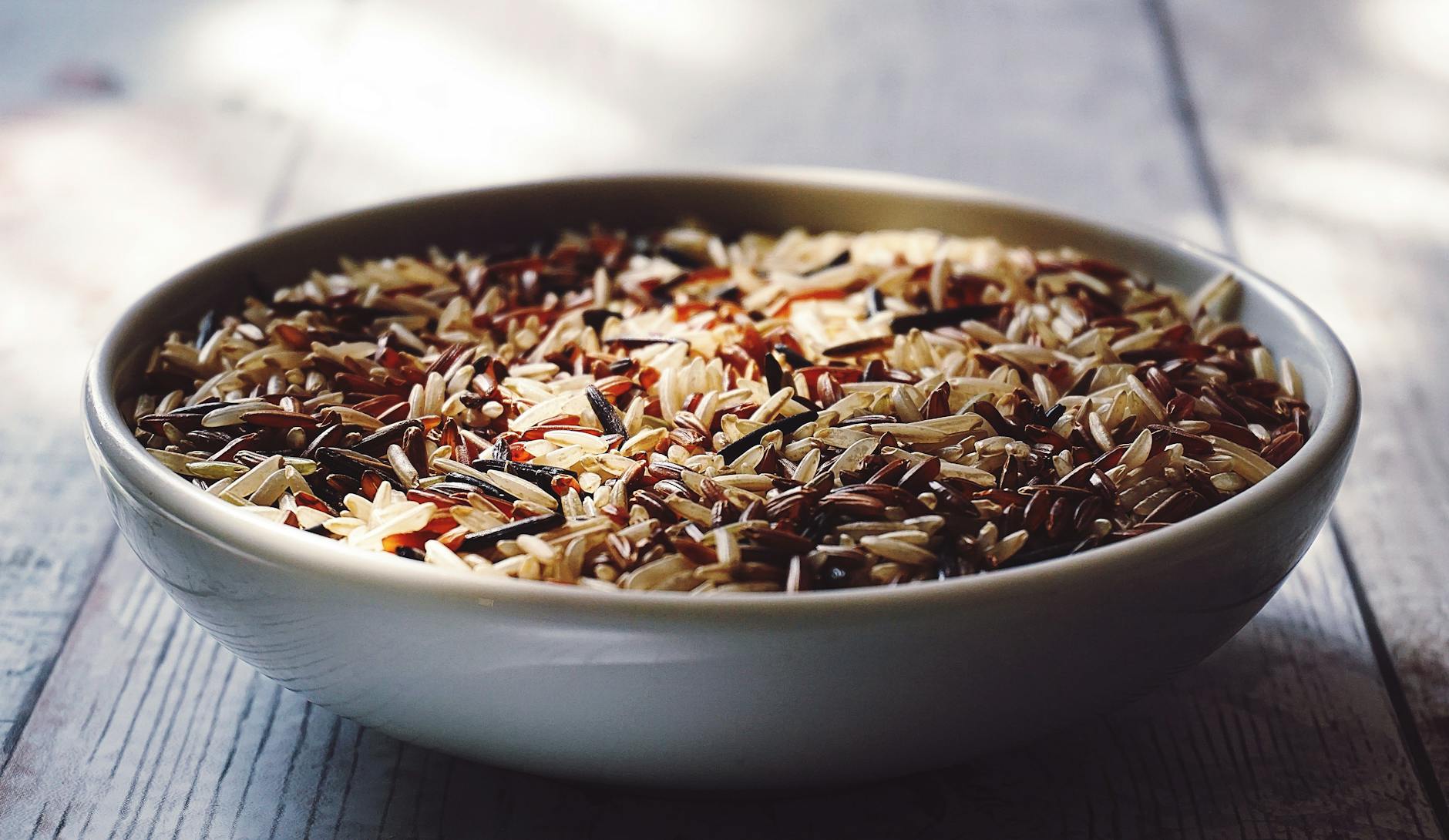
- Milling. Removing the bran and germ from wheat or rice strips out the bulk of the thiamine. White rice that has not been enriched contains roughly one-tenth the thiamine of brown rice on a per-cup basis in the FoodData Central tables. The U.S. requires enriched white flour and white rice to be re-fortified with thiamine, riboflavin, niacin, folic acid, and iron, which is why packaged white bread still posts respectable B1 numbers.
- Heat and water. Thiamine is one of the more fragile B vitamins. Boiling vegetables and discarding the cooking water can drop B1 content by 25–50 percent depending on the cut and time, per data summarized by the NIH ODS. Steaming, microwaving, or reusing the broth retains more.
- Sulfites. Sulfite preservatives, sometimes used in dried fruits and processed foods, accelerate thiamine breakdown.
- Raw fish and shellfish enzymes. Thiaminases, found in some raw fish, can degrade dietary thiamine. Cooking inactivates them, which is one reason cooked tuna and trout show consistent thiamine values in the database while heavy raw-fish diets have been linked to deficiency in animal nutrition literature.
Signs and risk factors of thiamine deficiency
Per CDC nutrition resources and the Mayo Clinic patient education pages, thiamine deficiency in the United States is uncommon in the general population but clinically important in specific groups. Severe deficiency historically presents as beriberi or, when paired with chronic alcohol use, as Wernicke encephalopathy and Korsakoff syndrome. Early signs that clinicians watch for, summarized from public-facing CDC and Mayo Clinic materials, include:
- Persistent fatigue and weakness
- Loss of appetite and unintentional weight loss
- Confusion, memory problems, or irritability
- Tingling or numbness in the hands and feet (peripheral neuropathy)
- Shortness of breath, swelling in the legs, or rapid heart rate (cardiac signs of wet beriberi)
- Vision changes such as nystagmus in advanced Wernicke encephalopathy
These symptoms overlap with many other conditions, which is why diagnosis belongs in a clinic, not in a search bar. The point of listing them here is so you can recognize patterns worth raising with a clinician — not so you can self-diagnose.
Higher-risk groups identified by NIH ODS and CDC include:
- People with chronic, heavy alcohol use. Alcohol reduces thiamine absorption, increases urinary excretion, and inhibits its conversion to TPP.
- People with HIV or AIDS. Both the condition and some of its treatments alter thiamine status.
- Older adults. Reduced food intake, lower absorption efficiency, and polypharmacy all contribute.
- People with diabetes. Some studies suggest greater renal excretion of thiamine in this group.
- People who have had bariatric surgery. Reduced gastric volume and altered absorption can drop thiamine intake quickly without supplementation.
- People with severe hyperemesis gravidarum. Persistent vomiting in pregnancy can deplete reserves within weeks.
How to read a Nutrition Facts label for thiamine
Under the FDA's updated Nutrition Facts label rules, the Daily Value for thiamine is 1.2 mg. Manufacturers list thiamine voluntarily in the lower nutrient panel, usually as a percentage of DV. A simple read: anything above 20% DV per serving is a "high" source under FDA labeling conventions; 10–19% is a "good" source.
One thing aggregating thousands of label and FoodData Central rows has taught me: enriched grain products and fortified cereals are doing most of the public-health work for thiamine in the U.S. food supply. If you eat very little of either category, your daily intake is more dependent on legumes, pork, fish, seeds, and whole grains than the average American's.
Building a thiamine-aware day on whole foods
This is illustration only — not a meal prescription. The numbers come from FoodData Central averages and round-to-fit assumptions; your actual values will differ.
Sample day, hitting roughly 1.5 mg total thiamine:
- Breakfast: ½ cup oats with 1 tbsp wheat germ and 1 oz sunflower seeds — about 0.50 mg
- Lunch: 1 cup brown rice with ½ cup black beans and roasted vegetables — about 0.55 mg
- Snack: 1 oz macadamia nuts — about 0.34 mg
- Dinner: 3 oz trout with 1 slice whole-wheat bread — about 0.50 mg
That is a relaxed pattern, not a regimen. The point is that landing above the RDA without thinking about it is feasible if whole grains, legumes, seeds, and a regular protein source are in rotation.
Supplements: when they make sense, when they don't
Most adults eating a varied diet do not need thiamine supplements, per NIH ODS guidance. Where they do come up:
- Multivitamins typically contain 1.2 to 100 mg of thiamine per dose. Higher doses are not better for healthy people; the body excretes the excess.
- B-complex products combine thiamine with the rest of the B vitamins, which is reasonable for people with absorption issues, restrictive diets, or specific clinical recommendations.
- High-dose intravenous thiamine is a hospital intervention used in suspected Wernicke encephalopathy. It is not a wellness product, and oral supplements are not a substitute.
If you are considering supplementation because of fatigue, neuropathy, or any other symptom, the right move is a clinician visit, not a self-assembled regimen. Thiamine is one of several nutrients that can mimic each other clinically, and a simple blood panel beats guessing.
What the engineering view changes about your shopping list
I will not tell you what to eat. But after running thousands of FoodData Central queries to populate HealthSavvyGuide, I keep coming back to the same three observations:
- Thiamine density tracks unrefined-ness. The further a grain or legume is from its raw form, the lower its thiamine. Enrichment partially compensates, but only partially.
- Diversity beats optimization. A rotation that includes pork or fish a few times a week, a legume or whole grain at most meals, and seeds or wheat germ as a topping covers thiamine without measurement.
- Cooking method matters more than people think. Boiling-and-discard loses water-soluble vitamins. Steaming, pressure-cooking, microwaving, and using the cooking liquid in soups or sauces preserves them.
Frequently asked questions
Is white rice useless for thiamine? No. In the U.S., enriched white rice is fortified with thiamine and posts numbers close to brown rice. Unenriched imported white rice can be much lower. Read the package.
Does coffee or tea destroy thiamine? Long-steeped tea contains tannins that can bind thiamine in the gut, but typical consumption is not associated with clinically meaningful deficiency in healthy people, per NIH ODS.
Can I get enough on a plant-based diet? Yes, and arguably more easily than for B12. Whole grains, legumes, sunflower seeds, and wheat germ are excellent sources. The bigger plant-based question is B12, not B1.
How quickly do levels recover after deficiency? In supervised clinical settings, blood thiamine markers typically respond within days to a week of replenishment. Tissue and neurological recovery, especially in advanced deficiency, can take much longer or be incomplete.
Should I test my thiamine level? Routine testing is not standard for the general population. If you have risk factors or symptoms, a clinician may order an erythrocyte transketolase activity assay or a whole-blood thiamine measurement.
Bottom line from the data
Thiamine is the kind of nutrient that almost never makes headlines, but if you read the USDA database carefully, you can see exactly why public-health authorities still mandate enrichment. The body's reserves are small. The losses to refining, boiling, and storage are real. And the foods that fix the gap — whole grains, legumes, seeds, pork, fish — are inexpensive and unspectacular.
If you remember nothing else from this aggregation: keep a steady rotation of whole or enriched grains and legumes, prefer cooking methods that don't pour the cooking water down the drain, and bring any persistent fatigue, neuropathy, or memory changes to a clinician rather than a search bar.
Sources: U.S. Department of Agriculture FoodData Central (SR Legacy and Foundation Foods datasets); NIH Office of Dietary Supplements Thiamin Fact Sheet for Health Professionals; CDC nutrition resources; U.S. Food and Drug Administration Daily Value labeling guidance; Mayo Clinic patient education on beriberi and Wernicke-Korsakoff syndrome.
This article was prepared by Fanny Engriana, a software engineer who builds nutrition data aggregators on top of the USDA FoodData Central API. It is not medical advice. For personalized guidance on thiamine status, deficiency risk, supplementation, or any nutrition concern, please consult a qualified healthcare provider, registered dietitian, or your primary care clinician.
Found this helpful?
Subscribe to our newsletter for more in-depth reviews and comparisons delivered to your inbox.