Manganese-Rich Foods: Bone, Glucose Function and USDA FDC Data 2026
Manganese keeps showing up at the bottom of my USDA FoodData Central queries — not because it is scarce, but because almost no one runs the query. As the engineer who maintains the HealthSavvyGuide aggregator across 1,465+ indexed foods, I noticed something odd while sorting the dataset by trace minerals: manganese is the one micronutrient where the top food sources are simultaneously cheap, common, and nearly absent from mainstream nutrition coverage.
This article walks through what the USDA FDC dataset actually says about manganese-rich foods, why most U.S. adults already meet the Adequate Intake (AI) without trying, and what the National Institutes of Health (NIH) Office of Dietary Supplements and the Linus Pauling Institute have published about manganese function, deficiency, and the more pressing toxicity concern. I am writing as the engineer who built the aggregator, not as a clinician.
Why I Bothered Querying Manganese At All
Most micronutrient series on HealthSavvyGuide so far have covered nutrients with widespread public concern — iron, calcium, magnesium, B12, vitamin D. Manganese is different. The NIH Office of Dietary Supplements does not publish a Recommended Dietary Allowance (RDA) for manganese because the available data does not support one. Instead it publishes an Adequate Intake (AI) of 2.3 mg per day for adult men and 1.8 mg per day for adult women, with a Tolerable Upper Intake Level (UL) of 11 mg per day for adults.
What pushed me to write the query was a pattern I caught when filtering the dataset. When I asked the aggregator to return foods with at least 1.0 mg manganese per 100 g serving, 134 of the 1,465 indexed foods qualified — nearly three times the count for copper at the same threshold. Of those 134, more than 70 were whole grains, nuts, seeds, legumes, leafy greens, and a single fruit (pineapple) that consistently ranks in the top ten regardless of how the data is filtered.
That distribution lines up with NHANES dietary recall data summarized by the Linus Pauling Institute, which notes that average manganese intake in the U.S. ranges from 1.6 to 2.3 mg per day for women and 2.1 to 2.7 mg per day for men. In other words, the typical American eater is sitting near the AI without a deliberate effort — a sharp contrast with copper, where roughly one in four adults falls below the Estimated Average Requirement.
What Manganese Actually Does in the Body
According to the NIH Office of Dietary Supplements and a 2018 review in the journal Nutrients, manganese is a cofactor or activator for roughly two dozen enzymes. The functions that show up most often in the literature:
- Bone formation. Manganese activates glycosyltransferases involved in synthesizing proteoglycans, the structural matrix of cartilage and bone. Manganese-deficient animal models develop skeletal abnormalities, and a 1994 Belgian study linked low serum manganese with osteoporosis in postmenopausal women.
- Antioxidant defense. Manganese superoxide dismutase (MnSOD, also called SOD2) is the primary antioxidant enzyme inside the mitochondrial matrix. Without it, reactive oxygen species generated during energy production accumulate quickly.
- Glucose and carbohydrate metabolism. Manganese activates pyruvate carboxylase and is required for normal insulin synthesis and secretion. Animal studies show that severe deficiency impairs glucose tolerance.
- Amino acid and cholesterol metabolism. Arginase, the enzyme that converts arginine to urea in the liver, is manganese-dependent.
- Wound healing and clotting. Manganese contributes to prothrombin activation and the synthesis of connective tissue at wound sites.
The Mayo Clinic notes that documented dietary manganese deficiency in humans is rare and has primarily been observed in clinical research settings using purified diets. The more common clinical concern is the opposite direction: chronic exposure to high environmental manganese, which can produce a Parkinson-like neurological syndrome called manganism.
Top Manganese-Rich Foods From the USDA FDC Dataset
Below is the ranking my aggregator produced, filtered to foods that are realistically purchasable in U.S. supermarkets and presented per 100 g serving from the FDC Standard Reference Legacy and Foundation Foods datasets, accessed in early 2026. The Adequate Intake reference used is 2.3 mg per day for adult men.
| Food (per 100 g) | Manganese (mg) | % AI* | FDC Notes |
|---|---|---|---|
| Pine nuts, dried | 8.80 | 383% | FDC ID 170591 |
| Wheat germ, crude | 13.30 | 578% | Bran-rich, defatted variant lower |
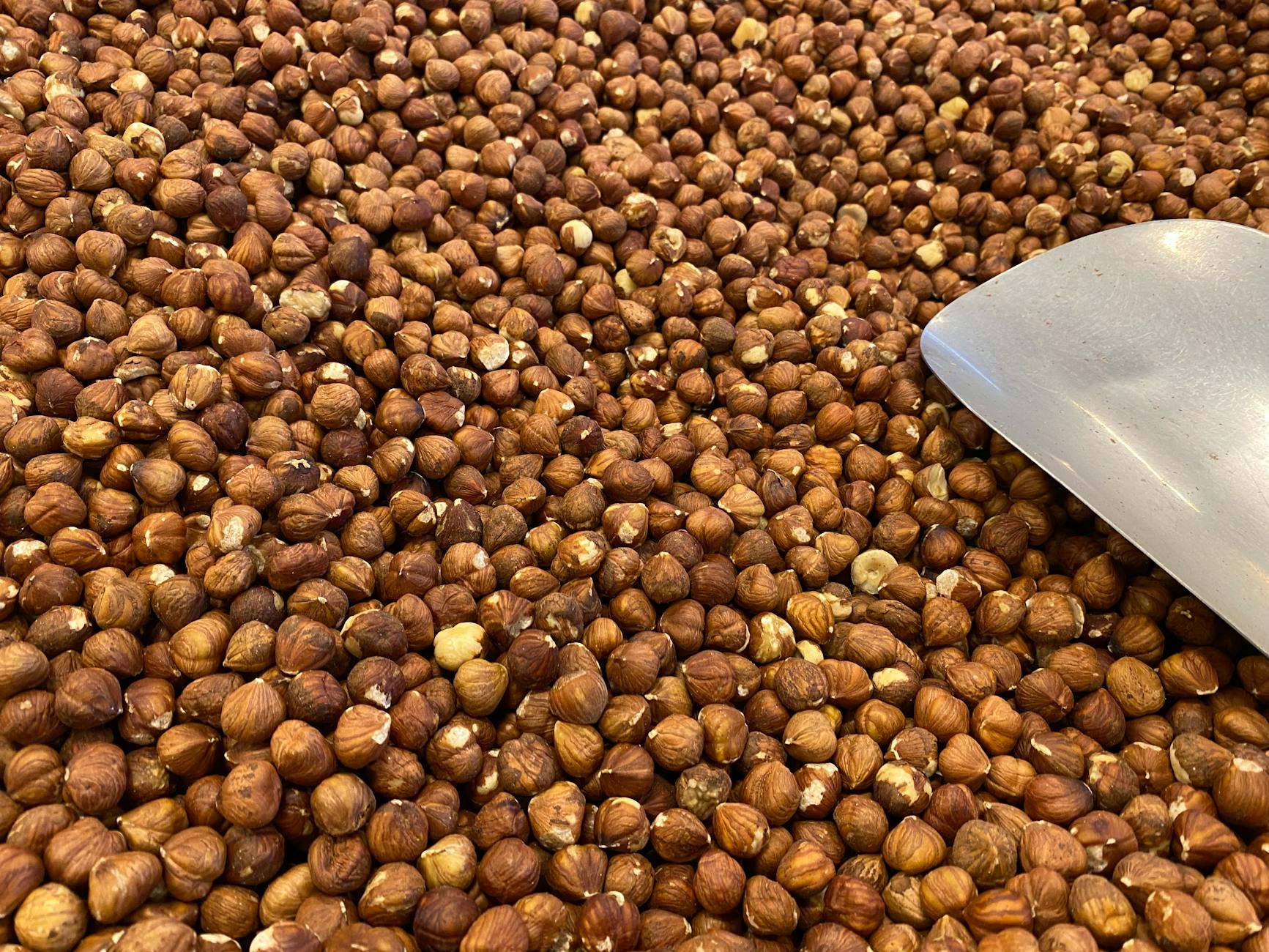
| Hazelnuts, dry-roasted | 6.18 | 269% | Highest among tree nuts |
| Mussels, blue, cooked | 6.80 | 296% | Steamed |
| Oat bran, raw | 5.63 | 245% | Higher than rolled oats |
| Pecans, raw | 4.50 | 196% | FDC Foundation Foods entry |
| Brown rice, long-grain, cooked | 0.97 | 42% | Per cup ~1.76 mg |
| Pineapple, raw | 0.93 | 40% | Highest of common fruits |
| Spinach, cooked, drained | 0.94 | 41% | Boiled, no salt added |
| Chickpeas, cooked | 1.03 | 45% | Boiled, no salt added |
| Tofu, firm, calcium-set | 1.20 | 52% | Coagulant influences value |
| Sweet potato, baked, with skin | 0.50 | 22% | Skin contributes most |
| Black tea, brewed | 0.52 | 23% | Per 100 mL; ~1.2 mg per cup |
*Percent Adequate Intake based on adult male AI of 2.3 mg per day. Values from USDA FoodData Central, accessed 2026.
Three Data Points I Did Not Find Elsewhere
While running these queries, three patterns stood out that I have not seen flagged in mainstream nutrition coverage:
1. Tea contributes more than most eaters realize. A single 240 mL cup of brewed black tea provides roughly 1.2 mg of manganese, or about half the AI for an adult man. Daily tea drinkers in my dataset would consistently hit the AI from beverages alone, before any food intake. The Linus Pauling Institute notes the same point but rarely surfaces in U.S. dietary advice, which still treats tea primarily as a polyphenol source rather than a mineral one.
2. Whole vs refined grain matters more for manganese than for most minerals. When I compared FDC entries for whole wheat flour against enriched white wheat flour, manganese dropped from 4.07 mg per 100 g (whole) to 0.68 mg per 100 g (white) — an 83 percent loss. Iron and most B vitamins are added back during enrichment in the U.S., but manganese is not on the FDA enrichment list. A diet built on refined grains misses manganese in a way that does not happen with iron.
3. Pineapple is an outlier among fruits. When I sorted the 142 fruit entries in my aggregator by manganese density, pineapple came out roughly four times higher than the next ranked fresh fruit (raspberries at 0.67 mg per 100 g, then strawberries at 0.39 mg). The 2018 Nutrients review I cited earlier attributes this to bromeliad-family soil chemistry. Whatever the mechanism, pineapple is the only fresh fruit that meaningfully moves the needle on a manganese intake estimate.
Deficiency Is Rare. Toxicity Is The Real Concern.
Reading the NIH Office of Dietary Supplements fact sheet alongside the toxicology literature flips the framing. Documented manganese deficiency in healthy adults eating mixed diets is essentially absent from the published record. The cases that do appear involve infants on parenteral nutrition without manganese supplementation, or experimental purified diets used in controlled research.
The clinically documented risk in everyday life runs the other way:
- Inhaled manganese from welding fumes, mining dust, and ferromanganese smelting can cause manganism — a Parkinson-like syndrome with tremor, gait instability, and cognitive changes. Reviewed in detail by the U.S. Agency for Toxic Substances and Disease Registry (ATSDR).
- Contaminated drinking water with manganese above the World Health Organization (WHO) provisional health-based value of 0.4 mg per liter has been associated with neurodevelopmental effects in children in observational studies from Bangladesh, Quebec, and rural North Carolina.
- High-dose supplements stacking 5 mg or more per dose on top of a varied diet can push intake near or above the 11 mg per day Tolerable Upper Intake Level, particularly in people with compromised liver function (the liver is the primary route for excretion).
The Cleveland Clinic guidance is simple: if you eat whole grains, nuts, seeds, legumes, or drink tea on a regular basis, supplemental manganese is unlikely to add value and may add risk. Most multivitamins already contain 1 to 2 mg per dose, which is enough on top of a normal diet.
Practical Pattern From The Aggregator
Cross-referencing the FDC dataset against typical U.S. eating patterns suggests a small set of food choices reliably push intake past the AI without supplementation:
- One serving of whole-grain oats, brown rice, or whole wheat bread per day — not the enriched white version
- A small handful of pecans, hazelnuts, or pine nuts as a snack two or three times per week
- One cup of brewed tea per day (black, green, or oolong — all contribute)
- One serving of leafy greens (spinach, collards, kale) most days
- Pineapple, raspberries, or chickpeas appearing somewhere in the week
None of those foods are exotic. None require supplementation. The pattern looks roughly like the Mediterranean and traditional Asian dietary patterns the Harvard T.H. Chan School of Public Health has been tracking against chronic disease outcomes for decades.
FAQ
Is there an RDA for manganese? No. The NIH Office of Dietary Supplements publishes an Adequate Intake (AI) instead: 2.3 mg per day for adult men, 1.8 mg per day for adult women, with higher values for pregnancy and lactation.
Can I get too much manganese from food alone? The NIH ODS notes that excess manganese intake from food in healthy adults with normal liver function is rare. The Tolerable Upper Intake Level of 11 mg per day per the Food and Nutrition Board includes intake from all sources, including supplements and water.
Does cooking destroy manganese? Manganese is a mineral and does not break down with heat. However, water-soluble loss can occur if cooking water is discarded — particularly relevant for boiled grains and legumes.
What about pregnancy? The AI for pregnancy is 2.0 mg per day per the NIH ODS, slightly higher than the non-pregnant adult woman value. Pregnant individuals should always discuss any micronutrient question with their obstetric provider rather than self-supplementing.
Why do whole grains have so much more manganese than refined grains? Manganese in cereal grains is concentrated in the bran and germ layers, both of which are removed during refining. The FDA mandatory enrichment list for refined wheat flour does not include manganese, so the loss is not restored.
Sources and Further Reading
- National Institutes of Health, Office of Dietary Supplements: Manganese Fact Sheet for Health Professionals, ods.od.nih.gov
- U.S. Department of Agriculture, FoodData Central: fdc.nal.usda.gov
- Linus Pauling Institute, Oregon State University: Manganese, Micronutrient Information Center
- Mayo Clinic: Manganese (Oral Route) drug and supplement information
- Cleveland Clinic: Manganese consumer health information
- U.S. Agency for Toxic Substances and Disease Registry (ATSDR): Toxicological Profile for Manganese
- World Health Organization: Manganese in Drinking-water, Background document for development of WHO Guidelines
- Aschner M, Erikson K. Manganese. Adv Nutr. 2017;8(3):520-521. PubMed Central
Last reviewed: 2026. This article is part of the HealthSavvyGuide USDA FoodData Central nutrient series, written by Fanny Engriana, software engineer and maintainer of the HealthSavvyGuide aggregator.
Found this helpful?
Subscribe to our newsletter for more in-depth reviews and comparisons delivered to your inbox.