Choline-Rich Foods: What USDA FoodData Central Data Shows (2026)
Medical Disclaimer: This article is for informational purposes only and is not medical advice. The figures below describe nutritional composition aggregated from public databases and do not constitute a diet plan or treatment recommendation. Consult a qualified healthcare provider before changing your diet, starting a supplement, or acting on the research cited here — especially if you are pregnant, breastfeeding, taking prescription medication, or managing a liver, kidney, or cardiovascular condition.
Why a nutrient with no Daily Value column kept showing up in my data
I am Fanny Engriana, a software engineer building HealthSavvyGuide as a USDA FoodData Central (FDC) aggregator project. I am not a dietitian or a nutritionist — my work is writing import pipelines, normalizing API responses, and keeping a catalog of 1,465+ foods searchable and consistent. Choline is one of the nutrients that forced me to slow down and read the schema carefully, because it behaves differently from the vitamins and minerals most people expect.
Choline is unusual in two ways. First, it was not formally recognized as an essential nutrient in the United States until 1998, when the Institute of Medicine (now the National Academies) set its first reference intakes (NIH Office of Dietary Supplements: Choline). That is recent — decades after the B vitamins were characterized. Second, because the science was still maturing, regulators set an Adequate Intake (AI) rather than a Recommended Dietary Allowance (RDA): there was not enough data to calculate an average requirement, so they estimated a level assumed to be sufficient. From an engineering standpoint, that distinction matters, because it changes how confidently you can label anything in a database as "meeting" a target.
This article walks through what choline is, what the USDA FDC database actually reports for it, and how cautious researchers describe the evidence. My angle is the engineer-builder, not the advice-giver.
What choline is, in plain terms
Choline is a water-soluble compound often grouped with the B vitamins, though it is technically not a vitamin. The body makes a small amount on its own in the liver, but the NIH states that endogenous production is not sufficient to meet needs, which is why choline is classified as an essential nutrient that must also come from food (NIH ODS).
It plays several documented roles. It is a precursor to acetylcholine, a neurotransmitter involved in memory, muscle control, and other functions. It is a building block of phosphatidylcholine and sphingomyelin, two phospholipids in every cell membrane. It serves as a methyl donor, interacting with folate and the amino acid homocysteine in one-carbon metabolism. And it is required to transport fat out of the liver as very-low-density lipoprotein — which is why severe choline deficiency has been linked in research settings to fat accumulation in the liver (National Academies dietary reference intakes summary, NCBI Bookshelf).
The reference numbers, and why most people sit below them
The NIH lists the Adequate Intake for choline as 550 mg/day for adult men and 425 mg/day for adult women, rising to 450 mg/day during pregnancy and 550 mg/day during lactation (NIH ODS). The same source notes that most people in the United States consume less than these amounts, citing national survey data. That gap between intake and target is the kind of pattern that is easy to see once food data is normalized and queryable.
There is also a Tolerable Upper Intake Level of 3,500 mg/day for adults — the point above which adverse effects, such as low blood pressure and a fishy body odor, have been observed. Reaching that ceiling from food alone is extremely difficult; the concern applies mainly to high-dose supplements, which is outside the scope of what a food-composition database can tell you.
What the USDA FoodData Central database actually shows
Here is where the engineering perspective is useful. In the USDA FDC schema, choline is tracked as the nutrient "Choline, total" (nutrient ID 421), reported in milligrams per 100 grams. Unlike some phytonutrients I have written about — catechins and spermidine, for example, which live in separate specialty datasets — choline sits in the main nutrient response for many entries. That made it straightforward to pull, but it exposed a different problem: coverage is uneven. Plenty of food records carry a choline value; plenty of others, especially branded and mixed-dish items, leave the field empty, which means any "average per category" you compute is only as honest as the underlying coverage.
With that caveat stated, here is roughly what the high-choline records cluster around. Values are approximate and rounded, drawn from USDA FDC entries; cooking method and exact cut shift them:
- Beef liver, cooked — one of the densest sources in the database, on the order of ~350–430 mg per 3-ounce (85 g) serving. A single small portion can approach or exceed a full day's AI.
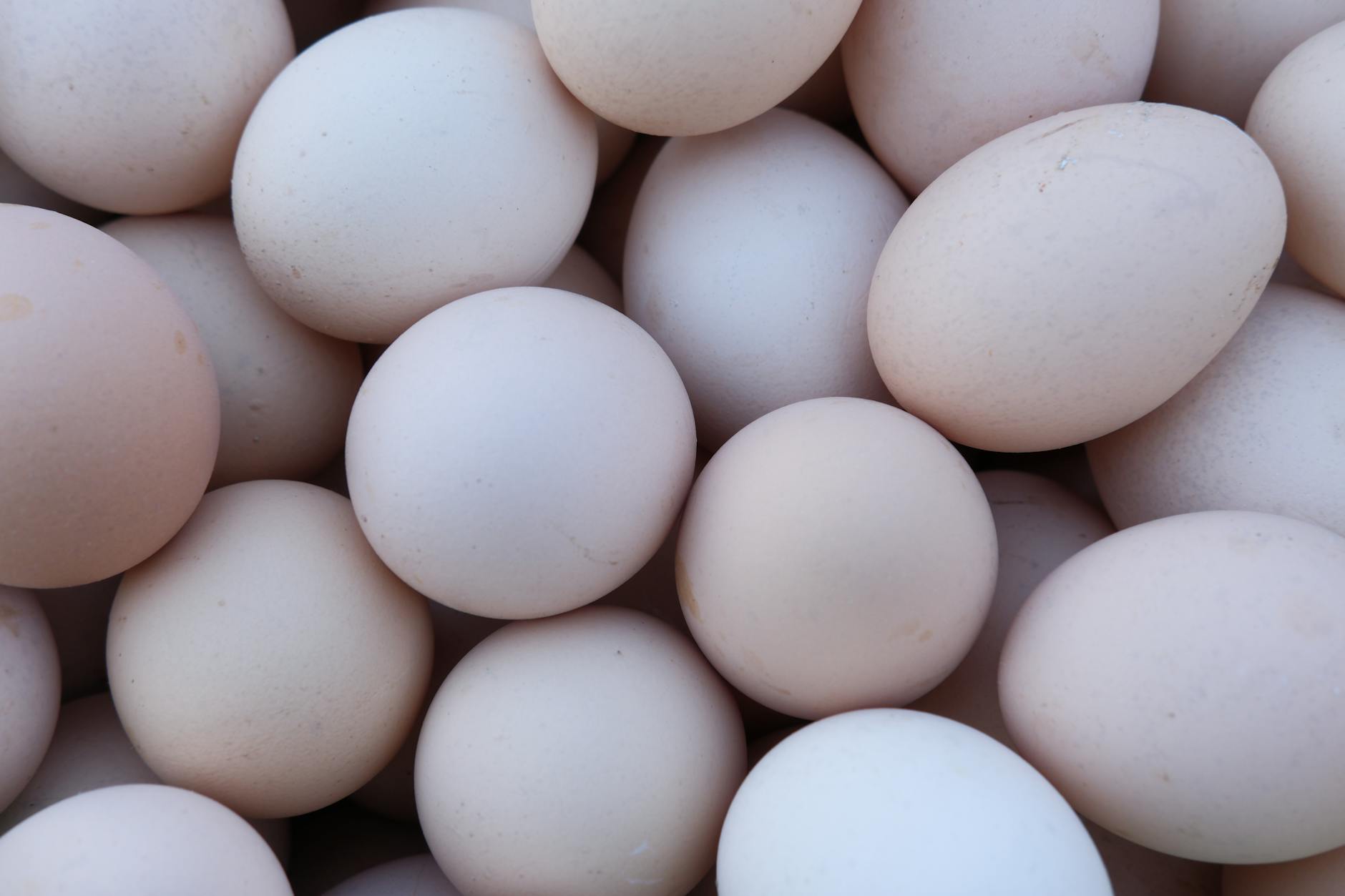
- Egg, whole, cooked — about 147 mg in one large egg, with the overwhelming majority in the yolk, not the white. This is the data point I find most worth repeating: people avoiding yolks for cholesterol reasons are discarding nearly all of the egg's choline.
- Soybeans, roasted — a strong plant source, roughly 100+ mg per half-cup.
- Chicken breast and beef, cooked — commonly in the ~70–115 mg per 3-ounce range.
- Fish (cod, salmon) — typically ~70–190 mg per 3-ounce serving depending on species.
- Shiitake mushrooms, cooked — around 50+ mg per half-cup, notable for a vegetable.
- Kidney beans, quinoa, broccoli, Brussels sprouts — modest contributors, generally in the tens of milligrams per serving, but they add up across a day.
- Milk and yogurt — small per-serving amounts that matter mainly because of how routinely they are consumed.
The pattern the data makes obvious is that choline is concentrated in animal-source foods — liver, eggs, meat, fish, dairy — with soybeans and a handful of vegetables as the meaningful plant contributors. This is consistent with NIH's own characterization of dietary sources and is one reason researchers have flagged choline intake as a point of attention for people following strictly plant-based patterns (NIH ODS).
One data-engineering wrinkle: choline comes in several forms
"Choline, total" is a sum. In real foods the nutrient exists as several distinct molecules — free choline, glycerophosphocholine, phosphocholine, phosphatidylcholine, and sphingomyelin. Egg yolk is rich in phosphatidylcholine; other foods skew toward the water-soluble forms. The USDA total field collapses all of these into one number, which is convenient for a catalog but hides a detail that some research considers relevant, since the forms differ in how they are absorbed and metabolized. When I display a single choline figure on HealthSavvyGuide, I am presenting an aggregate, and I think it is honest to say so rather than imply more precision than the field carries.
How careful researchers describe the evidence
Choline is genuinely essential, and that part is not controversial. Where caution is warranted is around the larger claims that circulate online — that choline supplements sharpen memory, prevent cognitive decline, or are required by everyone in high doses.
The NIH fact sheet reviews research on choline and brain development, liver health, cardiovascular markers, and neural-tube defects, and repeatedly notes that findings are mixed or that more research is needed before firm conclusions can be drawn (NIH ODS). Choline's role during pregnancy and fetal brain development is one of the more actively studied areas, but the appropriate place to act on that is a conversation with an obstetric provider, not a food database.
There is also an ongoing research thread linking dietary choline and carnitine to TMAO (trimethylamine N-oxide), a gut-microbe-derived compound that some cardiovascular studies have associated with risk. This is an area of active investigation, not settled science, and it underscores why none of this should be read as a recommendation to load up on — or cut out — any particular food. The data describes composition. It does not prescribe a diet.
Three things the data taught me
First, the egg-yolk concentration of choline is the single most counterintuitive number in this nutrient. Roughly all of an egg's ~147 mg sits in the yolk, so "egg-white only" choices change the choline math dramatically.
Second, the AI-versus-RDA distinction is not pedantic. Because choline only has an Adequate Intake, any tool — mine included — that flags a food as "good for meeting your choline needs" is comparing against an estimate, not a hard requirement. I built the comparison to be transparent about that.
Third, field coverage is the quiet limiter. The honest version of "average choline per food category" is "average choline among the records that report it," and those are not the same thing. That is true for a lot of FDC nutrients, but choline made it vivid because the gaps cluster in exactly the branded and prepared foods people eat most.
The bottom line
Choline is an essential nutrient that the USDA FoodData Central database tracks as a single total field, concentrated in liver, eggs, meat, fish, soybeans, and a few vegetables, with NIH-set Adequate Intakes of 550 mg/day for men and 425 mg/day for women. Survey data cited by the NIH suggests most people fall short of those numbers. That is a description of what public food data shows — useful context, not a diet plan.
If you are weighing changes to your own intake, particularly during pregnancy, while breastfeeding, on a plant-based diet, or with any liver, kidney, or heart condition, that is a question for a registered dietitian or your physician, who can account for your full health picture in a way no aggregated dataset can.
Sources: NIH Office of Dietary Supplements — Choline Fact Sheet for Health Professionals; National Academies, Dietary Reference Intakes (NCBI Bookshelf); USDA FoodData Central (nutrient ID 421, "Choline, total").
Found this helpful?
Subscribe to our newsletter for more in-depth reviews and comparisons delivered to your inbox.