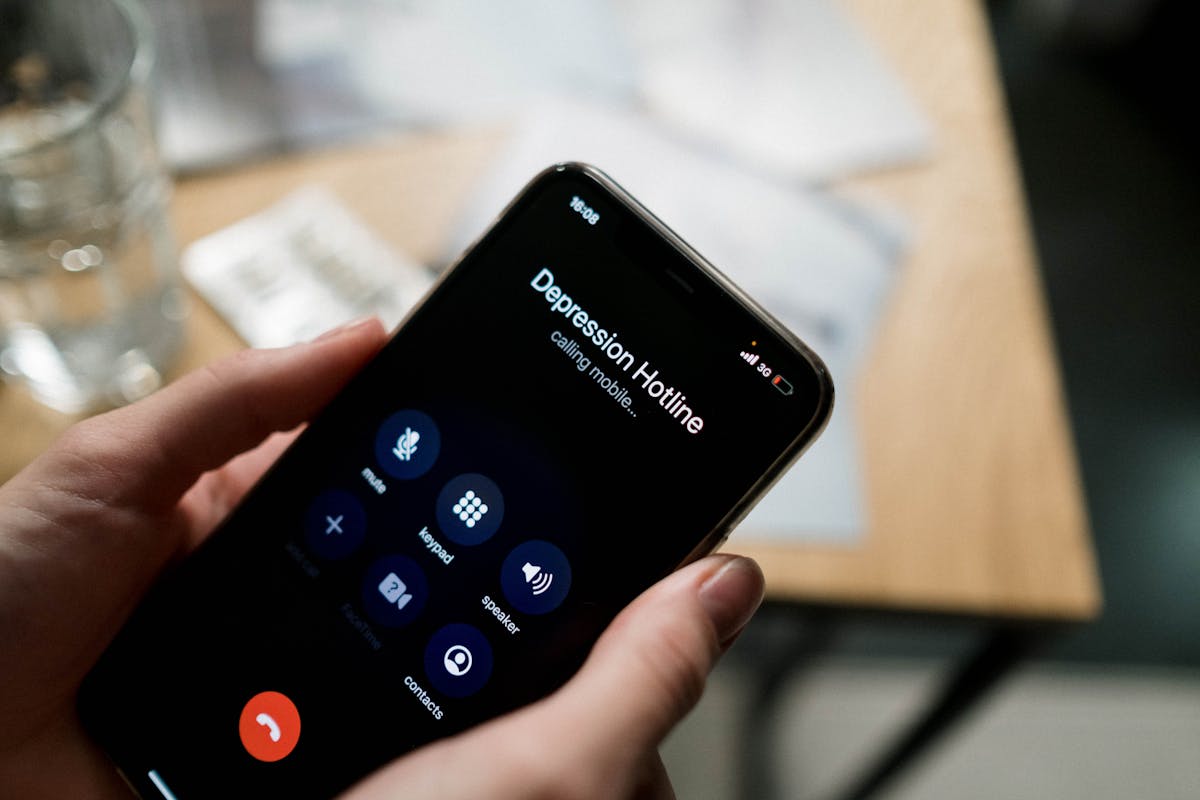
Best Mental Health Apps That Are Actually Free in 2026 — I Tested 23 and Only 7 Survived

I Tested 23 "Free" Mental Health Apps — Only 7 Were Actually Free (Here Are the Ones Worth Your Time)
Let me save you about forty hours of your life.
Last November, I went through a rough patch — nothing dramatic, just the kind of grinding low-grade anxiety that makes you check your phone seventeen times an hour and forget why you walked into a room. My therapist was booked three weeks out. I didn't want medication. So I did what any reasonable person in 2026 does: I Googled "best free mental health apps."
What I found was... frustrating. Every listicle — Healthline, Verywell Mind, Forbes Health, all of them — recommended the same apps. Calm. Headspace. BetterHelp. Talkspace. And they all had the word "free" in the headline. But when I actually downloaded them? "Free 7-day trial." "Free tier with 3 meditations." "Free to download, $69.99/year to actually use." One app — I won't name it — had a "free" plan that gave me access to exactly one breathing exercise and a motivational quote that changed daily. That's not a mental health app. That's a fortune cookie.
So I went deeper. I downloaded 23 mental health apps over the course of three weeks. I used each one for at least three days. I tracked which ones were genuinely, completely, no-strings-attached free, which ones had usable free tiers, and which ones were just trial-period bait.
Seven survived. Here they are.
1. PTSD Coach — The Government's Best Kept Secret
I'm putting this first because almost nobody knows about it, and it's legitimately one of the best mental health apps I've ever used.
PTSD Coach was developed by the U.S. Department of Veterans Affairs and the National Center for PTSD. It's completely free, no account required, no ads, and no in-app purchases. Zero monetization. Your tax dollars already paid for it.
Despite the name, you don't need to have PTSD to benefit. The app includes:
- Self-assessment tools for anxiety, depression, and stress
- Guided breathing exercises and grounding techniques
- Cognitive behavioral therapy (CBT) worksheets
- A "Manage Symptoms" toolkit with real-time coping strategies
- A crisis resources section with direct links to hotlines
My friend Jess — who's a social worker in Minneapolis, so she actually knows what she's talking about — was the one who recommended it. "I tell every client about PTSD Coach," she said over coffee one morning. "Half of them look at me weird because they think it's only for veterans. It's not. The coping tools are universal."
She's right. The grounding exercise in PTSD Coach is the same 5-4-3-2-1 sensory technique my therapist charges $175/hour to walk me through. Exact same thing. For free. On my phone.
Available on: iOS, Android
Cost: 100% free, no account, no ads
Best for: Anxiety management, grounding techniques, self-assessment
Developed by: U.S. Department of Veterans Affairs
2. MindShift CBT — Anxiety-Specific and Actually Useful
MindShift was developed by Anxiety Canada, a non-profit. Like PTSD Coach, it's completely free with no premium tier. It uses cognitive behavioral therapy principles to help you identify anxious thought patterns and reframe them.
What I like about MindShift is that it doesn't just tell you to "breathe deeply." It actually walks you through the thinking part of anxiety — the catastrophizing, the fortune-telling, the mind-reading. There's a "Thought Journal" feature where you log an anxious thought, identify the cognitive distortion, and generate an alternative thought. It's basically a pocket CBT therapist.
The one downside: the interface is a little dated. It looks like it was designed in 2019 and hasn't gotten a visual refresh. But honestly, I'd rather have an ugly app that works than a gorgeous app that wants $12.99/month to unlock the "Advanced Breathing" module. (Yes, that's a real thing I encountered.)
My coworker David started using MindShift during a particularly stressful product launch last February. "I was doing the thought journal at my desk between meetings," he told me. "My manager walked by and asked what I was typing so intensely. I panicked and said I was doing a competitive analysis." Three months later, he told his manager the truth. She downloaded it too.
Available on: iOS, Android
Cost: 100% free, no premium tier
Best for: Anxiety specifically, cognitive behavioral therapy techniques
Developed by: Anxiety Canada (non-profit)
3. Woebot — AI Therapy That Doesn't Feel Like Talking to a Robot
Okay, I was skeptical about this one. An AI chatbot for mental health? In 2026? When AI chatbots have been caught giving dangerous advice and saying unhinged things to users?
But Woebot surprised me. It's developed by clinical psychologists at Stanford, it's FDA-cleared (one of the few mental health apps that can say that), and the conversational CBT sessions are genuinely well-designed. It doesn't try to be your therapist. It's more like a structured journaling prompt that talks back.
The free version gives you unlimited daily check-ins, mood tracking, and CBT lessons. There's a paid tier for workplace programs, but the individual app is free.
What impressed me: when I told Woebot I was feeling overwhelmed, it didn't just say "try this breathing exercise." It asked specific questions — "Is this overwhelm related to something you can control, or something you can't?" — and then tailored its response based on my answer. When I said something that sounded like I might be in crisis, it immediately offered crisis resources without being melodramatic about it.
What didn't impress me: it can feel repetitive after a few weeks. The conversation patterns start looping. But as a check-in tool during rough patches, it's solid.
Available on: iOS, Android
Cost: Free (individual use), paid enterprise tier
Best for: Daily mood check-ins, CBT-based journaling
Developed by: Stanford-affiliated psychologists, FDA-cleared
4. Insight Timer — 200,000 Free Meditations (No, Really)
While Calm and Headspace lock their best content behind paywalls, Insight Timer operates on a different model entirely. The vast majority of its content — over 200,000 guided meditations, music tracks, and courses — is free. The premium tier ($60/year) adds some courses and offline access, but honestly, you could use the free version for years without running out of content.
The reason it works: Insight Timer is community-driven. Teachers upload their own meditations, similar to how YouTube works. This means the quality varies — some meditations are incredible, some sound like they were recorded in a bathroom — but the sheer volume means you'll find what works for you.
I use it specifically for sleep. There's a teacher named Sarah Blondin whose sleep meditations have knocked me out in under ten minutes, consistently, for four months. I haven't slept this well since college. And I didn't pay a cent.
My sister tried it after I wouldn't shut up about it. She lasted two days before declaring she "can't meditate." Then I showed her the timer feature — just a simple meditation timer with ambient sounds, no guided voice. She's been using it for 15 minutes every morning since. Different strokes.
Available on: iOS, Android, Web
Cost: Free (200,000+ guided meditations), optional premium $60/year
Best for: Meditation, sleep, relaxation
Developed by: Insight Network (community-driven)
5. Bearable — Mood and Symptom Tracking That Actually Reveals Patterns
Bearable is a mood and health tracking app that does something most competitors don't: it shows you correlations. After two weeks of logging your mood, sleep, exercise, and symptoms, Bearable starts generating "Insights" — like "Your mood tends to be 23% higher on days you sleep more than 7 hours" or "Your anxiety increases on days you drink more than 2 coffees."
The free tier is generous. You get mood tracking, symptom tracking, customizable factors, and basic insights. The premium tier ($49.99/year) adds more detailed analytics and unlimited factors, but the free version covers what most people need.
I found out through Bearable that my anxiety spikes consistently on Sundays around 4 PM. Every single week. Once I saw the pattern, I realized it was anticipatory anxiety about Monday mornings. Knowing the pattern didn't make it disappear, but it made it manageable. I started scheduling something I enjoy on Sunday afternoons — cooking a complicated recipe, usually — and the spike dropped noticeably within two weeks.
That kind of self-knowledge is worth more than any motivational quote.
Available on: iOS, Android
Cost: Free (core tracking + basic insights), premium $49.99/year
Best for: Identifying mood patterns and triggers
Developed by: Bearable (independent)
6. Finch — Self-Care Gamified (Without Being Annoying About It)
Finch is a virtual pet app that doubles as a self-care tracker. Before you roll your eyes — I know, I did too — hear me out. You take care of a little bird by completing self-care activities: journaling prompts, breathing exercises, gratitude logs, step goals. The bird "grows" and goes on adventures as you check things off.
It sounds childish. It works disturbingly well.
The psychology behind it is solid: external motivation through a care-taking mechanic. When you don't want to do a breathing exercise for yourself, you'll do it because your fictional bird looks sad. Is this healthy? Debatable. Is it effective? Absolutely.
The free version includes daily check-ins, breathing exercises, journaling, goal setting, and the core pet mechanic. Premium ($54.99/year) adds more customization and a "Tree Town" feature, but I've used the free version for five months without feeling limited.
My cousin's teenage daughter uses Finch. When I asked her what she likes about it, she said, "I don't know, it's just nice to have something that's happy to see me every morning." I had to leave the room for a minute after that one.
Available on: iOS, Android
Cost: Free (core features), premium $54.99/year
Best for: Building self-care habits, younger users, anyone who responds to gamification
Developed by: Finch (independent)
7. 7 Cups — Free Peer Support That's Better Than Reddit
Sometimes you don't need an app. You need a person. 7 Cups connects you with trained volunteer "listeners" — real humans who've completed a training program in active listening. You can chat anonymously, for free, 24/7.
The quality of listeners varies, and I want to be honest about that. I've had conversations with listeners who were genuinely empathetic and skilled, and I've had conversations where the person clearly copy-pasted their training responses. But even the mediocre ones are better than spiraling alone at 2 AM.
7 Cups also has community forums, group support rooms, and self-help guides. The paid tier ($150/month) offers licensed therapy, but the free peer support is the real differentiator — no other app offers anything like it at no cost.
A word of caution: peer listeners are NOT therapists. They cannot diagnose, prescribe, or provide clinical advice. If you're in crisis, use the app's crisis resources or call 988 (the Suicide and Crisis Lifeline). Peer support is for processing, venting, and feeling heard — not for clinical mental health treatment.
Available on: iOS, Android, Web
Cost: Free (peer support, forums, self-help), paid therapy $150/month
Best for: Talking to someone when you can't access (or afford) professional help
Developed by: 7 Cups (backed by Y Combinator)
The Apps I Tested That Didn't Make the Cut (and Why)
Quick rundown for the curious:
- Calm: Beautiful app, genuinely good content. But the free tier in 2026 is a joke — about 5% of the library. $69.99/year for the rest. Not "free."
- Headspace: Same issue. The free "Basics" course is decent for absolute beginners, but you'll hit the paywall within a week. $69.99/year.
- BetterHelp/Talkspace: These are online therapy platforms, not free apps. Starting at $65-100/week. Useful? Sure. Free? Absolutely not.
- Youper: AI-based, decent CBT tools, but the free tier got gutted in late 2025. Most features now require premium.
- Moodfit: Clean interface, good tracking. But the free tier is too limited — can't even customize mood factors without paying.
- Daylio: Good mood tracker, but Bearable does everything Daylio does plus correlation insights, and Bearable's free tier is more generous.
What I Actually Use Now (My Stack)
After all that testing, my daily mental health "stack" is:
- Morning: Finch check-in + one journaling prompt (3 minutes)
- Midday: Woebot mood check-in if I'm feeling off (5 minutes)
- Evening: Bearable mood log (1 minute)
- Bedtime: Insight Timer sleep meditation (10 minutes)
- As needed: MindShift thought journal when anxiety spikes, PTSD Coach grounding exercise in acute moments
Total daily time: about 20 minutes. Total cost: $0. Is it a replacement for professional therapy? Absolutely not. But on the days between therapy sessions, or the weeks when my therapist is booked, or the 2 AM moments when no professional is available — these apps have been a genuine lifeline.
If you're struggling right now and money is tight, start with one. Any one. PTSD Coach if you want structure. Insight Timer if you want calm. 7 Cups if you want a human. You don't need to spend a dollar to take your mental health seriously.
And if any app ever tells you that healing requires a premium subscription, close it and find a better one. Your brain deserves better than a paywall.
Related Reading
- Marijuana Does Not Help Anxiety or Depression — What the Research Shows
- ADHD Brains Slip Into Microsleep While Awake — New Study Explains Why
- Why Social Media Is Destroying Your Sleep Quality
Need professional digital solutions for your health and wellness business? Wardigi (Warung Digital) builds websites and apps for healthcare providers and wellness brands.
Disclaimer: This article is for informational purposes only and does not constitute medical or mental health advice. If you are experiencing a mental health crisis, please contact the 988 Suicide and Crisis Lifeline (call or text 988), the Crisis Text Line (text HOME to 741741), or your local emergency services. App recommendations are based on the author's personal experience and publicly available information as of March 2026. Sources: NIMH, SAMHSA, FDA Medical Device Clearances, Anxiety Canada, U.S. Department of Veterans Affairs National Center for PTSD.
Found this helpful?
Subscribe to our newsletter for more in-depth reviews and comparisons delivered to your inbox.
Related Articles