Apigenin-Rich Foods: Parsley, Chamomile & Celery (USDA Flavonoid Data)
This article is for informational purposes only and is not medical advice. Consult a qualified healthcare provider before making changes to your diet, supplements, or health routine. Nutrient values cited here describe foods in general and are not a treatment recommendation for any condition.
Building HealthSavvyGuide on top of the USDA's nutrition datasets, I keep a running list of compounds that are easy to find in a chemistry textbook but surprisingly hard to find clean numbers for. Apigenin is near the top of that list. It is a plant flavonoid that shows up in parsley, chamomile, and celery, and it has picked up attention in longevity circles over the last few years. But when I went looking for per-food values to fold into the aggregator, I learned that apigenin does not live in the main FoodData Central tables at all. This article is the engineering write-up of what I found, the data sources I had to stitch together, and what the numbers actually say.
Why apigenin is not in the table you expect
Most people assume that if a compound is in food, it is in FoodData Central (FDC). That assumption breaks for flavonoids. FDC's Foundation Foods and SR Legacy datasets are built around macronutrients, vitamins, and minerals — the values printed on a Nutrition Facts label. Polyphenols like apigenin, quercetin, and luteolin are not regulated label nutrients, so they were never collected at the same scale.
The actual numbers come from a separate release: the USDA Database for the Flavonoid Content of Selected Foods, Release 3.3 (last updated 2018, archived through the Nutrient Data Laboratory). From an engineering perspective this matters a lot. The flavonoid database covers only a few hundred foods, uses a different aglycone-based measurement convention, and is distributed as a standalone file rather than through the modern FDC API. So aggregating apigenin means joining a legacy flat file against the FDC food list by hand, and accepting that coverage is patchy. That gap — a famous compound with a thin, siloed dataset — is exactly the kind of thing you only notice when you try to build a database instead of read one.
Where apigenin actually concentrates
Here is the first data point that surprised me. Apigenin is wildly unevenly distributed. A handful of herbs hold almost all of it, and most foods have trace amounts or none recorded. According to the USDA flavonoid release, the standout values (apigenin aglycone, per 100 grams) are:
- Dried parsley — roughly 4,500 mg per 100 g. This is the single highest entry in the database by a wide margin. It is also slightly misleading, because nobody eats 100 grams of dried parsley; a teaspoon is closer to 1 gram.
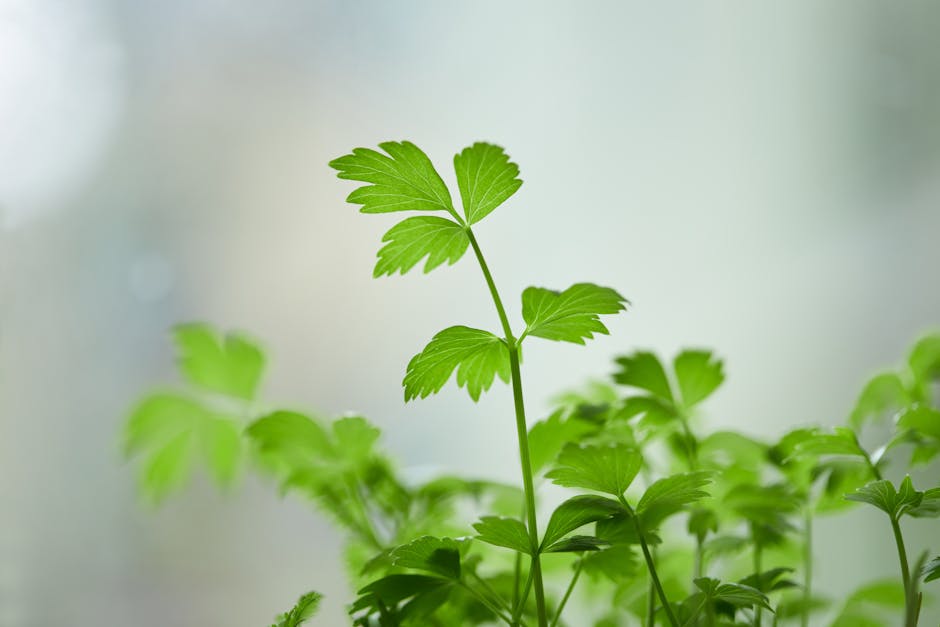
- Fresh parsley — around 215 mg per 100 g, still extremely high for a raw food.
- Dried chamomile / chamomile tea — chamomile is one of the most concentrated dietary sources, which is why apigenin is often discussed alongside chamomile's traditional use as a calming tea.
- Celery and celery seed — celery hearts and leaves carry meaningful amounts, generally in the low single-digit to low double-digit mg per 100 g range depending on the part.
- Other herbs — oregano, thyme, and certain peppers show measurable but far lower values.
The second data point: the dried-versus-fresh gap is almost entirely a water-weight artifact. Drying parsley does not create apigenin; it removes water, so the same compound is concentrated into a smaller mass. When you normalize for a realistic serving, fresh parsley and a cup of chamomile tea are far more representative of what people actually consume than the eye-catching 4,500 mg headline number. This is a recurring trap in nutrition data — "per 100 g" is a lab convention, not a serving size, and reporting it without that caveat is how thin content inflates numbers.

The aglycone problem (why two sources disagree)
The third thing worth flagging for anyone trying to use these numbers: apigenin in food is mostly bound to sugars as glycosides — apiin in parsley, apigetrin and others elsewhere. The USDA flavonoid database reports the aglycone, meaning it chemically strips the sugar and reports the free apigenin backbone. Other databases sometimes report the intact glycoside weight. The same celery sample can therefore show two different "apigenin" numbers depending on which convention a source used, and the gap can be large.
For an aggregator this is a real data-integrity issue, not a rounding detail. If you ingest one source in aglycone units and another in glycoside units and store both in a single column, your database is quietly wrong. I ended up tagging every flavonoid value with its measurement basis so the two never get averaged together. It is the kind of invisible decision that determines whether a nutrition dataset is trustworthy.
What the research actually claims — and what it does not
Apigenin has a large preclinical literature. In cell and animal studies it has been investigated for antioxidant and anti-inflammatory activity, and more recently for effects on cellular aging pathways. The peer-reviewed literature indexed by the NIH includes work on apigenin and an enzyme called CD38 that influences NAD+ levels, which is the thread that connects it to the longevity conversation.
It is important to be precise about the strength of this evidence, because this is a YMYL topic and overstating it would be irresponsible. The bulk of apigenin research is in vitro (cells in a dish) or in animal models. Rigorous human clinical trials measuring health outcomes from dietary apigenin are sparse. The doses used in laboratory studies are often far higher than you would get from eating parsley or drinking chamomile tea. None of this means apigenin is ineffective — it means the honest summary is "biologically interesting, not clinically proven in humans." Authoritative bodies such as the National Institutes of Health and the NIH Office of Dietary Supplements do not list apigenin among nutrients with established intake recommendations, precisely because the human evidence is not there yet.
Putting it in a meal instead of a supplement bottle
If you simply want more apigenin-containing foods in your week, the data points to ordinary, inexpensive choices rather than capsules:
- Fresh parsley used as an actual ingredient — folded into tabbouleh, chimichurri, or a green sauce — rather than a plate garnish you push aside.
- Chamomile tea, which delivers apigenin in a watery, low-calorie form and is one of the most-studied culinary sources.
- Celery, including the leafy tops most people discard, which tend to be richer than the pale stalks.
- Dried herbs like oregano and thyme as everyday seasoning — small amounts, but they add up across a week of cooking.
A reasonable, evidence-aligned takeaway is the same one nutrition agencies have repeated for decades: a diet rich in a wide variety of plants gives you apigenin alongside hundreds of other polyphenols, fiber, vitamins, and minerals that work together. That is a sturdier position than chasing a single molecule. The CDC's nutrition guidance and the Harvard T.H. Chan / Harvard Health materials both frame flavonoids this way — as one reason to eat more plants, not as standalone medicine.
What I changed in the aggregator
Concretely, working through apigenin pushed three changes into HealthSavvyGuide's data layer that apply to every flavonoid I add next:
- Source provenance per value. Each flavonoid figure now records whether it came from FDC proper or the legacy flavonoid release, so I never imply the main API has data it does not.
- Measurement-basis tagging. Aglycone versus glycoside is stored explicitly, preventing the silent unit-mixing described above.
- Serving-size context. Any "per 100 g" headline is paired with a realistic serving so a 4,500 mg dried-parsley figure cannot masquerade as something you would actually eat.
That is the honest engineering story behind one flavonoid. The compound is genuinely interesting and the food sources are cheap and pleasant to eat. But the gap between a striking lab number and a meaningful dietary intake is wide, and most of the value of building an aggregator is making that gap visible instead of hiding it behind a big number.
Key takeaways
- Apigenin is a flavonoid concentrated in parsley, chamomile, and celery, and it is documented in the USDA flavonoid release rather than the main FoodData Central tables.
- Dried parsley tops the database at roughly 4,500 mg per 100 g, but that is a water-weight artifact; fresh parsley and chamomile tea reflect realistic intake.
- USDA reports apigenin as the aglycone, which can differ substantially from glycoside-based figures in other sources.
- Most apigenin research is preclinical; strong human clinical evidence is limited, and no authoritative body sets an intake recommendation.
- The practical move is variety: eat more apigenin-containing plants as part of an overall plant-rich diet rather than relying on a single compound.
Sources referenced: USDA FoodData Central (fdc.nal.usda.gov); USDA Database for the Flavonoid Content of Selected Foods, Release 3.3; National Institutes of Health and NIH Office of Dietary Supplements (nih.gov, ods.od.nih.gov); U.S. Centers for Disease Control and Prevention nutrition resources (cdc.gov); Harvard Health (health.harvard.edu). This content is informational and not a substitute for personalized advice from a licensed healthcare professional.
Found this helpful?
Subscribe to our newsletter for more in-depth reviews and comparisons delivered to your inbox.