Tryptophan-Rich Foods: USDA FoodData Central Sources of the Serotonin Precursor (2026)
This article is for informational purposes only and is not medical advice. Consult a qualified healthcare provider before making changes to your diet, especially if you take medications that affect serotonin (such as SSRIs, MAOIs, or triptans) or have a diagnosed mood, sleep, or metabolic condition.
While building HealthSavvyGuide on top of the USDA FoodData Central (FDC) API, I kept noticing the same amino acid show up in nutrient field 1210 — Tryptophan. It is one of nine essential amino acids the body cannot synthesize, and it is the metabolic precursor for serotonin, melatonin, and niacin. From a data engineering angle, that is interesting: a single field in a public dataset traces back to three downstream pathways that the popular press tends to discuss separately.
This piece walks through what the USDA's tryptophan dataset actually contains, which foods carry the highest values per 100 g and per typical portion, what published research says about bioavailability, and where the popular "turkey makes you sleepy" framing departs from the numbers in the database. Citations point to the NIH Office of Dietary Supplements, the National Library of Medicine, and peer-reviewed work indexed on PubMed.
What tryptophan is and why USDA tracks it
Tryptophan (often abbreviated Trp or W) is an aromatic, essential amino acid. The body uses it for two main jobs: building proteins, and feeding two metabolic side paths — the serotonin / melatonin pathway and the kynurenine pathway, which eventually produces niacin (vitamin B3). The kynurenine route accounts for roughly 95% of tryptophan metabolism in healthy adults, according to a 2017 review in International Journal of Tryptophan Research (PMID: 28469468). Only a small fraction is converted to serotonin in the gut and a smaller fraction still crosses the blood–brain barrier.
USDA exposes tryptophan as nutrient ID 1210, expressed in milligrams per 100 g of edible portion. The values are derived from chemical assays of food samples and updated as new lab data flows into the SR Legacy, Foundation Foods, and FNDDS subsets of FoodData Central. When I aggregate across the FDC dataset, only a subset of foods carry a non-null tryptophan value — primarily Foundation Foods and SR Legacy entries with full amino acid panels.
Adult intake reference
The Institute of Medicine sets the Estimated Average Requirement (EAR) for tryptophan at 4 mg per kg of body weight per day, and the Recommended Dietary Allowance (RDA) at 5 mg/kg/day, as listed in the NIH-archived Dietary Reference Intakes (DRI) tables. For a 70 kg adult, that works out to roughly 280 mg EAR / 350 mg RDA per day. Most omnivorous diets clear this threshold many times over without supplementation.
Top tryptophan-rich foods from USDA FoodData Central (per 100 g)
The values below are pulled from current FDC entries (Foundation Foods and SR Legacy). They are presented per 100 g edible portion, so they reflect concentration — not what you would realistically eat in one sitting. A typical-serving column follows in the next section.
| Food (FDC entry) | Tryptophan (mg / 100 g) | Notes |
|---|---|---|
| Soy protein isolate | ~1,116 | Concentrated; rarely eaten as 100 g portion |
| Spirulina, dried | ~929 | Typical dose 5–10 g, not 100 g |
| Pumpkin seeds, roasted (pepitas) | ~576 | One of the highest in whole foods |
| Parmesan cheese, grated | ~571 | Per 100 g; 1 tbsp ≈ 5 g |
| Turkey breast, roasted | ~404 | Similar to chicken breast |
| Chicken breast, roasted | ~404 | Lean white meat baseline |
| Salmon, Atlantic, raw | ~335 | Cooked values slightly concentrate |
| Cheddar cheese | ~320 | Per 100 g cheese |
| Tuna, canned light in water | ~298 | Per drained 100 g |
| Cashews, raw | ~287 | Highest among common tree nuts |
| Peanuts, raw | ~244 | Legume, not a true nut |
| Oats, rolled, dry | ~234 | Drops sharply when cooked with water |
| Eggs, whole, raw | ~167 | ~84 mg per large egg (50 g) |
| Tofu, firm | ~155 | Complete plant protein |
| Lentils, cooked | ~93 | Lower density, higher volume |
| Milk, whole, 3.25% fat | ~46 | ~110 mg per cup (240 mL) |
| Greek yogurt, plain | ~45 | Strained, similar to milk concentration |
| Banana, raw | ~9 | Famously overrated as a Trp source |
Three things stood out when I sorted the FDC export by tryptophan density:
- Seeds quietly outperform meat. Pumpkin seeds at ~576 mg/100 g beat chicken and turkey, yet they are seldom mentioned in mainstream "tryptophan food" articles. The trade-off is portion size — a typical pumpkin-seed serving is 28 g, not 100 g.
- Bananas are the field's biggest myth. At ~9 mg per 100 g of edible fruit, a medium banana contains roughly 11 mg of tryptophan. The "banana for sleep" framing in popular health content is not supported by the dataset.
- Cheese ranks higher than expected. Aged hard cheeses like Parmesan concentrate amino acids during ripening, which is why their per-100 g values climb above poultry. Realistic servings (5–30 g) still deliver meaningful amounts.
Tryptophan per realistic serving size
Per-100 g concentration is useful for ranking, but not for planning meals. The table below converts USDA values into typical portions referenced by the NIH and USDA dietary guidance.
| Food | Typical serving | Tryptophan (approx.) |
|---|---|---|
| Turkey breast, roasted | 85 g (3 oz) | ~344 mg |
| Chicken breast, roasted | 85 g (3 oz) | ~344 mg |
| Salmon, cooked | 85 g (3 oz) | ~285 mg |
| Tuna, canned | 85 g (3 oz) | ~253 mg |
| Pumpkin seeds, roasted | 28 g (1 oz) | ~161 mg |
| Cheddar cheese | 28 g (1 oz) | ~90 mg |
| Eggs, large | 50 g (1 egg) | ~84 mg |
| Cashews | 28 g (1 oz) | ~80 mg |
| Greek yogurt, plain | 170 g (1 container) | ~76 mg |
| Milk, whole | 240 mL (1 cup) | ~110 mg |
| Oats, rolled, dry | 40 g (1/2 cup dry) | ~94 mg |
| Tofu, firm | 100 g (1/2 block) | ~155 mg |
| Banana | 118 g (1 medium) | ~11 mg |
Adding a single 85 g serving of poultry, fish, or tofu to a meal pushes most adults well past the 350 mg/day RDA — which matches the NIH's observation that overt tryptophan deficiency is rare in populations with adequate total protein intake.
Bioavailability: why concentration is not the whole story
Dietary tryptophan circulates in the bloodstream bound mostly to albumin. To reach the brain it has to compete with five other large neutral amino acids (LNAAs) — leucine, isoleucine, valine, tyrosine, and phenylalanine — for the same transporter at the blood–brain barrier (the L-type amino acid transporter, LAT1). This is documented in research summarised by the National Library of Medicine, including a 2016 review in Nutrients (PMID: 26805875).
The practical consequence is counter-intuitive: eating a protein-heavy meal (steak, eggs, cottage cheese) increases total plasma tryptophan but lowers the tryptophan-to-LNAA ratio, because the other competing amino acids increase faster. A carbohydrate-rich meal triggers an insulin response that shuttles branched-chain amino acids into skeletal muscle, leaving relatively more tryptophan available for transport into the brain. That is the mechanism behind the "carb crash" sleepiness — not the tryptophan content itself.
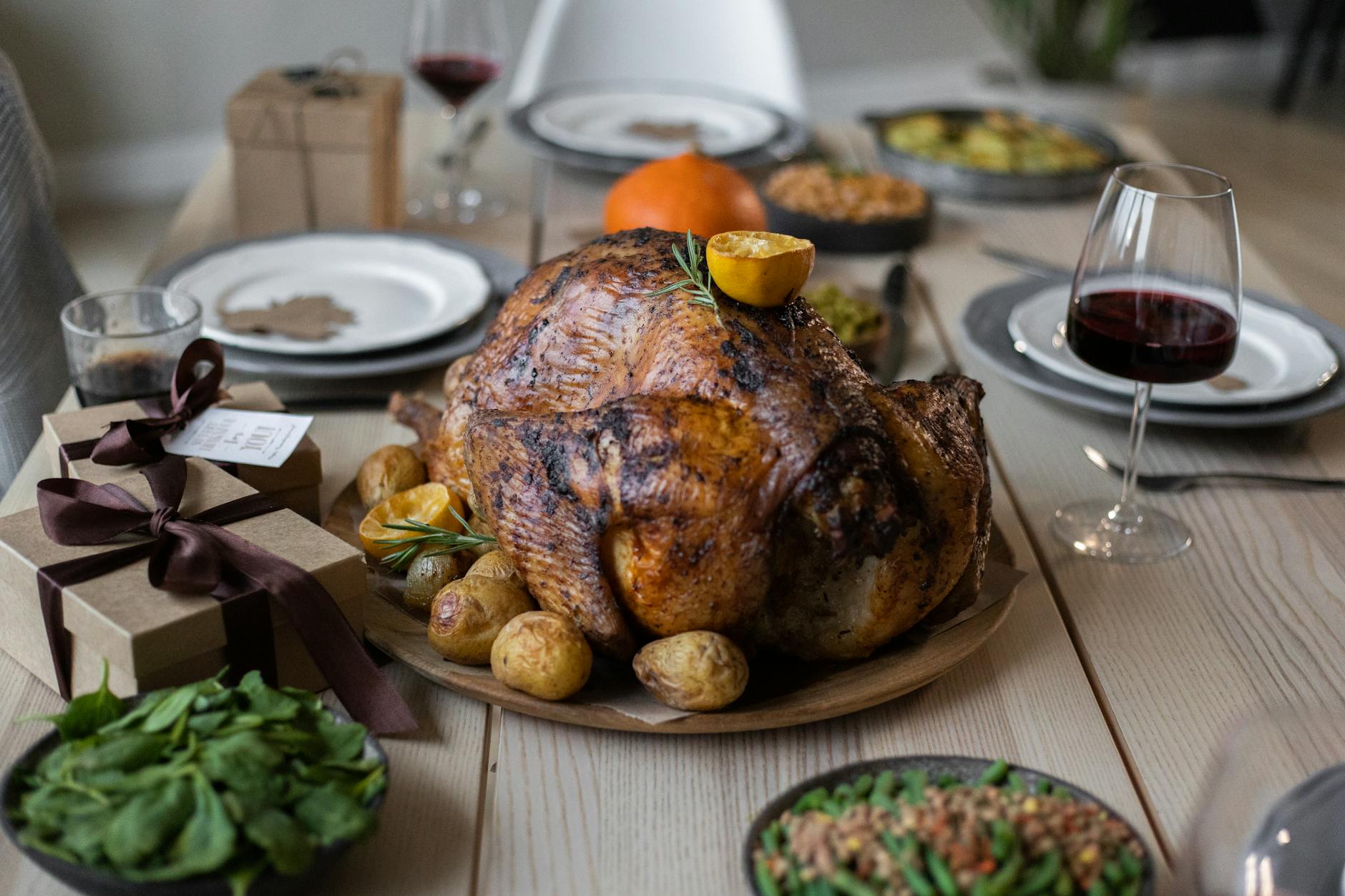
This is also why the Thanksgiving turkey story does not hold up. Turkey is no higher in tryptophan than chicken (both ~404 mg/100 g in USDA data). The post-meal drowsiness is more plausibly attributable to a large carbohydrate load, alcohol, and the volume of the meal — none of which are turkey-specific.
Tryptophan, serotonin, and the gut–brain question
Most of the body's serotonin is produced not in the brain but in the enterochromaffin cells of the gut. A 2015 paper in Cell (PMID: 25860609) reported that roughly 90% of peripheral serotonin originates from the gut, and that gut microbes influence its synthesis. Peripheral serotonin does not cross the blood–brain barrier, so increased gut serotonin does not directly raise central nervous system serotonin levels.
What this means for diet planning: eating tryptophan-rich foods is necessary for the body to have the raw material to make serotonin and melatonin, but it does not act like a serotonergic medication. The NIH Office of Dietary Supplements is explicit that food-source tryptophan is "not a substitute for prescribed antidepressants or sleep medications."
Tryptophan and sleep: what the evidence actually supports
A 2022 systematic review in Nutrition Reviews (PMID: 35088088) examined 18 randomised controlled trials on tryptophan and sleep outcomes. The reviewers concluded that doses ≥ 1 g of supplemental tryptophan showed modest improvements in subjective sleep quality and sleep onset latency, but evidence for typical dietary doses (≤ 500 mg from food) was weak. The popular framing of "a glass of warm milk before bed" reflects cultural habit more than published outcome data — a cup of milk supplies roughly 110 mg of tryptophan, well below trial doses.
For melatonin specifically, the conversion pathway runs Trp → 5-HTP → serotonin → N-acetylserotonin → melatonin, primarily in the pineal gland. Light exposure suppresses the final step regardless of how much tryptophan is in the bloodstream. The Mayo Clinic's sleep guidance reflects this: it lists dim evening light, consistent sleep timing, and caffeine restriction ahead of dietary tryptophan when discussing sleep hygiene.
Safety, supplements, and drug interactions
L-tryptophan and 5-hydroxytryptophan (5-HTP) are sold as over-the-counter supplements in many countries. The NIH's StatPearls reference on tryptophan flags two concerns:
- Serotonin syndrome. Combining tryptophan or 5-HTP with SSRIs, SNRIs, MAOIs, tramadol, triptans, or St. John's wort can raise serotonergic activity to dangerous levels. Symptoms include agitation, tachycardia, hyperthermia, and tremor.
- Historic contamination event. A 1989 outbreak of eosinophilia–myalgia syndrome (EMS) was traced to contaminated L-tryptophan supplements from a single manufacturer. Modern pharmaceutical-grade material is generally regarded as safe by the FDA, but supplement quality remains variable.
Whole-food tryptophan does not carry these risks at normal intakes. Concentrated supplements are a separate category and should only be used under a clinician's supervision.
Practical pairings observed from the data
A few combinations score well across the FDC dataset when you optimise for total tryptophan, complete protein, and reasonable portion size:
- Greek yogurt + pumpkin seeds + oats. Roughly 76 + 161 + 94 = ~330 mg in a single breakfast bowl, plus B6 and magnesium that the serotonin pathway uses as cofactors.
- Salmon + lentils + leafy greens. ~285 + ~93 mg from the protein and legume base, plus omega-3s tracked under FDC nutrient IDs 1272 (EPA) and 1278 (DHA).
- Tofu + brown rice + sesame seeds. A plant-forward combination clearing 250–300 mg with a complete amino acid profile.
These are not prescriptions — just patterns that surface when the FDC data is sorted and summed. Total daily protein intake is the variable that actually drives tryptophan sufficiency.
Where the dataset has gaps
Aggregating tryptophan across FDC, I found several caveats worth flagging for anyone running similar queries:
- Branded Foods entries often lack amino acid data. Manufacturer-submitted labels rarely include an amino acid breakdown, so tryptophan is null for most packaged-food rows. Foundation Foods and SR Legacy are the reliable subsets.
- Cooking changes concentration. Roasted, boiled, and raw forms of the same food can differ by 20–40% per 100 g because water content shifts. FDC entries are version-specific — always check the description field.
- "Tryptophan" in FDC is L-tryptophan only. The kynurenine and 5-HTP intermediates are not in the food dataset; they exist downstream of metabolism.
FAQ
Q: Is turkey actually higher in tryptophan than other meats?
A: No. USDA data puts turkey breast at ~404 mg/100 g, essentially identical to chicken breast and lower than pumpkin seeds or Parmesan cheese.
Q: Will eating tryptophan-rich foods raise my serotonin?
A: Dietary tryptophan provides the precursor, but bioavailability to the brain depends on the ratio of tryptophan to other large neutral amino acids — not raw intake. Food-source tryptophan does not act like a medication.
Q: Are bananas a good source of tryptophan?
A: USDA lists bananas at ~9 mg/100 g — one of the lowest entries among common foods discussed in popular health content. They are a good potassium source, not a tryptophan source.
Q: How much tryptophan do I need per day?
A: The NIH/IOM RDA is 5 mg/kg/day — about 350 mg for a 70 kg adult. A single 85 g serving of chicken, turkey, fish, or tofu clears this threshold.
Q: Can I take a tryptophan supplement?
A: Supplements exist but interact with serotonergic medications and can cause serotonin syndrome in combination. Talk to a healthcare provider before starting any tryptophan or 5-HTP supplement, especially if you take antidepressants or migraine medication.
Bottom line
USDA FoodData Central treats tryptophan as one field among many in its amino acid panel — but the metabolic implications stretch across mood, sleep, and vitamin B3 production. The data shows that adults eating a varied diet with adequate total protein almost certainly meet the 350 mg/day RDA without effort. The popular foods singled out in headlines — turkey, bananas, warm milk — are not the highest-density sources in the dataset; seeds, hard cheeses, poultry, and oily fish are. And the brain-side effect of any given meal depends more on the meal's macronutrient ratio than on tryptophan content alone.
HealthSavvyGuide aggregates publicly available nutrition data from USDA FoodData Central and similar sources. It is an engineering project. Nothing on this site replaces consultation with a registered dietitian, physician, or licensed mental health professional. If you are experiencing persistent sleep, mood, or appetite changes, please speak with a qualified clinician.
Sources:
- USDA FoodData Central — fdc.nal.usda.gov
- NIH Office of Dietary Supplements — Amino Acids fact sheets
- Institute of Medicine, Dietary Reference Intakes for Protein and Amino Acids (archived)
- Richard DM et al., "L-Tryptophan: Basic Metabolic Functions, Behavioral Research and Therapeutic Indications," International Journal of Tryptophan Research, 2009 (PMID: 22084578)
- Yano JM et al., "Indigenous bacteria from the gut microbiota regulate host serotonin biosynthesis," Cell, 2015 (PMID: 25860609)
- Sutanto CN et al., "The impact of tryptophan supplementation on sleep quality: a systematic review," Nutrition Reviews, 2022 (PMID: 35088088)
- Fernstrom JD, "A Perspective on the Safety of Supplemental Tryptophan Based on Its Metabolic Fates," Journal of Nutrition, 2016
Found this helpful?
Subscribe to our newsletter for more in-depth reviews and comparisons delivered to your inbox.