I Was Too "Fine" for Therapy — Then I Couldn't Get Out of Bed for Three Days
I've always been skeptical of therapy. Not because I thought mental health wasn't real — I just figured I wasn't "broken enough" to need it. My life was fine. A little stressed, sure. Some anxiety. Trouble sleeping occasionally. But nothing that warranted lying on a couch and talking about my childhood, right?
Then I burned out so hard in 2024 that I couldn't get out of bed for three days. Not figuratively. Literally could not make myself stand up and walk to the kitchen. My body just… stopped cooperating.
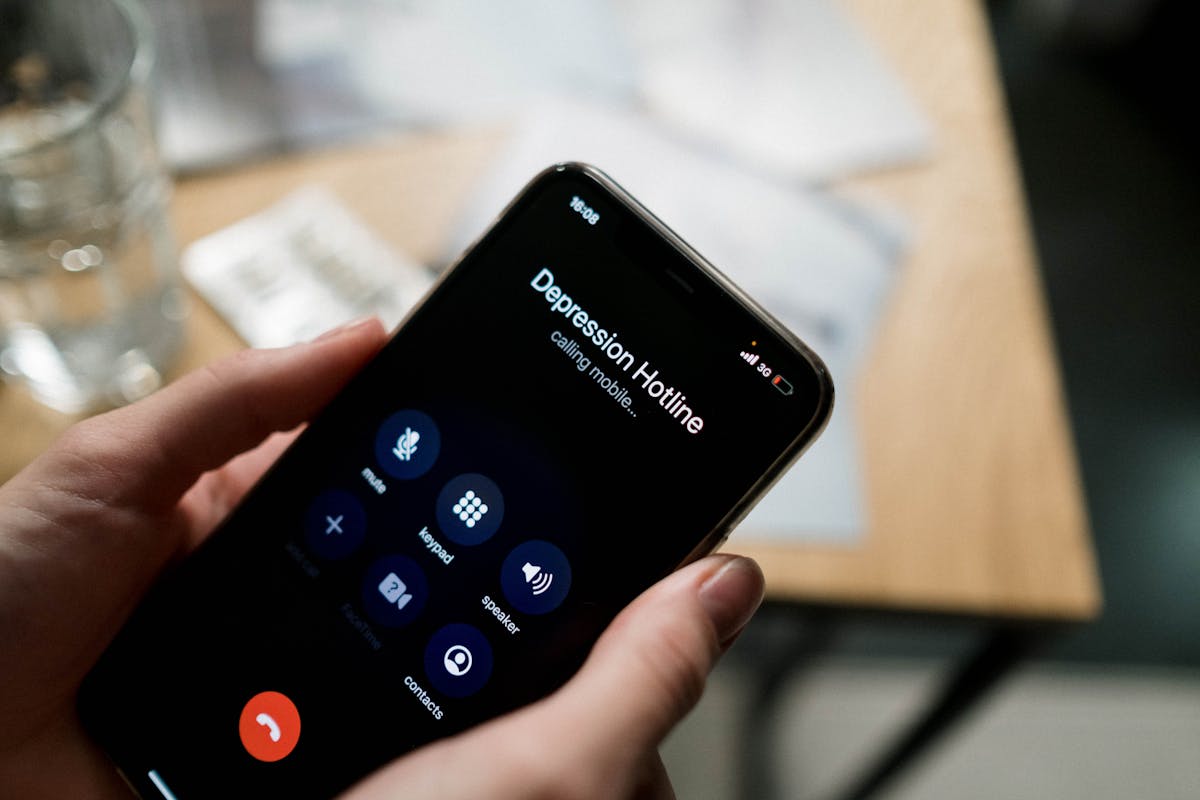
That was when I finally called a therapist. And what I learned over the next 18 months didn't just help me recover from burnout — it completely changed how I understand what therapy actually is, who it's for, and why the common objections to it are mostly wrong.
Here are the questions I had before I started, answered with what I know now.
Disclaimer: This article is for informational and educational purposes only and is not a substitute for professional medical or mental health advice, diagnosis, or treatment. The experiences described are personal and may not reflect typical outcomes. If you are experiencing a mental health crisis, please contact the 988 Suicide & Crisis Lifeline (call or text 988 in the US) or your local emergency services. Always consult a qualified mental health professional before making decisions about your care. References to published research are cited for educational context, not as clinical guidance.
"Isn't Therapy Just Paying Someone to Listen to You Complain?"
This is what I thought before I went. It's also completely wrong.
A good therapist doesn't just listen — they observe patterns you can't see from inside your own head. In my first three sessions, my therapist pointed out that every story I told about work stress ended with "but it's fine, I can handle it." I said some version of that phrase eleven times across those sessions. I had no idea.
That pattern — minimizing distress and immediately pivoting to coping — was the exact mechanism that led to my burnout. I couldn't see it because I was living inside it. She could see it because she was trained to look for exactly these kinds of cognitive patterns.
Research published in the Annual Review of Clinical Psychology shows that cognitive behavioral therapy (CBT) produces measurable changes in brain activity patterns, particularly in the prefrontal cortex and amygdala, according to neuroimaging studies. It's not just talking — it's a structured intervention that changes how your brain processes information. The American Psychological Association recognizes CBT as an evidence-based treatment for anxiety, depression, insomnia, and numerous other conditions.
"I'm Not Depressed or Anxious — Do I Still Need Therapy?"
Therapy isn't just for diagnosable conditions. That was probably the biggest misconception I had.
My therapist explained it with an analogy that stuck with me: you don't wait until your car breaks down on the highway to take it to a mechanic. Regular maintenance prevents breakdowns. Therapy works the same way for your mental health.
I didn't have clinical depression. I had chronic stress, poor emotional regulation under pressure, and a deeply ingrained belief that asking for help was a weakness. None of those would show up on a diagnostic screening, but all of them were slowly eroding my quality of life.
A 2023 meta-analysis published in JAMA Psychiatry found that psychotherapy produced significant improvements not just in clinical symptoms but also in general well-being, relationship satisfaction, and work performance among participants who didn't meet criteria for a mental health disorder. The benefits extend well beyond treating illness.
"How Do I Know If My Therapist Is Any Good?"
This is a legitimate concern and one that doesn't get discussed enough. Not all therapists are equally effective, and the therapeutic relationship (the "fit" between you and your therapist) is one of the strongest predictors of positive outcomes, according to research compiled by the American Psychological Association.
Here's what I've learned about finding a good fit:
Give it three to four sessions. The first session is mostly logistics and background. By session three or four, you should have a sense of whether this person understands you and whether you feel safe being honest with them. If something feels off after four sessions, it's okay to try someone else.
They should challenge you, not just validate you. A therapist who agrees with everything you say and never pushes back isn't doing their job. Good therapy is uncomfortable sometimes. If you never feel challenged, you're probably not growing.
Look for evidence-based approaches. CBT, DBT (dialectical behavior therapy), ACT (acceptance and commitment therapy), and EMDR all have strong research support. Ask potential therapists what modality they use and why. Be cautious of practitioners who rely heavily on unvalidated approaches.
Check credentials. Licensed clinical psychologists (PhD/PsyD), licensed clinical social workers (LCSW), licensed professional counselors (LPC), and psychiatrists (MD/DO) all have training and oversight. Be wary of unlicensed practitioners, regardless of how good their website looks.
"What If I Can't Afford It?"
Let's be honest: therapy is expensive, and the American mental health system makes access far harder than it should be. That said, there are more options in 2026 than there were even five years ago.
Insurance parity laws require most plans to cover mental health. Under the Mental Health Parity and Addiction Equity Act, your insurance is generally required to cover mental health services at the same level as physical health services. Call your insurance company and ask for in-network therapists. Yes, the hold time will be painful. Do it anyway.
Sliding scale therapists exist. Many therapists offer reduced rates based on income. Psychology Today's directory lets you filter for sliding scale providers. Open Path Collective offers sessions between $30-$80 with member therapists.
Community mental health centers provide services on a sliding fee scale, sometimes for as little as $5-$25 per session. The Substance Abuse and Mental Health Services Administration (SAMHSA) maintains a directory at findtreatment.gov.
Teletherapy platforms like BetterHelp and Talkspace are imperfect but more affordable than traditional in-person therapy. They're a reasonable starting point if cost is a primary barrier, though I'd recommend transitioning to a dedicated therapist if your situation is complex.
"How Long Does Therapy Take to Work?"
This varies enormously depending on what you're working on, but here's what the research says:
According to a widely cited analysis by researcher Bruce Wampold (published in Psychotherapy, APA), approximately 50% of people with common mental health concerns show clinically significant improvement within 15-20 sessions. For specific phobias or acute stress responses, CBT can produce measurable results in as few as 6-8 sessions.
For me, I noticed my first real shift around session 8. I caught myself doing the "but it's fine" thing in a work meeting and actually stopped mid-sentence. It was a small moment, but it felt enormous. By session 15, my sleep had improved, my resting heart rate had dropped (I tracked it on my watch), and I'd had two difficult conversations with my manager that I would have avoided six months earlier.
The gains weren't linear. Week 10 felt like a regression. Week 14 felt like a breakthrough. That's normal, and a good therapist will prepare you for it.
"Real Men Don't Go to Therapy" (And Other Garbage)
I need to address this one directly because it almost kept me from going.
The stigma around men seeking mental health support is slowly improving but still deeply embedded. According to the National Institute of Mental Health (NIMH), men are significantly less likely than women to receive mental health treatment despite similar rates of experiencing mental health challenges. The CDC reports that men die by suicide at nearly four times the rate of women.
The connection between these two statistics isn't complicated. When half the population is culturally discouraged from seeking help, the consequences are predictable and devastating.
Going to therapy is not weakness. It is the most pragmatic, effective thing I've ever done for my performance, my relationships, and my health. The toughest people I know — military veterans, trauma surgeons, first responders — are increasingly the most vocal advocates for therapy. Because they've seen what happens when people don't get help.
What I Wish Someone Had Told Me Before I Started
Therapy isn't a magic fix. It's a process, and it requires you to do the work. Your therapist gives you tools and insights; you have to actually use them between sessions.
It's also not forever. Some people benefit from ongoing therapy. I did 18 months, transitioned to monthly check-ins, and now go quarterly. The goal was always to build enough self-awareness and coping skills that I didn't need weekly sessions anymore. A good therapist actively works toward making themselves unnecessary.
If you've been on the fence about trying therapy — too busy, too skeptical, too "fine" — consider this: the worst-case scenario is that you spend an hour talking to a trained professional about your life and learn nothing useful. The best-case scenario is that it fundamentally changes how you experience being alive.
For me, it was closer to the best case. And I just wish I hadn't waited until I couldn't get out of bed to find out.
Sources: NIST guidelines via NIST SP 800-63B, American Psychological Association research on therapeutic alliance, meta-analyses from JAMA Psychiatry (2023), Annual Review of Clinical Psychology on CBT neuroimaging, NIMH mental health statistics, CDC WISQARS data on suicide rates, Bruce Wampold's research published in Psychotherapy (APA). If you are experiencing a mental health emergency, please contact the 988 Suicide & Crisis Lifeline by calling or texting 988.
Found this helpful?
Subscribe to our newsletter for more in-depth reviews and comparisons delivered to your inbox.
Related Articles