Your Spin Class Is Blasting Music at Rock Concert Levels — And a New USC Study Says It Could Cost You Your Hearing
This article is for informational and educational purposes only and does not constitute medical advice. Consult your healthcare provider for personalized guidance. Sources include peer-reviewed research from USC, WHO guidelines, and NIH publications.
I want to tell you about the moment I realized I might be slowly going deaf at the gym.
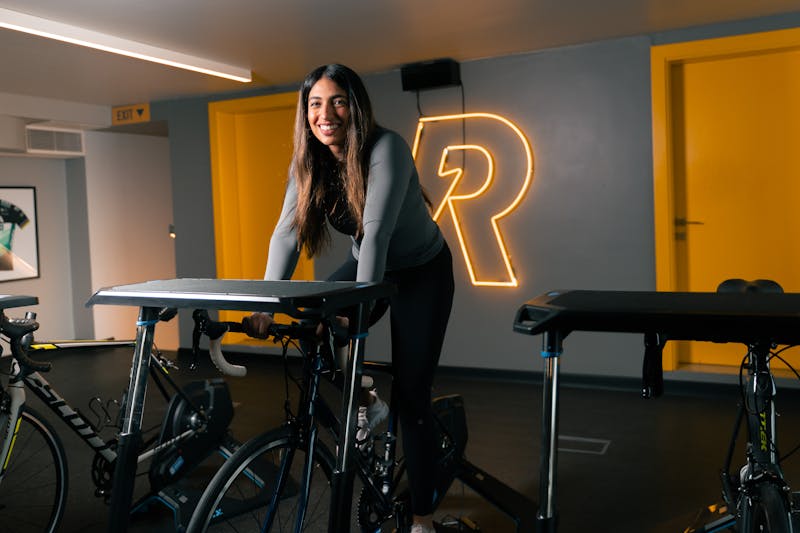
It was a Thursday evening spin class — the 6:30 PM slot, which is always packed because the instructor plays this insane mix of EDM and early-2000s hip hop that makes you forget you are a 34-year-old with bad knees pedaling a bicycle that goes nowhere. About 35 minutes in, during what I can only describe as the bass drop to end all bass drops, I noticed something. My Apple Watch was vibrating. Not a text. A noise warning.
The reading: 102 dBA. For reference, a chainsaw operates at about 110 dBA. I was voluntarily sitting in a room that was 8 decibels quieter than a chainsaw, three times a week, for $180 a month. And I thought I was making a healthy choice.
What the USC Researchers Actually Found
A team at the University of Southern California, led by Dr. Janet Choi — a head and neck surgeon at Keck Medicine of USC who specializes in ear disorders — decided to actually measure what is happening in these classes and test a theory that every gym operator takes as gospel: louder music equals harder workouts.
Their findings? Sound levels in group exercise classes can reach as high as 108 dBA. That is genuinely rock concert territory. The Who holds the Guinness record for loudest concert at 126 dBA, and most modern concerts hover between 100 and 115 dBA. Your Tuesday morning boot camp class is operating in the same decibel range as a Metallica show.
But here is the part that should make every gym-goer reconsider their noise exposure: the researchers found a clear plateau effect at around 80 dBA. Below that, yes, louder music does increase perceived motivation. But once you hit 80 dBA — roughly the level of a busy restaurant or a vacuum cleaner — pushing louder does not make people work harder. It just damages their hearing.
"Once it hits around 80 decibels, it really does not have to be any louder than that," Dr. Choi told reporters. "That would protect hearing for both instructors and participants."
The Math of Hearing Damage
Here is where it gets frightening. According to the World Health Organization, safe noise exposure follows a strict time-limit curve:
- 85 dBA: safe for up to 8 hours
- 88 dBA: safe for up to 4 hours
- 91 dBA: safe for up to 2 hours
- 94 dBA: safe for up to 1 hour
- 97 dBA: safe for up to 30 minutes
- 100 dBA: safe for up to 15 minutes
- 103 dBA: safe for up to 7.5 minutes
Most group fitness classes run 45 to 60 minutes. At 100 dBA — which is common in spin, CrossFit, and HIIT classes — you exceed your safe daily noise budget in the first 15 minutes. Everything after that is actively damaging the delicate hair cells in your inner ear.
And those hair cells do not regenerate. Ever. Unlike most cells in your body, the stereocilia in your cochlea are a one-time gift. Damage them, and they stay damaged. The National Institute on Deafness and Other Communication Disorders (NIDCD) estimates that noise-induced hearing loss affects approximately 26 million Americans between ages 20 and 69.
My friend Sandra — she is a physical therapist, not an audiologist, but she hears complaints about this literally every week — told me over a $6.25 green smoothie: "I have clients in their late twenties coming in with tinnitus they thought was just stress. When I ask about their gym routine and they tell me they do spin five times a week, I already know what happened."
And it is not just the noise levels. A recent study found that every single headphone tested contains hormone-disrupting chemicals — so even wearing earplugs means putting potentially harmful materials in your ears.
The Instructor Problem Nobody Talks About
Here is what really keeps me up at night about this: think about the instructors.
A typical gym member might attend three to four loud classes per week. An instructor might teach 15 to 20. They are exposed to 100-plus dBA environments for hours every single day, often shouting over the music through headset microphones — which, ironically, makes the overall volume even louder.
Dr. Choi noted in her research that she is seeing "more younger adults, people in their 20s and 30s, coming in with hearing changes or ringing that does not go away." While age-related hearing loss has traditionally been a concern for people over 60, cumulative recreational noise exposure is shifting that timeline dramatically.
I talked to Rachel, who taught cycling classes at a boutique studio for four years before quitting. She is 31. "By year three, I could not hear conversations in restaurants," she said during a 28-minute phone call where I had to repeat myself three times. "My ENT told me I had the hearing profile of someone in their mid-fifties. I am 31. I taught spin. That is it. That is the whole story."
Rachel now wears hearing aids. She did not go to war. She did not work in construction. She taught fitness classes.
What Your Gym Is Not Telling You
OSHA requires employers to provide hearing protection when workplace noise exceeds 85 dBA for an 8-hour shift. Construction workers get earplugs. Airport ground crew get noise-canceling headsets. Factory workers get regular audiometric testing.
Gym members get nothing. No warnings. No decibel meters on the wall. No earplugs at the front desk — well, some gyms have started offering them, which is basically admitting the environment is dangerous while doing nothing about the actual danger.
Jennifer Morgan, a 50-year-old Orangetheory member in Utah who attends three to five classes per week, told researchers that her Apple Watch "regularly flashed noise warnings" during workouts. She now wears Loop earplugs to every session. "I understand that music can make or break a class," she said. "But we need to be taking into consideration not only the patrons and their hearing, but the long-term effects on coaches."
Sleep quality matters too. If noise exposure is disrupting your recovery, our guide on undiagnosed sleep apnea covers why 80% of cases go undetected — and loud gym sessions are not helping.
How to Protect Yourself Without Quitting the Gym
I am not telling you to stop going to group fitness classes. I am telling you to protect your ears while you do it.
Buy proper earplugs. Not the foam ones from the pharmacy. Musician-grade earplugs like Loop Experience ($35), Eargasm ($40), or custom-molded options from an audiologist ($150-200) reduce volume evenly across frequencies without making music sound muffled. They make a real difference.
Use your phone or watch as a decibel meter. The Apple Watch noise app measures ambient sound levels. The NIOSH Sound Level Meter app (free, developed by the National Institute for Occupational Safety and Health) is the gold standard for iPhone. Android users can try Sound Meter by Smart Tools.
Position yourself away from speakers. Sound intensity follows the inverse square law — double your distance from the speaker, and intensity drops by 75%. The difference between the front row and the back row can be 10-15 dBA, which translates to dramatically different hearing risk.
Ask your gym to measure and post decibel levels. This is awkward but important. Some chains, including Equinox and certain SoulCycle locations, have started implementing volume policies. If your gym has not, a polite request backed by the USC study might start a conversation.
Give your ears recovery time. If you attend a loud class on Monday, your ears need at least 16 hours of relative quiet to recover from the temporary threshold shift. Back-to-back loud classes on consecutive days compound the damage significantly.
Healthcare costs are already forcing tough choices. One in three Americans is cutting spending to afford healthcare — adding hearing damage treatment to that list is something you can avoid.
The Bottom Line
The USC study proved something that should have been obvious: you do not need concert-level volume to get a great workout. The motivation plateau at 80 dBA means every decibel above that is pure hearing damage with zero fitness benefit.
I still go to spin class. Three times a week, same 6:30 PM Thursday slot, same instructor with the killer playlist. But I wear $35 Loop earplugs now, and I sit in the second-to-last row instead of the front.
My $180 monthly gym membership is supposed to make me healthier. Losing my hearing at 34 was never part of the plan.
Looking to build a health and wellness platform that puts users first? Wardigi specializes in digital solutions for health-focused businesses.
For more information on noise-induced hearing loss, visit the NIDCD, the WHO, or the CDC hearing loss prevention page. The USC study is available through Keck Medicine of USC.
More fitness reads: While you protect your ears, also protect your posture — 6 exercises that fixed desk job damage in 8 weeks. Check if your headphones are exposing you to chemicals and fuel your workouts with a 30-day meal prep plan.
More fitness reads: While you protect your ears, also protect your posture — 6 exercises that fixed desk job damage in 8 weeks. Check if your headphones are exposing you to chemicals and fuel your workouts with a 30-day meal prep plan.
Found this helpful?
Subscribe to our newsletter for more in-depth reviews and comparisons delivered to your inbox.
Related Articles