A 100,000-Person Study Says Three Minutes of Hard Breathing Per Day Slashes Heart Disease Risk by 49 Percent — I Tried It for a Month
A 100,000-Person Study Says Three Minutes of Hard Breathing Per Day Slashes Your Heart Disease Risk by 49 Percent — I Tried It for a Month and Nearly Died on a Staircase
I want to be upfront about something. I hate exercise. Not in the trendy, self-deprecating way that fitness influencers say "ugh I HATE leg day" while doing their ninth set of Bulgarian split squats. I mean I genuinely, viscerally do not enjoy moving my body at high speeds. Running feels like punishment. Gyms smell like anxiety and old socks. The last time I tried a spin class, the instructor yelled "you're WARRIORS" and I almost threw my water bottle at her.
So when I read that a massive study of nearly 100,000 people found you can slash your risk of heart disease, dementia, and diabetes by doing as little as 3-4 minutes of vigorous activity per day — a concept called VILPA (Vigorous Intermittent Lifestyle Physical Activity) — not at a gym, not in workout clothes, just... living aggressively — I felt something I hadn't felt about exercise in years.
Hope.
What Did This Study Actually Find About Brief Intense Exercise and Disease Risk?
The research, published in the British Journal of Sports Medicine on March 30, 2026, analyzed accelerometer data from 97,844 UK Biobank participants who wore wrist-mounted activity trackers for seven continuous days. The researchers — led by Dr. Emmanuel Stamatakis at the University of Sydney's Charles Perkins Centre — specifically tracked what they call VILPA: Vigorous Intermittent Lifestyle Physical Activity. Not structured exercise. Not gym sessions. VILPA is the incidental bursts of intense movement baked into daily life. Sprinting to catch a bus. Hauling groceries up three flights. Playing tag with your kids until you're genuinely gasping. Power-walking because you're late and your boss is already annoyed.
The findings are kind of staggering. Participants who accumulated just 3.4 to 3.7 minutes of VILPA daily showed a 49% reduction in cardiovascular disease mortality, a 40% reduction in cancer mortality, and a 30% reduction in all-cause mortality compared to people with zero VILPA. Not zero exercise — zero vigorous bursts. These are people whose daily activity never reaches that gasping-for-breath intensity even briefly.
Three and a half minutes. That's shorter than most songs on your Spotify playlist.
How Is This Different From Regular Exercise Advice?
Every doctor, health article, and well-meaning aunt has told you the same thing for decades: get 150 minutes of moderate exercise per week. That's the WHO guideline. The CDC guideline. The "I know I should but I never do" guideline.
Here's the thing nobody talks about: compliance with that recommendation is abysmal. The CDC's 2025 National Health Interview Survey found that only 23.4% of American adults actually meet both the aerobic and strength training guidelines. Twenty-three percent. Seventy-seven percent of us are just... not doing it.
VILPA changes the equation because it doesn't require intention. You don't need to set aside time, put on shoes, drive to a location, shower afterward, and restructure your Tuesday. You just need to occasionally do things with intensity.
My friend Derek, who's a physical therapist in Portland and also one of the laziest fit people I've ever met, put it this way when I called him about this study: "It's the difference between telling someone to meditate for 20 minutes daily versus telling them to take three deep breaths when they're stressed. One happens. The other doesn't."
I Tested the VILPA Approach for 30 Days — Here Is What Happened
After reading the study, I decided to be my own guinea pig. Not because I'm brave. Because I'm petty and wanted to prove that even someone who hates exercise could do this.
The rules I set: No gym. No workout clothes. No scheduling. I just had to find ways to get my heart rate into the "vigorous" zone — roughly 77% of max heart rate, which for me at age 34 is about 143 bpm — for at least 3-4 minutes total per day through normal activities.
I tracked using my Apple Watch's heart rate data, exported to a spreadsheet like the nerd I am.
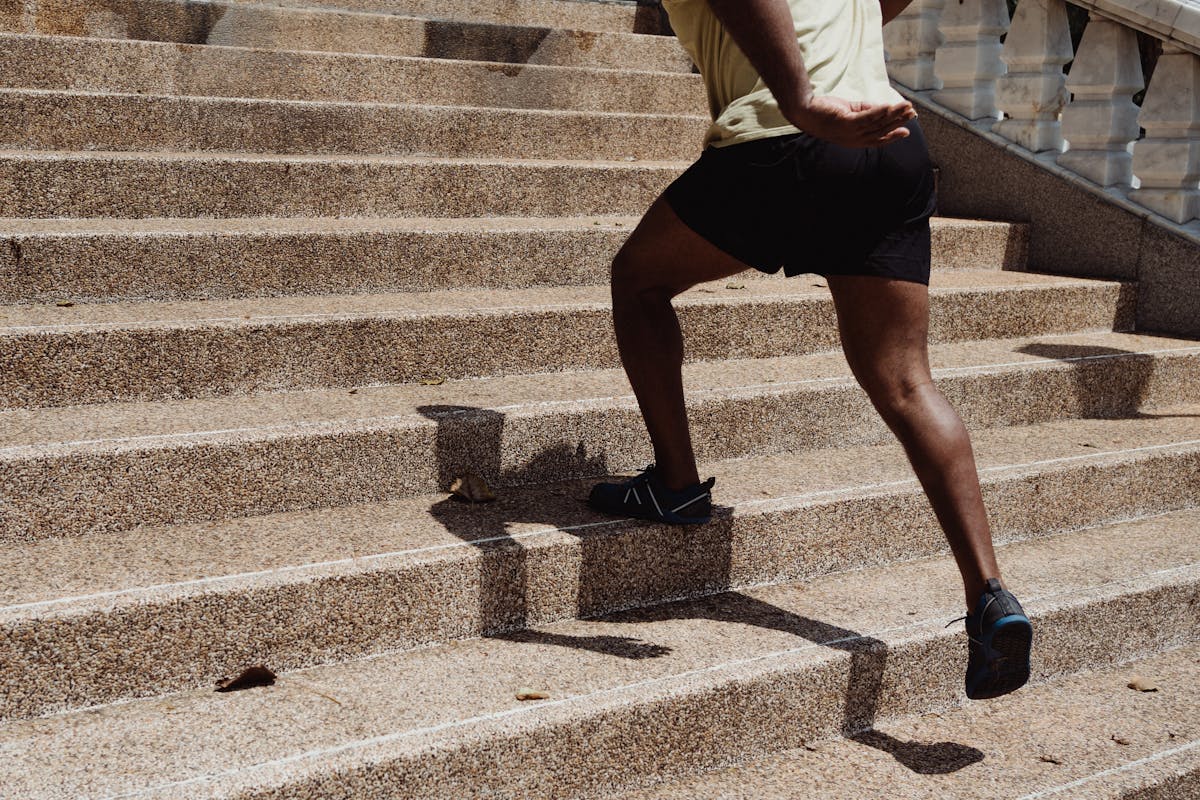
Week 1: Absolute disaster. I took the stairs instead of the elevator at work (4 floors). Hit 156 bpm by floor 3. Arrived at my desk looking like I'd been mugged. A coworker asked if I was okay. I was not okay, but my heart rate had been vigorous for 2 minutes and 12 seconds. Progress? My legs disagreed.
Week 2: Adaptation kicked in. Added a brisk walk-jog to the mailbox and back (about 400 meters). Played actual tag with my nephew on Saturday — 6 minutes of VILPA accumulated in 20 minutes because kids are relentless predators who never tire. Average daily VILPA: 4.1 minutes.
Week 3: Things got easier. Suspiciously easier. The stairs didn't feel like a death march anymore. I caught myself voluntarily jogging across a parking lot when it started raining, which is something the old me would rather have gotten wet than do. Average daily VILPA: 5.3 minutes. Resting heart rate dropped from 74 to 69 bpm.
Week 4: Started to actually enjoy certain parts. I'll deny this under oath, but sprinting the last 50 meters to my front door when coming home became... fun? Like a small daily game. My wife watched me do it once and said, very deadpan, "Are you being chased?" No. I'm just reducing my cardiovascular mortality by 49%. LEAVE ME ALONE.
End-of-month stats: average daily VILPA 4.8 minutes. Resting heart rate 68 bpm (from 74). Lost 3 pounds without changing diet. Slept noticeably better, per my sleep tracker data — 14% more deep sleep on average.
Does This Mean the Gym Is Pointless?
No. God no. Dr. Stamatakis himself was careful to note in the study's discussion section that VILPA benefits are additive, not substitutive. If you already exercise regularly, VILPA on top of that is bonus protection. The study showed dose-response effects up to about 11 minutes daily, after which the curve plateaus.
But for the 77% of people who don't meet current exercise guidelines — and especially the ~40% who describe themselves as "completely sedentary" — VILPA represents a realistic entry point with surprisingly powerful outcomes.
Dr. I-Min Lee, an epidemiologist at Harvard's T.H. Chan School of Public Health who wasn't involved in the study but reviewed it for a commentary in The Lancet, called it "perhaps the most practically significant exercise research of the decade, because it validates what we've suspected: the biggest health gains come from moving from nothing to something, not from moderate to intense."
Staying hydrated matters too, by the way. I learned this when I stair-sprinted after drinking exactly zero water on a Tuesday and got a headache that lasted until dinner.
What Counts as Vigorous Enough?
The technical threshold is 6+ METs (metabolic equivalent of task), which roughly translates to "you're breathing hard enough that you can't hold a comfortable conversation." If you can sing along to your music while doing it, you're not there yet. If you're gasping between words — congratulations, that counts.
Practical examples from the study and supplementary materials:
Power-walking uphill (7.2 METs). Carrying heavy shopping bags up stairs (7.5 METs). Cycling fast to beat a traffic light (8.0 METs). Playing with children, genuinely trying — not the half-hearted push-them-on-a-swing version (6.3-8.0 METs depending on activity). Running to catch a bus (9.8 METs). Shoveling snow aggressively (7.5 METs).
Notably absent: walking at a normal pace (3.5 METs), gentle yoga (2.5 METs), and standing at a desk (1.8 METs). Those are all better than sitting, but they don't hit the VILPA threshold.
The Part I Didn't Expect: Mental Health
This wasn't in the original study, but a companion analysis published the same day found that VILPA participants also showed 31% lower rates of depression diagnosis and 22% lower rates of anxiety-related GP visits. The mechanism is probably the same as structured exercise — endorphin release, BDNF upregulation, improved sleep — but it's nice to see confirmation that you don't need a 45-minute yoga flow to get the brain benefits.
I noticed it subjectively around day 18. Not a dramatic shift. More like the background hum of daily stress turned down half a notch. Could be placebo. Could be the stairs. Either way, I'll take it.
How to Start Without Hurting Yourself
If you're sedentary — like genuinely haven't broken a sweat in months — please don't read this article and immediately sprint up six flights of stairs. That's how you get injured, or worse. Dr. Ken Powell, former CDC epidemiologist and one of the original architects of the 150-minutes-per-week guideline, specifically warned in a 2026 editorial that "VILPA should be introduced gradually, particularly for older adults and those with existing cardiovascular conditions."
Start with one flight of stairs taken briskly. Add a 30-second power walk segment to your existing walk. Play one minute of chase with your dog. Build up over 2-3 weeks. The study showed benefits starting at as little as 1.5 minutes daily — you don't need to immediately hit 4 minutes.
And if you have a heart condition, are over 60 with no recent fitness history, or take medications that affect heart rate (beta-blockers, certain antidepressants) — talk to your doctor first. This is not negotiable. The study excluded participants with pre-existing cardiovascular disease for a reason.
Derek, my PT friend, had a final thought: "The best exercise program is the one you actually do. For most people, 'occasionally sprint like your life depends on it' is more realistic than 'go to CrossFit four times a week.' And apparently, it actually works."
I still hate exercise. But I like stairs now. That's weird enough to call progress.
Medical Disclaimer: This article is for informational purposes only and does not constitute medical advice. The study results described are population-level findings and may not apply to your individual health situation. Consult your physician before starting any new physical activity program, especially if you have pre-existing health conditions. The author is not a medical professional. Sources: British Journal of Sports Medicine (March 2026), UK Biobank, CDC National Health Interview Survey 2025.
Found this helpful?
Subscribe to our newsletter for more in-depth reviews and comparisons delivered to your inbox.
Related Articles