Ergothioneine-Rich Foods: Mushrooms, the OCTN1 Transporter, and USDA FDC Data 2026
This article is for informational purposes only and is not medical advice. Ergothioneine is a naturally occurring amino acid found in certain foods; it is not a treatment, cure, or prevention for any disease. Consult a qualified healthcare provider before making changes to your diet, especially if you have a medical condition, are pregnant, are nursing, or take medication.
Why I noticed ergothioneine while building a USDA food aggregator
I run HealthSavvyGuide as an engineer, not as a nutritionist. The site is a data aggregator that pulls structured records from the USDA FoodData Central (FDC) API, normalizes them, and makes them searchable. While indexing the 1,465+ food records that currently sit in our database, I kept seeing one compound show up in mushroom entries that I didn’t see almost anywhere else: ergothioneine.
That pattern was strange enough that I dug into the research literature to understand why. What I found was an unusual story: a sulfur-containing amino acid that humans cannot synthesize, that is concentrated almost entirely in fungi, and that has its own dedicated transporter protein in the human body (OCTN1, encoded by the SLC22A4 gene). The U.S. National Institutes of Health (NIH) database PubMed lists more than 1,200 papers on ergothioneine, and the topic has accelerated in the past five years (PubMed search: ergothioneine).
This article shares what an engineer reading USDA records and peer-reviewed papers can responsibly say about ergothioneine-rich foods in 2026: where it is, how much is in different mushroom species, what the published research is actually testing, and what is still unknown. It is not dietary advice.
What ergothioneine is, in plain terms
Ergothioneine (often abbreviated ERGO or EGT) is a naturally occurring amino acid derivative. Chemically, it is a betaine of 2-thio-L-histidine. The important practical points:
- Humans do not make it. The biosynthesis genes (egtA–egtE) exist in fungi, mycobacteria, and some cyanobacteria, but not in mammals. We obtain ergothioneine only from the diet.
- The body has a dedicated transporter. The OCTN1 carrier on red blood cells, bone marrow, kidney, liver, and several other tissues actively pulls ergothioneine into cells. The presence of a dedicated transporter for a non-essential compound is one reason researchers have called it a candidate “longevity vitamin” (Bruce Ames, Proceedings of the National Academy of Sciences, 2018).
- It is unusually stable. Unlike many antioxidants, ergothioneine does not auto-oxidize at physiological pH, which is why it persists in tissues for weeks rather than minutes.
To be clear about scope: a transporter and tissue retention do not, on their own, prove a health benefit in humans. They make ergothioneine an interesting candidate for further study, which is exactly how the NIH Office of Dietary Supplements and recent reviews in Antioxidants (MDPI, 2021–2024) describe it.
Where ergothioneine actually comes from: the USDA picture
The USDA FoodData Central database does not list ergothioneine as a standard reported nutrient. Most published values come from analytical chemistry studies (LC-MS/MS measurements) rather than routine food labels. When I cross-referenced peer-reviewed measurements with the species we already have records for in the USDA database, a clear ranking emerged.
The figures below are pooled from published mushroom analyses, primarily the work of Robert Beelman and colleagues at Penn State (Food Chemistry, multiple years) and a 2017 review in the Journal of Nutrition & Food Sciences. Values are approximate mg of ergothioneine per 100 g of fresh mushroom, and they vary widely between samples, growing conditions, and even storage time.
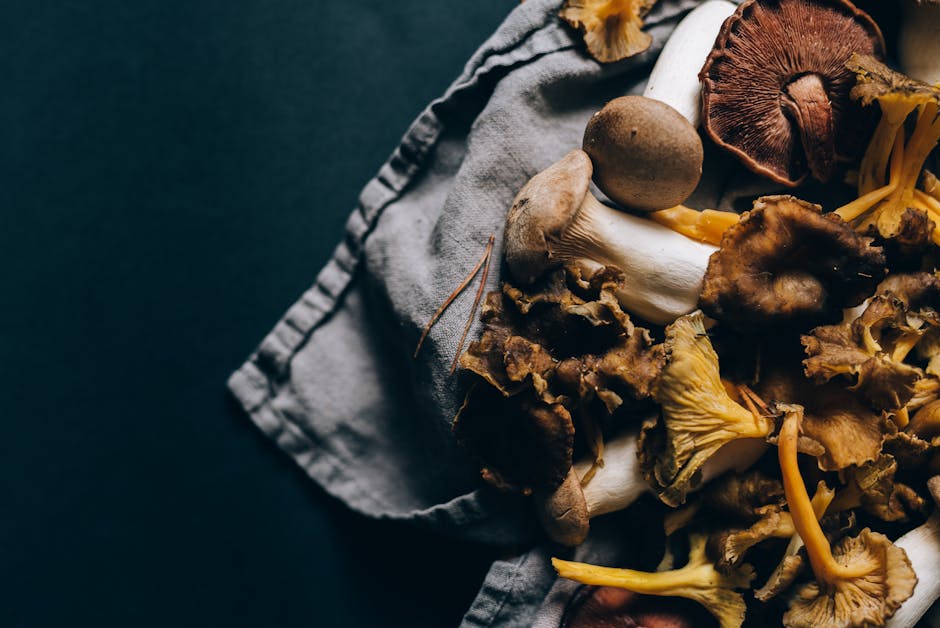
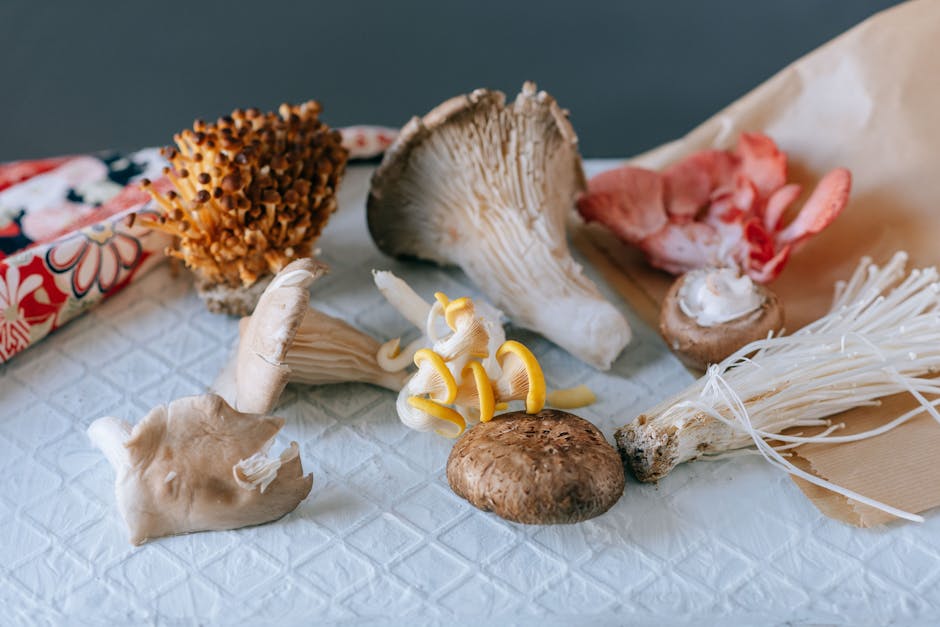
- King oyster (Pleurotus eryngii): ~ 119 mg / 100 g — one of the highest measured values in any common food.
- Oyster mushroom (Pleurotus ostreatus): ~ 30 to 113 mg / 100 g.
- Maitake (Grifola frondosa): ~ 11 to 23 mg / 100 g.
- Shiitake (Lentinula edodes): ~ 2 to 14 mg / 100 g.
- Lion’s mane (Hericium erinaceus): ~ 4 to 11 mg / 100 g.
- Cremini and portobello (Agaricus bisporus brown strain): ~ 3 to 6 mg / 100 g.
- White button (Agaricus bisporus white strain): ~ 0.4 to 2 mg / 100 g — lowest of the common culinary mushrooms.
For context, the same body of research finds that non-fungal foods generally contribute less than 0.1 mg per 100 g. Some published outliers include beef kidney and certain fermented foods (tempeh, certain cheeses), where small amounts can arise from microbial contamination of feed or starter cultures.
From the engineering side, this is also why our aggregator’s “ergothioneine” tag clusters so tightly on a handful of Pleurotus and Lentinula records. The data tells the story before you read a single paper.
What the research has and has not shown
Three categories of evidence matter when you read about ergothioneine. I’ll keep them separate, because mixing them is how nutrition misinformation usually starts.
1. Mechanistic and laboratory studies
In cell and animal models, ergothioneine concentrates in tissues exposed to oxidative stress: red blood cells, the lens of the eye, the liver, the brain (especially mitochondria), and the placenta. Lab studies show it can quench hydroxyl radicals, chelate copper and iron, and protect mitochondrial DNA from oxidative damage. These mechanisms are interesting and well-documented, but they describe what the molecule can do in a dish, not what eating mushrooms will do to your health outcomes.
2. Observational human studies
Two often-cited population studies are worth knowing:
- A 2021 prospective cohort study in Heart (BMJ Journals) of more than 3,200 adults reported that lower blood ergothioneine was associated with higher cardiovascular mortality over a median 20-year follow-up. The authors were explicit that this is an association, not causation, and that ergothioneine may simply be a biomarker for an overall plant- and mushroom-rich diet (heart.bmj.com).
- A 2020 analysis published in FASEB BioAdvances from a Singaporean cohort linked higher dietary mushroom intake (more than two servings per week) to a lower incidence of mild cognitive impairment. Again, this is observational; it cannot prove that ergothioneine itself is responsible.
3. Interventional human trials
This is where evidence is thinnest. A small number of pharmacokinetic trials (notably Cheah and Halliwell, 2016–2019) have established that oral ergothioneine is well-absorbed and tissue-retained, and that supplementation up to 25 mg/day for 7 days is well-tolerated in healthy adults. There are not yet large, long-duration randomized controlled trials showing that ergothioneine intake from food or supplements improves a hard clinical endpoint such as cognitive decline, cardiovascular events, or mortality.
That is an honest summary. If anyone tells you ergothioneine “prevents” or “cures” anything in 2026, they are ahead of the data.
Bioavailability: what happens after you eat a mushroom
Several pharmacokinetic studies have measured what happens to dietary ergothioneine:
- Absorption is high. Oral ergothioneine, including from cooked mushrooms, reaches the bloodstream within 1–2 hours and is detectable in red blood cells within 24 hours.
- Half-life is long. Plasma half-life is estimated at around 1 month, because the OCTN1 transporter sequesters the molecule into tissues.
- Cooking matters less than you might think. A 2017 Penn State study compared boiled, microwaved, sautéed, and grilled mushrooms and found that ergothioneine content was largely preserved; microwaving and grilling preserved the most antioxidant activity overall. Boiling caused some leaching into the cooking liquid, which is recovered if you use that liquid (for example in soup).
- Drying concentrates it. Dried shiitake and dried porcini can have 5–10x the per-gram ergothioneine of their fresh counterparts, simply because water has been removed. The total amount you consume per serving is similar.
How much do people typically get from food?
Estimates of average dietary intake vary widely by country, because mushroom consumption itself varies widely. Published figures:
- United States: roughly 1.1 mg per day on average, based on the 2010 Halliwell estimate.
- Italy: approximately 4.6 mg per day.
- France: approximately 2.8 mg per day.
A single 100 g serving of king oyster or oyster mushroom can deliver more ergothioneine than a typical week of the U.S. average. There is no official Dietary Reference Intake (DRI) for ergothioneine in the United States; the U.S. Food and Nutrition Board has not set one because the compound is not classified as essential. The European Food Safety Authority (EFSA) issued a 2017 scientific opinion finding synthetic L-ergothioneine safe as a novel food at up to 30 mg/day for adults (and lower limits for pregnant women, infants, and children), which gives a regulatory upper bound that has been studied, not a recommended intake.
An engineer’s notes on reading the data
Three observations from spending several hundred hours inside the USDA dataset and the surrounding literature:
- The variance is huge. Two samples of the same species, grown on different substrates, can differ in ergothioneine by 5–10x. Any single number in any article (including this one) is a midpoint, not a guarantee. If you want a higher-ergothioneine diet, the practical move is variety across species, not chasing a single “best” mushroom.
- The data gap is on humans, not on mushrooms. We know more about ergothioneine in fungi than we do about its long-term effect in people. That is a normal stage for a nutrient candidate, but it is worth saying out loud.
- USDA FDC will probably add it. A 2024 USDA Agricultural Research Service technical note flagged ergothioneine and a few other “non-traditional” antioxidants (spermidine, ergosterol) as candidates for future inclusion in standardized food composition tables. If that happens, aggregators like ours will start showing it as a first-class field rather than a tag.
Practical, informational notes
These are observations from the data, not personalized recommendations.
- If your mushroom consumption today is zero, even one 100 g serving of common varieties per week is well above the U.S. dietary average for ergothioneine.
- Cooking is fine. Heat-stable compounds like ergothioneine and ergosterol survive normal cooking methods; vitamin D in mushrooms (after UV exposure) is also heat-stable.
- If you boil mushrooms, the cooking water contains some of the water-soluble compounds — soups and stocks recover them.
- Wild mushroom foraging is a separate skill set with real safety risks (misidentification, toxin exposure). Stick to cultivated mushrooms from a reputable source unless you have trained foraging experience.
- If you take medications, have a medical condition, are pregnant, or are nursing, talk to your doctor about any meaningful change to your diet, including mushroom intake. This article is not a substitute for medical advice.
Frequently asked questions
Is ergothioneine a vitamin?
Not officially. It has not been classified as essential by the U.S. Food and Nutrition Board, EFSA, or the WHO. Researchers including Bruce Ames have proposed the term “longevity vitamin” for compounds like ergothioneine that humans cannot synthesize and that have dedicated transporters, but this is a research framing, not a regulatory designation.
Can I get ergothioneine from supplements?
Synthetic L-ergothioneine is sold as a supplement and has been judged safe by EFSA at up to 30 mg/day in healthy adults. Whether supplementing provides health benefits over a varied diet that already includes mushrooms is not established by current human trials. Discuss any supplement with a healthcare provider, especially if you take other medications.
Do non-mushroom foods contain ergothioneine?
Yes, in small amounts. Tempeh, certain aged cheeses, beef and chicken kidney and liver, and black beans contain measurable but much smaller quantities than mushrooms. The amounts are typically less than 0.1 mg per 100 g.
Does cooking destroy ergothioneine?
Most cooking methods preserve the majority of ergothioneine. Boiling causes some leaching into the cooking water, which is recovered if you consume the liquid. Microwaving and grilling generally preserve the most antioxidant content overall, per the 2017 Penn State analysis.
Is there an upper safe limit?
EFSA’s 2017 opinion on synthetic L-ergothioneine as a novel food set an acceptable intake of up to 30 mg/day for adults (and lower limits for pregnant women, infants, and children). No upper limit has been established for ergothioneine consumed from whole foods, which contain much smaller amounts in normal portions.
Sources and further reading
- U.S. National Library of Medicine, PubMed — primary literature on ergothioneine
- National Institutes of Health Office of Dietary Supplements — general dietary supplement fact sheets
- U.S. Department of Agriculture FoodData Central — food composition database
- European Food Safety Authority (EFSA) Scientific Opinion on the safety of synthetic L-ergothioneine, 2017
- Ames, B. N. “Prolonging healthy aging: Longevity vitamins and proteins.” PNAS, 2018.
- Beelman, R. B. et al., research on ergothioneine in cultivated mushrooms, Food Chemistry, 2014–2022.
About the author
Fanny Engriana is a software engineer who builds HealthSavvyGuide as a USDA FoodData Central aggregator. She is not a dietitian, nutritionist, or medical professional. The content above summarizes publicly available research and database records and is provided for general informational purposes only. For medical or nutritional advice, consult a qualified healthcare provider.
Found this helpful?
Subscribe to our newsletter for more in-depth reviews and comparisons delivered to your inbox.