Betaine in Food: What USDA FoodData Central Actually Shows
This article is for informational purposes only and is not medical advice. Consult a qualified healthcare provider before making changes to your diet, supplements, or treatment plan, especially if you have kidney disease, cardiovascular conditions, or a diagnosed metabolic disorder.
Building HealthSavvyGuide on top of the USDA FoodData Central API, I spend a lot of time looking at which nutrient fields are well-populated and which ones are nearly empty. Most macronutrients and the headline vitamins are filled in for thousands of foods. Betaine is different. It is one of the sparsest nutrient fields in the whole database, and that gap turned out to be the most interesting thing about it.
Betaine, also written as trimethylglycine or TMG, is a small molecule that plants and some animals use to manage water stress and that the human body uses as a methyl donor. It is named after the sugar beet (Beta vulgaris), where it was first isolated in the 1800s. This article walks through what the USDA data actually shows about betaine in food, where the data is missing, and what the published science says about why people pay attention to it. None of this is a recommendation to take a supplement or change your diet.
What betaine does in the body
Betaine works as a methyl donor. In a reaction catalyzed by the enzyme betaine-homocysteine methyltransferase, it hands a methyl group to homocysteine and converts it back into methionine. That matters because elevated plasma homocysteine (hyperhomocysteinemia) is a recognized marker associated with cardiovascular risk, according to the National Institutes of Health.
A meta-analysis published in The Journal of Nutrition (PMC3610948) found that betaine supplementation at roughly 6 grams per day lowered plasma homocysteine in healthy adults by about 5% to 20%. That is a supplement-level dose, far above what you would get from food. Typical dietary intake of betaine is estimated at 0.5 to 2 grams per day across a normal mixed diet, per the same body of literature. The food-versus-supplement distinction is worth keeping in mind for the rest of this piece: the amounts in food and the amounts in clinical studies are not the same order of magnitude.
Beyond the homocysteine pathway, review articles in the NIH PubMed Central archive describe betaine as having osmoprotective, antioxidant, and anti-inflammatory roles, with research interest in liver health and fatty liver disease. These are areas of active study, not settled clinical guidance. If you are reading this because of a specific health condition, that is a conversation for your doctor, not a blog.
The data gap I found in FoodData Central
Here is the part that surprised me as an engineer rather than as a reader. The single most famous dietary source of betaine is wheat bran. Yet when I query the USDA FoodData Central API for Wheat bran, crude (FDC ID 169722) in the SR Legacy dataset, the betaine field comes back null. There is no analyzed value. The same is true for several other obvious sources — Rice bran, crude (FDC 169713) also returns no betaine value.
This is not a bug in my code. Betaine simply was not measured for many of the raw whole-food records in SR Legacy. The values that nutrition writers usually quote for wheat bran — figures around 1,300 mg per 100 g — come from a separate USDA resource, the standalone USDA Database for the Betaine Content of Common Foods released by the Agricultural Research Service, not from the main food records most APIs return by default.
So if you build a tool that pulls betaine straight from the primary FDC food records, you get a misleadingly short list, and the headline food is missing from it. That is a real data-engineering trap, and it is the first thing I would warn anyone about who tries to rank foods by betaine programmatically.
Betaine content from USDA records (per 100 g)
The table below uses values I pulled directly from the USDA FoodData Central API, each tied to its FDC ID so you can verify it yourself. Where a record returned no analyzed value, I have marked it as such rather than substituting a number from elsewhere.
| Food | FDC ID | Betaine (mg / 100 g) | Notes |
|---|---|---|---|
| Quinoa, uncooked | 168874 | 630 | Highest analyzed value in this set |
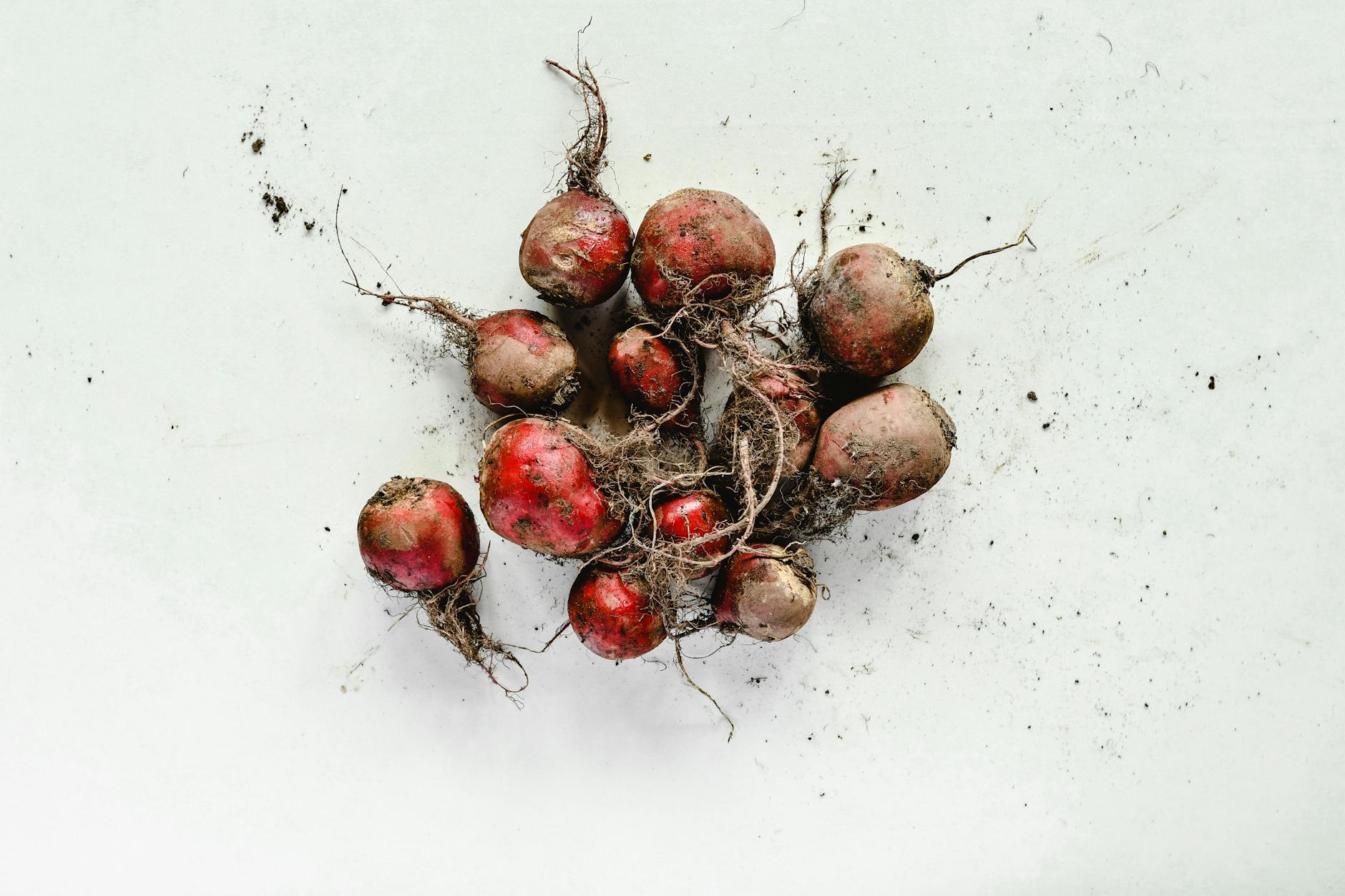
| Beets, raw | 169145 | 129 | The namesake source, lower than quinoa |
| Wheat bran flakes, ready-to-eat cereal (Ralston) | 173002 | 124 | Processed cereal, not raw bran |
| Spinach, raw | 168462 | 103 | Cooking concentrates it per portion |
| Corn bran, crude | 170289 | 4.6 | Far lower than wheat bran |
| Wheat bran, crude | 169722 | not analyzed (null) | Literature lists ~1,300 mg via the separate USDA Betaine Database |
| Rice bran, crude | 169713 | not analyzed (null) | No value in SR Legacy |
Three things jump out of this table. First, quinoa at 630 mg per 100 g is the densest source among the records that actually have a number — higher than the beet it is so often compared to. Second, beets, the food betaine is literally named after, sit at a modest 129 mg per 100 g raw. The name is etymology, not a ranking. Third, the cereal version of wheat bran (124 mg) carries far less than the raw bran's literature value, a reminder that processing and the specific product matter as much as the ingredient name.
Where betaine clusters in the food supply
Pulling back from individual records, the published USDA and PubMed Central literature is consistent about which food groups carry meaningful betaine:
- Wheat products — bran and germ are the densest sources by weight, which is why whole-grain foods contribute a large share of typical dietary intake.
- Beets and beet products — sugar beets are where the molecule was first found; table beets carry a moderate amount.
- Spinach and other leafy greens — a steady contributor, and because greens cook down, a cooked portion concentrates more than the raw per-100-g figure suggests.
- Quinoa and certain pseudo-cereals — surprisingly high in the records that have been analyzed.
- Shellfish such as shrimp — animal sources that the literature lists among notable contributors.
A practical takeaway for anyone reading nutrition databases: betaine and choline are metabolically linked (the body can oxidize choline to betaine), and the USDA historically published their values together in the same choline release. If you are tracking one, it is worth looking at the other in the same source.
Cooking, processing, and bioavailability
Betaine is water-soluble and fairly heat-stable compared with some vitamins, but boiling can leach it into cooking water, the same way it does with several minerals and B-vitamins. The research on cereal grains (PMC5920414) notes that milling separates betaine unevenly across flour streams — the bran and germ fractions concentrate it, while refined white flour carries much less. This is the same pattern you see with fiber and many micronutrients: refining the grain strips the part where the compound lives.
Because the molecule is stable and the dietary amounts are modest relative to studied supplement doses, the everyday food message is unremarkable and the same one health authorities give for most nutrients: a varied diet that includes whole grains and vegetables supplies betaine without any need to count milligrams.
What the science does and does not support
It is worth being precise here, because betaine is sold as a supplement (TMG) with strong marketing claims. The evidence base, summarized from NIH PubMed Central sources:
- Homocysteine lowering — supported at supplement doses (about 6 g/day) in healthy adults, per meta-analysis. Whether that translates into fewer cardiovascular events is not established by these studies.
- Homocystinuria — betaine is an established part of medical management for this rare inherited disorder, used under specialist supervision. That is a clinical use, not a wellness one.
- Liver and metabolic health — promising in reviews and animal work, but human clinical evidence is still developing.
- Athletic performance — some studies exist; results are mixed and beyond the scope of a food-data article.
One caution that appears in the literature: betaine supplementation has in some studies raised LDL cholesterol, which is why the homocysteine-versus-lipid trade-off is studied together (PMC1140947). This is exactly the kind of nuance that gets lost in supplement marketing and exactly why dosing decisions belong with a clinician.
Frequently asked questions
Is betaine the same as betaine HCl? No. Betaine anhydrous (TMG) is the methyl-donor form discussed here. Betaine hydrochloride is a different product marketed for stomach acid support. They are not interchangeable.
Can I get enough betaine from food? A normal varied diet provides an estimated 0.5 to 2 g per day, mostly from whole grains, beets, and greens. That is the range the general population already eats. Supplement studies use higher doses for specific endpoints.
Why does the beet rank lower than quinoa if betaine is named after beets? The name comes from where the molecule was first isolated historically, not from beets being the richest source. By the USDA numbers, uncooked quinoa (630 mg/100 g) carries more than raw beets (129 mg/100 g).
Why is wheat bran missing from the USDA table? The primary FoodData Central food record for raw wheat bran (FDC 169722) has no analyzed betaine value. The widely-quoted ~1,300 mg figure comes from a separate USDA Betaine Database, which is a different dataset than the one most food APIs return by default.
Bottom line
From a data-engineering point of view, betaine is a useful lesson in not trusting a single field. The food it is named after is not its richest source, the famous richest source is missing from the main records, and the numbers that circulate online often come from a different USDA dataset than the one being queried. From a health point of view, betaine is a normal part of a diet that includes whole grains, beets, greens, and quinoa, and the dramatic claims attach to supplement doses studied for specific endpoints, not to dinner.
Sources: USDA FoodData Central (fdc.nal.usda.gov); USDA Agricultural Research Service Betaine Database; National Institutes of Health PubMed Central (PMC3610948, PMC5920414, PMC1140947, PMC8224793). This content is informational and not a substitute for advice from a qualified healthcare provider.
Found this helpful?
Subscribe to our newsletter for more in-depth reviews and comparisons delivered to your inbox.