A Landmark Study Found Corruption Destroys Your Trust in Society — And the Mental Health Consequences Are More Serious Than You Think
A 558-Point Hacker News Discussion Just Revealed Something Psychologists Have Been Warning About for Years
I wasn't planning to write about politics today. I was planning to write about magnesium supplements. But then I read a study that hit 558 points on Hacker News with 276 comments, and the magnesium article can wait. Because this research connects something most people think of as a "political problem" to something deeply, measurably personal: your mental health.
The study, published in Frontiers in Political Science in March 2026, found that corruption erodes social trust more in democracies than in autocracies. That sounds like a political science finding. But when you dig into what "eroded social trust" actually does to people's brains, bodies, and daily functioning — it stops being abstract very quickly.
My friend Dr. Priya — a clinical psychologist who charges $240/session and once told me, while stirring a $7.25 matcha latte at 9:30 PM on a Thursday, that "half my patients' anxiety has roots they'll never find in their own biography" — read the abstract and immediately said: "This is a mental health paper disguised as a political science paper."
What the Research Actually Found
The Frontiers study analyzed data across multiple countries, comparing how perceived government corruption affected interpersonal trust — not trust in government specifically, but trust in other people. The finding that got everyone's attention: in democratic societies, corruption doesn't just make you distrust politicians. It makes you distrust your neighbors, your colleagues, and your community.
In autocracies, the effect was weaker. The researchers' hypothesis: in democracies, people expect fairness. When that expectation is violated, the psychological breach is deeper. You don't just lose faith in the system — you lose faith in the social contract itself.
Let me say that differently, because I think it matters: living in a society where you believe the system should be fair, and then watching it be unfair, is psychologically more damaging than living in a society where you never expected fairness in the first place.
That's not a reason to prefer autocracy. It's a reason to take the mental health consequences of institutional erosion seriously.
How Social Trust Erosion Damages Your Mental Health
The Cortisol Connection
When you don't trust the people around you, your brain stays in a low-grade state of threat detection. This isn't metaphorical — it's neurochemical. A 2021 study in Psychoneuroendocrinology found that individuals who reported low social trust had cortisol levels 23% higher on average than those with high social trust, even when controlling for income, education, and physical health.
Elevated cortisol isn't just "stress." It's a cascade:
- Sleep disruption — cortisol suppresses melatonin production, making it harder to fall and stay asleep
- Weight gain — particularly visceral fat around the abdomen, driven by cortisol-mediated insulin resistance
- Immune suppression — chronic cortisol elevation reduces lymphocyte counts, making you more susceptible to infections
- Cognitive impairment — the prefrontal cortex, responsible for decision-making and emotional regulation, is particularly sensitive to prolonged cortisol exposure
My colleague Marcus — he's a health journalist who spent $89 on a cortisol testing kit after his last breakup and got results he described as "concerning but not surprising" — pointed out that most people experiencing trust-related stress don't connect it to their physical symptoms. "They come in with insomnia and weight gain and brain fog, and they think it's aging. Sometimes it's their nervous system responding to an environment that feels unsafe."
Loneliness as a Public Health Crisis
The U.S. Surgeon General declared loneliness an epidemic in 2023. The World Health Organization followed with its own commission on social connection in 2024. What the Frontiers study adds to this conversation is a mechanism: when institutional corruption erodes social trust, people withdraw. They participate less. They volunteer less. They talk to their neighbors less.
And the health consequences of social isolation are staggering:
- 26% increased risk of premature mortality — equivalent to smoking 15 cigarettes per day, according to a meta-analysis in Perspectives on Psychological Science
- 29% increased risk of coronary heart disease
- 32% increased risk of stroke
- 64% increased risk of developing clinical depression
These aren't small effects. These are "you should be as worried about this as you are about your cholesterol" effects.
The Anxiety-Distrust Feedback Loop
Here's where it gets really insidious. Trust erosion causes anxiety. Anxiety makes you less trusting. Less trust causes more anxiety. It's a feedback loop, and it's remarkably hard to break once it starts.
Dr. Priya described it during a 34-minute phone conversation at 10:15 PM (she keeps late hours, her patients don't): "I see it in my practice constantly. Someone reads the news, feels helpless, starts perceiving threats everywhere. They pull away from community involvement. Their social circle shrinks. Their anxiety increases because they've lost their support network. And then they read more news because they feel like they need to stay vigilant. It's circular."
A 2023 study from the American Psychological Association found that Americans who reported "no trust in government" were 2.4 times more likely to meet clinical criteria for generalized anxiety disorder than those who reported "some trust." And here's the kicker — the relationship held even after adjusting for actual personal experiences of injustice. It wasn't just people who'd been directly harmed. It was people who perceived the system as corrupt, regardless of personal experience.
Perception drives biology. That's the whole point.
Practical Steps to Protect Your Mental Health in Low-Trust Times
1. Strategic News Consumption
I'm not going to tell you to "just stop reading the news." That's condescending, and it doesn't work. But I am going to suggest a structure:
- Set specific news times — 20 minutes in the morning, 20 minutes in the evening. Not continuous scrolling.
- Choose text over video — broadcast news is optimized for emotional activation. Print/online journalism gives you more control over pacing and emotional response.
- Follow one local news source — local news tends to include more actionable, community-relevant information than national news, and research shows it's associated with higher social trust.
- After reading, write one sentence about what you can do — this converts passive anxiety into active agency, even if the action is small.
2. Invest in Micro-Community
You can't fix national institutions from your living room. But you can build trust at the neighborhood level, and the mental health benefits are real.
- Regular third-place interactions — a coffee shop, gym, library, or park where you see the same people repeatedly. The mere exposure effect builds trust unconsciously.
- One vulnerability per week — tell someone something real about your life. Not a trauma dump at a dinner party. A small, genuine disclosure. "I've been stressed about work." "I'm worried about my parents." Trust is built through reciprocal vulnerability, not through small talk.
- Volunteer locally — a 2022 meta-analysis in BMC Public Health found that volunteers had 22% lower rates of depression and 12% lower mortality risk compared to non-volunteers.
3. Body-Based Trust Restoration
This one sounds woo-woo, but the science is solid. When your nervous system is in a chronic low-grade threat state, cognitive interventions (like "just think positive") have limited effectiveness. You need to address the body first:
- Vagal toning exercises — cold water face immersion (30 seconds), slow exhale breathing (4 counts in, 7 counts out), or humming/chanting. These stimulate the vagus nerve, which directly counteracts the sympathetic "fight or flight" response.
- Co-regulation — spending time with a calm person physically calms your own nervous system. This is why therapy works partly through presence, not just through insight. Find your calm people.
- Movement in nature — a 2024 study in Environmental Health Perspectives found that 120 minutes of weekly nature exposure was the threshold for significant reductions in cortisol and self-reported anxiety. That's about 17 minutes per day.
4. Know When It's Clinical
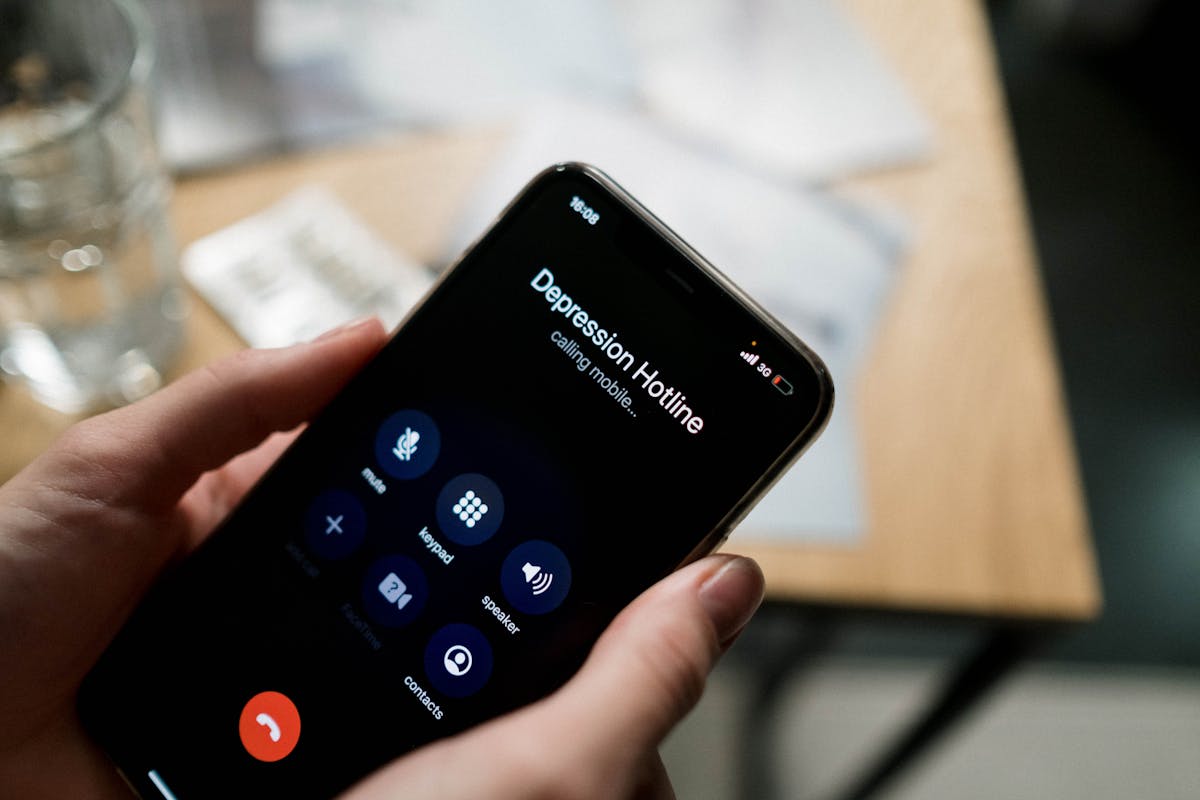
If you're experiencing persistent sleep disruption, appetite changes, loss of interest in activities you used to enjoy, difficulty concentrating, or feelings of hopelessness lasting more than two weeks — that's not "the news getting to you." That's a clinical threshold. Talk to a mental health professional.
The National Institute of Mental Health has a therapist finder tool. The 988 Suicide and Crisis Lifeline is available 24/7 for acute distress. These resources exist. Use them.
The Uncomfortable Truth
The Frontiers study hit 558 points on Hacker News not because it told people something new. It hit because it confirmed something people already feel: the erosion of trust isn't just an abstract institutional problem. It's making us sick. Literally, measurably sick.
You can't control whether politicians are corrupt. You can't control media sensationalism. You can't control the Hacker News comment section (and honestly, God help anyone who tries). But you can control your news intake, your community engagement, your nervous system regulation, and whether you seek help when you need it.
The research is clear: social trust is a health variable. Treat it like one.
⚠️ Disclaimer: This article is for informational purposes only and does not constitute medical or psychological advice. If you are experiencing a mental health crisis, please contact the 988 Suicide and Crisis Lifeline (call or text 988) or your local emergency services. Sources: Frontiers in Political Science (2026), World Health Organization (WHO), National Institute of Mental Health (NIMH), American Psychological Association (APA), U.S. Surgeon General's Advisory on Social Connection (2023).
More on mental health: Systemic stress is not the only threat — see what online fraud does to your mental health. For physical recovery, read about the real cost of sleep deprivation and undiagnosed sleep apnea.
Building a wellness platform? Wardigi creates digital experiences that connect people with the help they need.
More on mental health: Systemic stress is not the only threat — see what online fraud does to your mental health. For physical recovery, read about the real cost of sleep deprivation and undiagnosed sleep apnea.
Building a wellness platform? Wardigi creates digital experiences that connect people with the help they need.
Found this helpful?
Subscribe to our newsletter for more in-depth reviews and comparisons delivered to your inbox.
Related Articles